Nighthawks over Panama: The Story of the F-117’s First Combat
Seeking Panama’s dictator Manuel Noriega on multiple drug trafficking charges, the U.S. deployed one of their most secretive and effective weapons for the first time in the darkness of Dec. 20, 1989.
At 0101 hours on Dec. 20, 1989, the pitch black peaceful tropical night outside the Panamanian Defense Force (PDF) barracks was suddenly disturbed by two large explosions lighting up the sky and jarring soldiers from their restful sleep, confusing and stunning everyone in the area as bombs fell from unseen and undetected aircraft in the night skies above.
A Long Journey
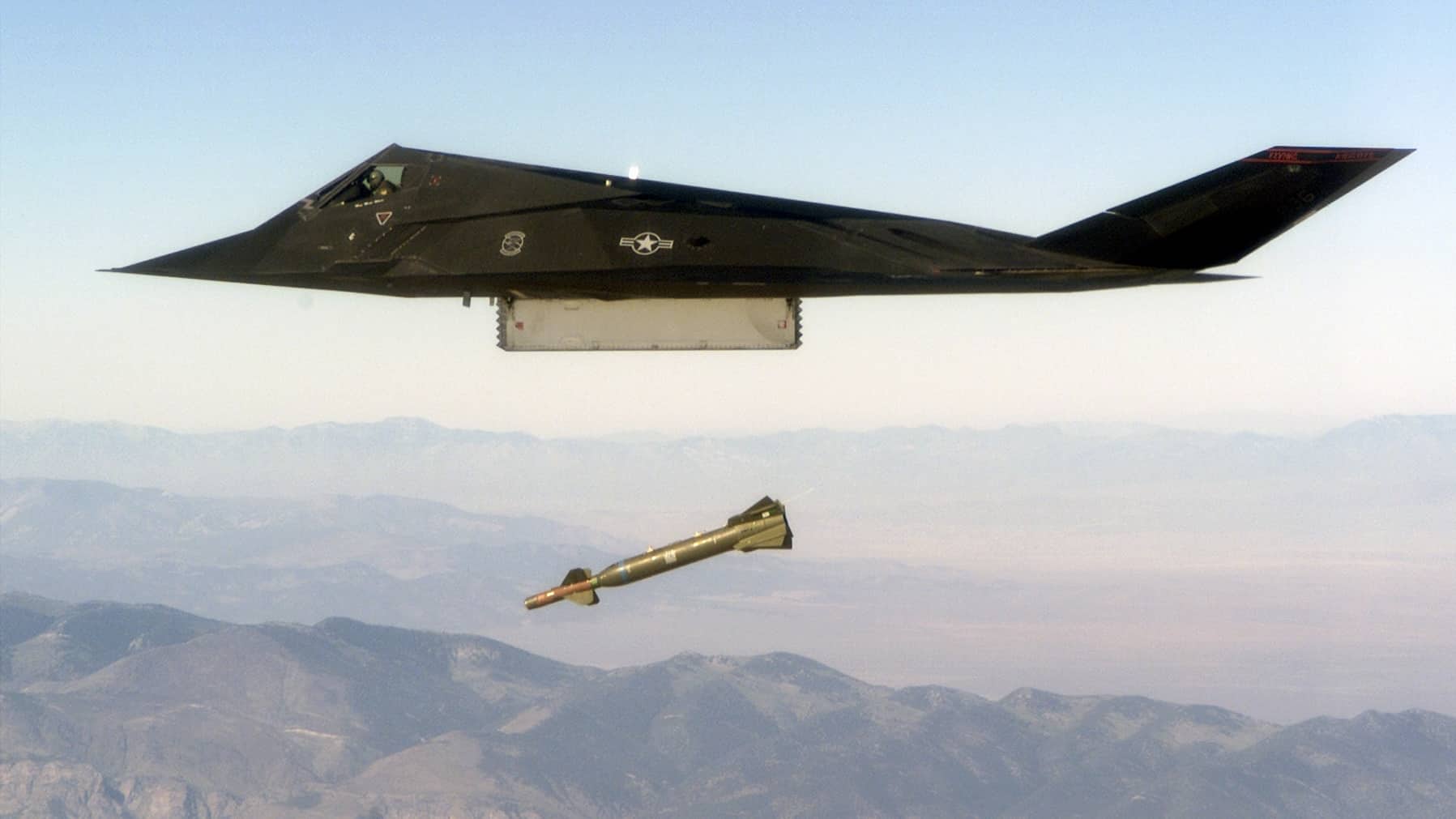
At dusk on Dec. 19, 1989, eight unconventional aircraft belonging to the 37th Tactical Fighter Wing (TFW) left their secretive base at Tonopah Test Range in Nevada. The aircraft, little known to the American public and most of the world, were products of the famous Lockheed ‘Skunk Works,’ known for producing technologically advanced aircraft in secrecy. These aircraft were built with new technology almost invisible to radar and equipped with advanced pinpoint weapons guidance systems. Because of the stealth characteristics, these aircraft could bomb flying straight and level, aiding accuracy.
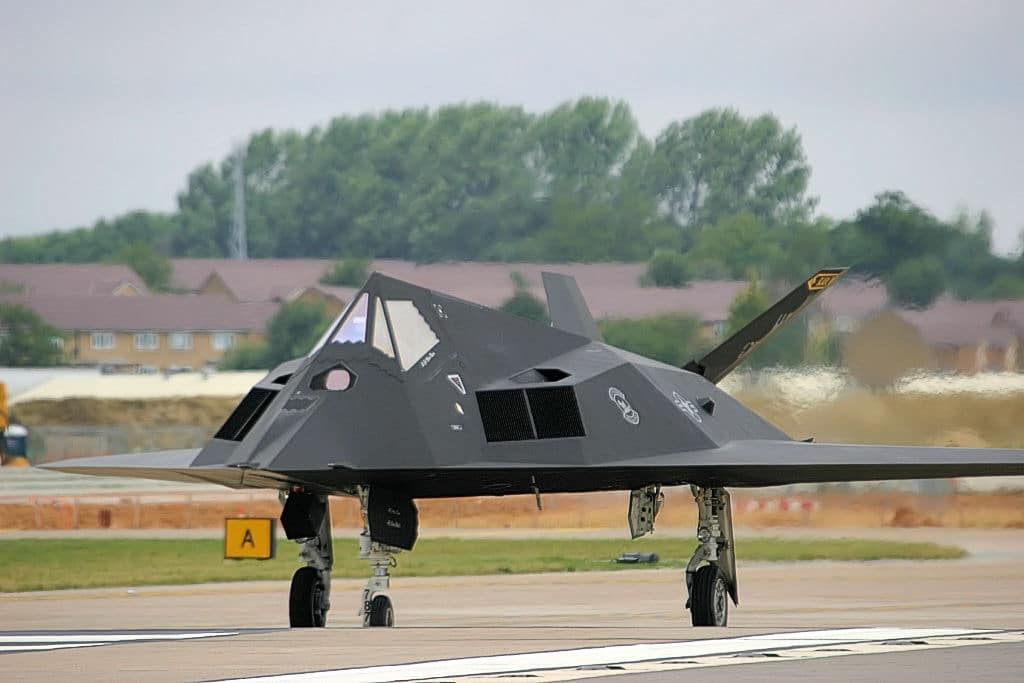
Painted black with a sinister shape and designed to operate with impunity over enemy territory at night, these aircraft were known as the F-117A Nighthawk, but are often referred to as the ‘Stealth Fighter,’ although it is actually more of a nocturnal attack aircraft that carries precision-guided bombs. The aircraft’s stealthy characteristics and pinpoint accuracy are why it was decided to finally unveil the United States Air Force’s (USAF) secret they’d been hiding in the Nevada desert and utilize it for the first time on an important mission.
A 37th TFW F-117A Nighthawk refuels from a 22nd Air Refueling Wing KC-10 Extender aircraft. | Source: United States Air Force/Staff Sgt. Scott P. Stewart
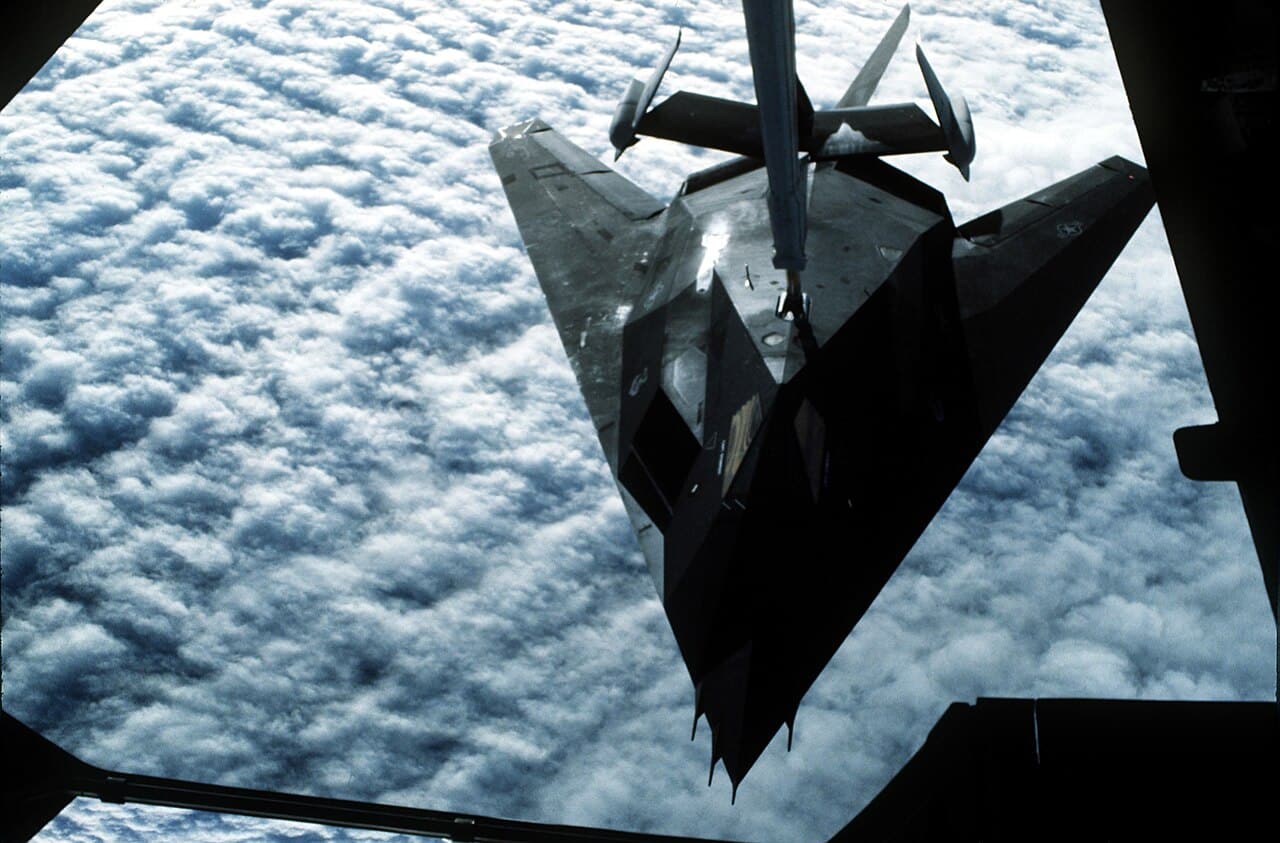
Two of the airborne aircraft were to conduct the mission in the opening hours of what was known as Operation Just Cause, another four were to conduct a still classified mission, and two held in reserve in the event of mechanical problems or the unlikely probability of a shoot down. A total of seven aerial refuelings would be required as they traveled over 3,000 miles for almost eight hours in the dark with their KC-10 tankers to Central America.
The Objective
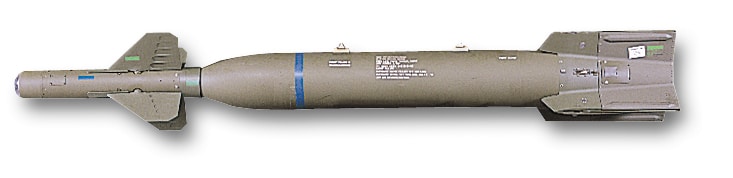
Carrying a single GBU-10 or GBU-27 laser-guided 2,000 lb bomb each, tucked away in internal bomb bays to maintain stealth characteristics, the Nighthawks could place the bombs in an area the size of a phone booth or a 5 ft circle with relative ease. However, not only did they have to strike the designated targets accurately, but they also had to hit them at a precise pre-determined time.
GBU-27 Paveway III 2,000 lb laser-guided bomb. | Source: Wikimedia Commons
The intent was to disorient but not kill elite members of the Panamanian Defense Forces (PDF) known to be fiercely loyal to General Manuel Noriega at Rio Hato while they slept in their barracks. The bombs were to be dropped in open areas a safe distance from occupied buildings and act as giant stun grenades. Army Rangers and other special forces would then immediately converge on the area in positions along the nearby runway in the confusion. The mission was further complicated by the fact that a dispensary with possible civilian patients was nearby as well as teenage cadets in training. Hitting either of these would be a disaster.
The Strike
As the two F-117s broke away from their tankers, went silent and disappeared even from the prying eyes of the E-3 Sentry Airborne Warning and Control System (AWACS) aircraft and Panamanian radar, and began their target runs, the winds changed directions. To further complicate things, plans were changed at the last minute causing the lead aircraft, piloted by Capt. Greg Feest, to drop his bomb right on time where it was originally intended the second aircraft would strike. Confused communications and possible incorrect coordinates caused the second aircraft piloted by Maj. Dale Hanner, who now thought they had reverted back to the original plan, to drop is bomb 325 yards wide of the intended target.
Map illustrating Operation Just Cause. | Source: United States Department of Defense
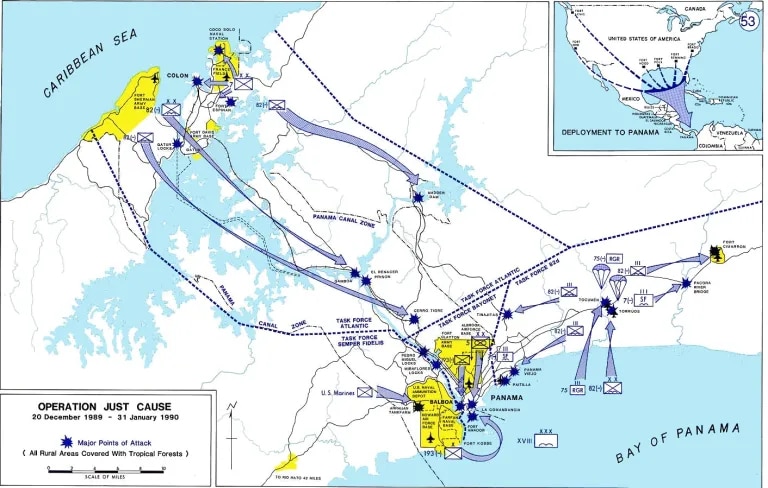
Despite the targeting mix-up and the fact it appeared the PDF had been tipped off and was already alert and in place defending the air strip, reports indicated the explosions did create some desired confusion, with PDF soldiers running about in their underwear and some throwing down weapons and running off.
It was 0102 hrs on Dec. 20, and the two F-117s would not stick around to watch the fireworks as an AC-130 Spectre gunship and AH-64 Apache attack helicopter, joined by a pair of AH-6 Little Birds, would be making their runs on the airstrip, all part of an over 300 aircraft air armada assembled for the largest United States military action since Vietnam.
A U.S. Army AH-64 Apache attack helicopter is winched down the ramp of a National Guard C-5 Galaxy at Eielson Air Force Base, Alaska, on Feb. 6, 1998. The Apache is attached to the 4th Battalion, 3rd Armored Cavalry Regiment, Fort Carson, Colorado. The Galaxy is deployed from Kelly Air Force Base, Texas. | Source: United States Air Force/Senior Airman Michael D. Morford
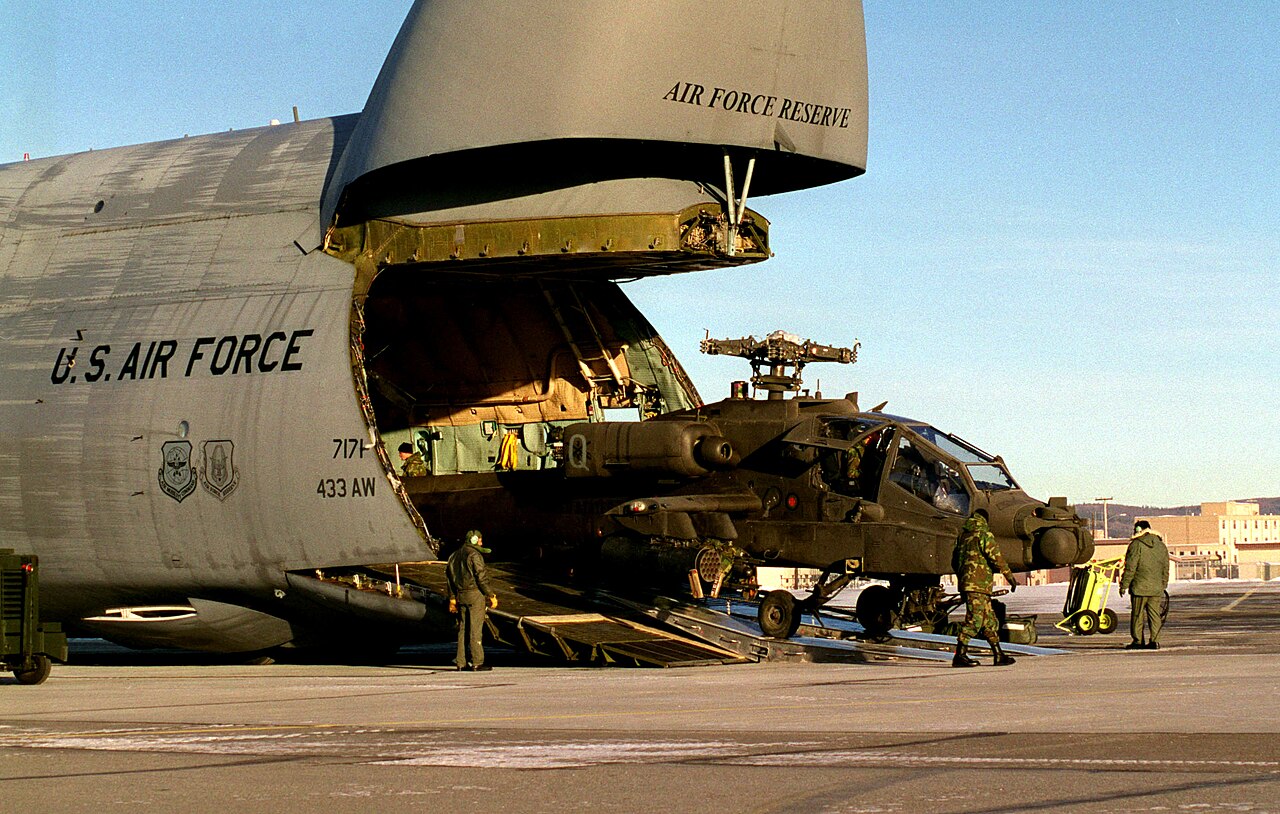
The Apaches had been smuggled onto Howard Air Force Base (AFB) inside giant C-5 Galaxy transport aircraft. The helicopters were only flown at night and tucked away in hangers before dawn to prevent the PDF from knowing they were present at the air base inside Panama.
Soon 144 C-130 and C-141 transport aircraft carrying troops, armored vehicles, weapons, and equipment were dropping their cargos in the largest airborne operation since World War 2, while fighters provided escort and KC-135 and KC-10 fueled the thirsty air fleet.
A Lockheed F-117A at 2004 Royal International Air Tattoo. | Source: Wikimedia Commons
Air National Guard A-7 Corsair IIs and Howard Air Force Base A-37 Dragonfly attack aircraft stood by, should additional fixed-wing fire support be needed. F-15s provided Combat Air Patrol (CAP) flights in the event the Panamanian Air Force mounted a challenge. The F-15s were also prepared to intercept any attempt by Noriega to escape the country by aircraft. Search and Rescue aircraft were placed in strategic locations as well.
The other four F-117s that had been tasked with a separate mission assisting Special Forces in the capture of Noriega, but were called off after intelligence indicated he was not at any of the assigned targets.
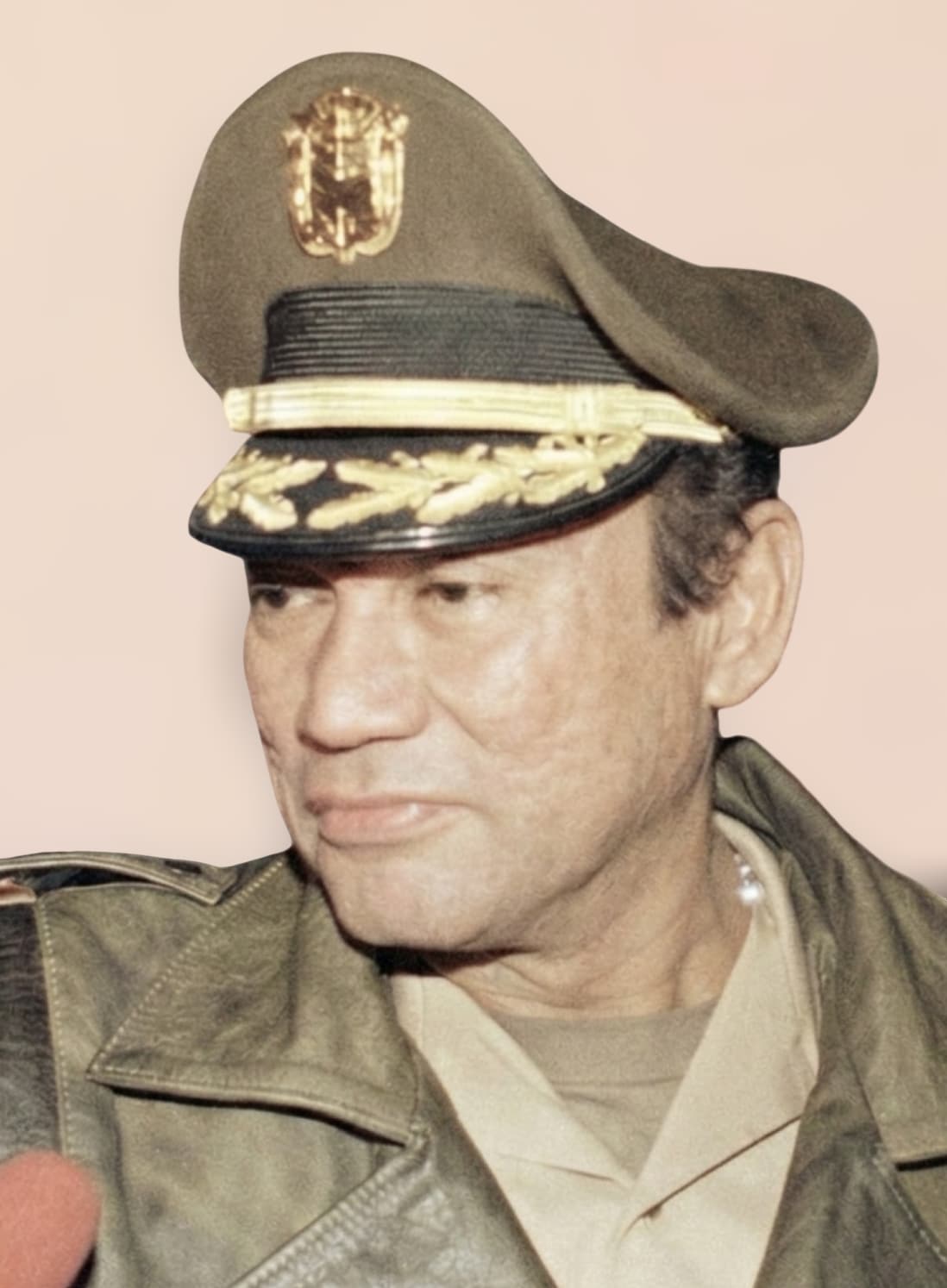
Panamanian Dictator Manuel Noriega in 1988. | Source: Wikimedia Commons
The Results
The F-117 had proven itself against an enemy Integrated Air Defense System (IADS) in combat for the first time, and had done what it was asked to do. Even with the targeting miscues, General Carl Steiner, commander of the XVIII Airborne Corps, was pleased with the results and happy that he had requested the use of the F-117s for the operation.
The PDF was quickly overwhelmed by American forces while Noriega evaded capture, eventually seeking sanctuary at the Apostolic Nunciature. After ten days of having Van Halen blasted by U.S. forces from a cassette tape, constant helicopters coming and going and other intentional loud noises, he surrendered on Jan. 3, 1990, and was taken as a prisoner to be prosecuted and sentenced. He passed away on May 29, 2017, from complications during surgery for a brain tumor. He was 83.
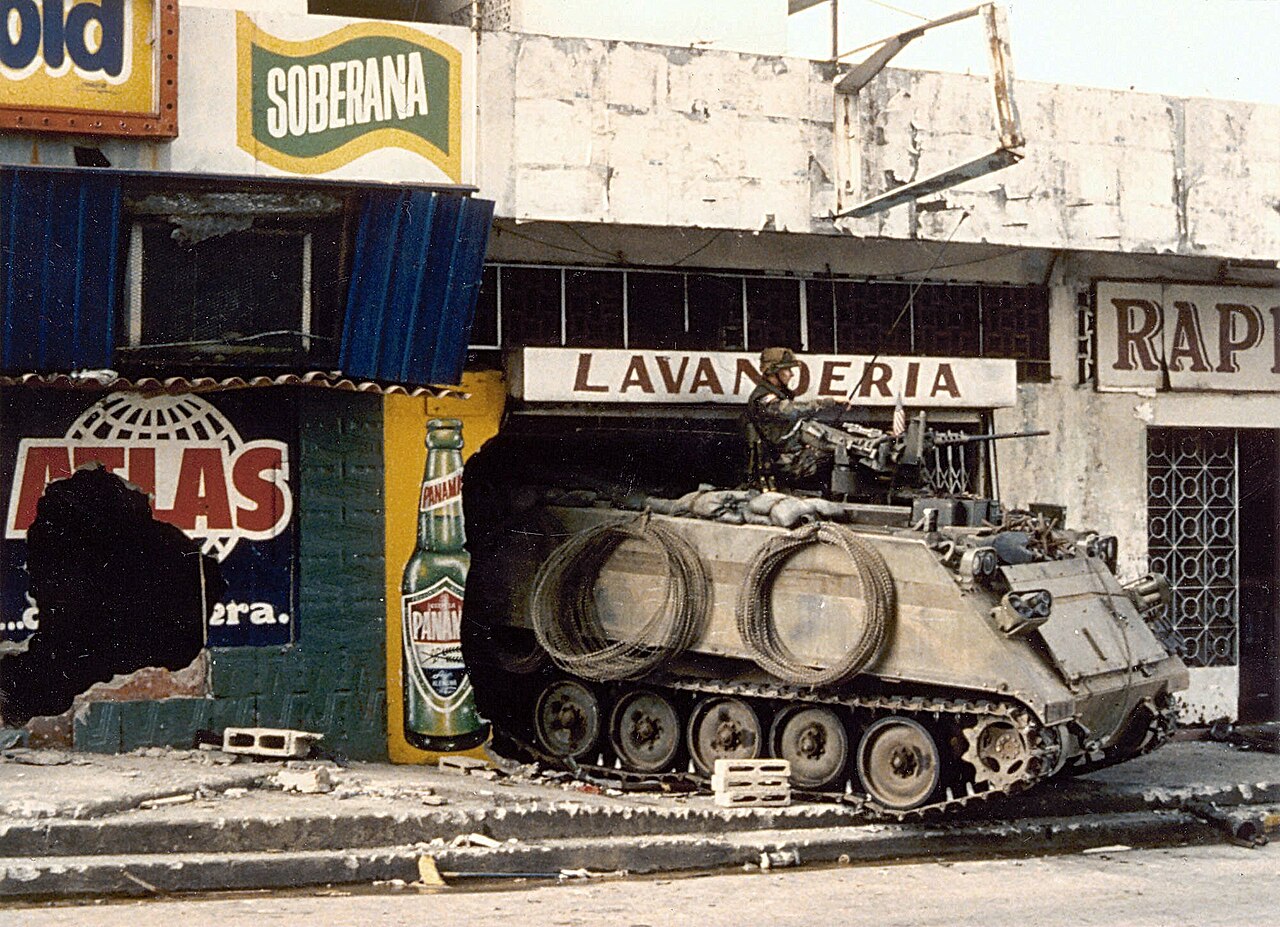
A U.S. Army M-113 armored personnel carrier guards a street near the destroyed PDF headquarters building during the second day of Operation Just Cause, Dec. 21, 1989. | Source: United States Department of Defense
Captain Feest was chosen to lead the F-117 mission over Panama instead of a Major because of the secrecy of the program and him being the top performer in the wing, bypassing those who outranked him. Capt. Feest had won the squadron’s Top Gun award in two consecutive years and maintained a perfect 100% hit rate.
The F-117A would go on to prove even more valuable and deadly in January 1991, when it would achieve legendary status in the skies over Iraq. Now a Major, Greg Feest would be at the forefront once again, striking important targets with precise accuracy and timing in an F-117A Nighthawk.