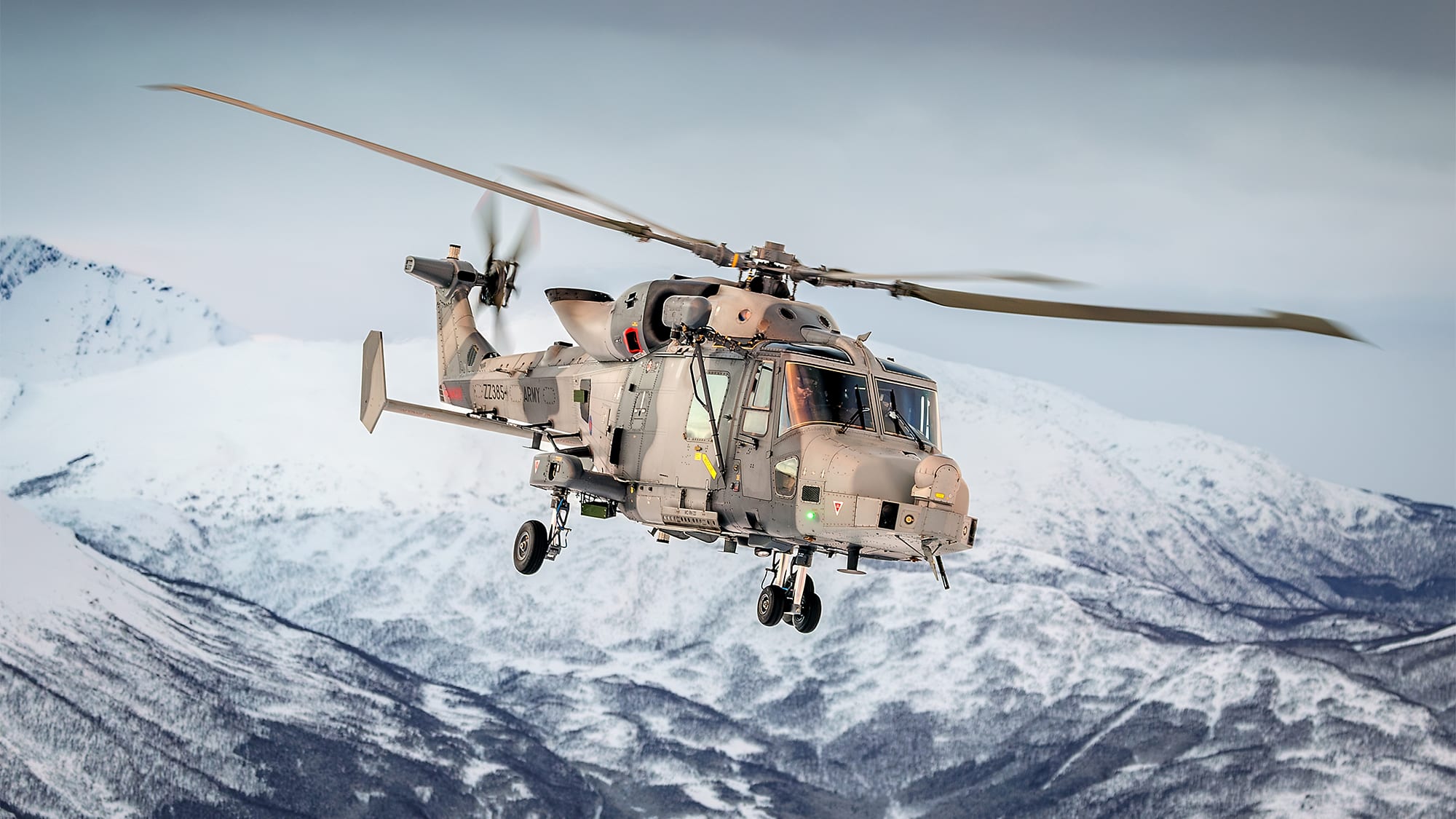
British Army Wildcat Helicopters to Retire From Next Year
The now-published Defence Investment Plan includes an unexpected and shocking announcement that the British Army’s fleet of Wildcat AH1 helicopters, which entered service in 2014, will begin to be withdrawn from 2027.
The Defence Investment Plan (DIP), which has finally been released after significant and high-profile delays, includes a heavy commitment in multiple domains to new, uncrewed platforms that will work alongside crewed capabilities in the near future. Before the plan was published in full, this was known to include a shift in plans for the Royal Navy to focus on a ‘system of systems’ approach and new Common Combat Vessels (CCVs) – which would command fleets of drone ships – in place of the apparently shelved Type 83 destroyer.
Now, as we are able to see the DIP document in full, it can be revealed that the British Army will stand down its battlefield reconnaissance and utility helicopters in favor of new autonomous systems. The Wildcat AH1 was introduced in 2014 and provides the British Army with a light transport and scout helicopter, which has already been tested alongside drones.
Helicopter ambitions delayed comes as a result of a change in the MoD’s wider priorities around drones, etc. A couple of takeaways are that some older Chinooks will be retained in service for longer, while the army’s Wildcats are to be retired in 2027 in favour of unmanned. Was… pic.twitter.com/3z3XQ4Q5SA
— Gareth Jennings (@GarethJennings3) June 30, 2026
34 Wildcat AH1s were purchased for the British Army, while the Royal Navy operates 28 Wildcat HMA2s. The Wildcat HMA2 differs from the AH1 most visibly with the inclusion of the under-nose mounted Seaspray radar. In recent years, the HMA2 variant has also been integrated with weapon wings that can be used to deploy Martlet and Sea Venom missiles.
No clarification is made on what may happen to these surplus Wildcat helicopters. The Royal Navy might seek to take on the airframes, if budgets allow. An upgrade program for the AH1 to bring it closer in line to the HMA2, with an integrated radar, has already been discussed previously. The Royal Navy has a notable shortfall in helicopter capacity, and the total loss of two Merlin HC4s in fatal incidents since 2024 has only worsened the situation.
847 Naval Air Squadron already operates the Wildcat AH1, drawn from a common pool of Army Air Corps-owned airframes, as a support component for the Royal Marines. It is presently a small squadron, but could grow and begin to operate the AH1 airframes in its own right – again, if budgets, and sign offs from senior officials, allow. If no airframes are transferred, this could mean the end for 847 NAS, and its Royal Marines role would most likely be shoehorned into the existing – and already stretched – Wildcat HMA2 units.
Welcome to @847NAS with the Wildcat AH1’s
The combat helicopters from the Battlefield Reconnaissance Squadron, Ex Alto Concutimus ‘We Strike From On High’#UKCSG23 pic.twitter.com/PdDxLyDLN1
— UK Carrier Strike Group (@COMUKCSG) September 15, 2023
Questions remain over exactly how drones will cover the capability gap left from withdrawing the Wildcat AH1. While they can certainly provide an excellent intelligence, surveillance, and reconnaissance (ISR) capability, this is only part of the AH1’s role. Uncrewed systems are unlikely to be providing survivable in-battlefield transport of significant numbers of personnel and equipment anytime soon (if at all), nor would they be as adaptable for the high-risk missions such as combat search and rescue (CSAR) that the Wildcat force could be tasked with during a conflict.
With the withdrawal of Wildcat AH1, the Army Air Corps will be reduced to just two helicopter types, comprising 50 AH-64E Apaches alongside a small number of Dauphin AH1s operated by 658 Squadron in a special forces support role. The incoming AW149 from the New Medium Helicopter program will be tasked with supporting the British Army but will be operated by the Royal Air Force, much like the Puma helicopters (already retired) they are intended to replace.
Also mentioned in the DIP alongside the Wildcat AH1 retirement is the withdrawal of older Chinook HC6A airframes. This has been known for some time, though the timetable for when there will be a follow-on order beyond the 14 H-47ER variants in production to replace them is unclear. There are plans to see the UK’s Chinooks evolve into a multirole force that can carry and deploy uncrewed systems as well as provide rotary wing airlift, so the Royal Air Force’s strong commitment to the type appears to be unwavering.
Keep an eye on The Aviationist for more coverage of the Defence Investment Plan