NATO Selects Saab GlobalEye to Replace E-3 AWACS Fleet
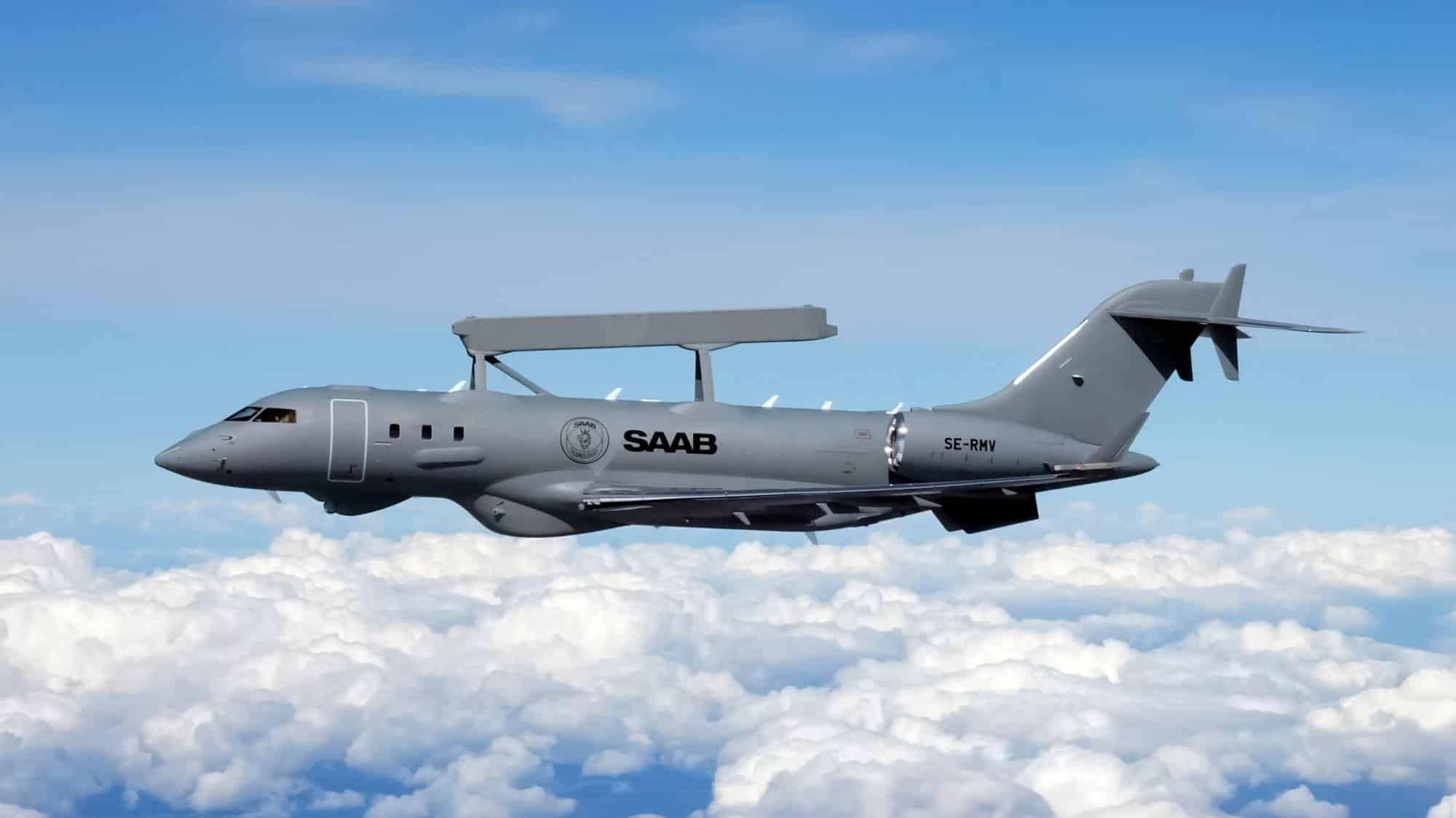
NATO Secretary General Mark Rutte announced that a number of allies decided to procure up to ten Saab GlobalEye aircraft to replace the aging E-3 AWACS fleet.
After months of anticipation, NATO has officially selected the Saab GlobalEye as its next Airborne Early Warning and Control (AEW&C) platform, replacing the aging E-3 Airborne Warning and Control System (AWACS). The decision was announced by NATO Secretary General Mark Rutte at the summit in Ankara, Turkey.
Rutte said that a number of allies have jointly decided to acquire the GlobalEye and create a fleet of up to ten aircraft. The new platform will not replace the E-3s on a one-to-one basis, as the fleet currently counts 14 aircraft and originally was composed by 18 aircraft.
NOW: NATO allies sign contracts to jointly procure up to 10 Saab GlobalEye AEW&C aircraft, snubbing Boeing. pic.twitter.com/d6RALojxTS
— Clash Report (@clashreport) July 7, 2026
French and German news outlets first reported about the GlobalEye selected by Alliance in April 2026, citing sources familiar with the matter. However, at the time this was not confirmed by NATO and Saab.
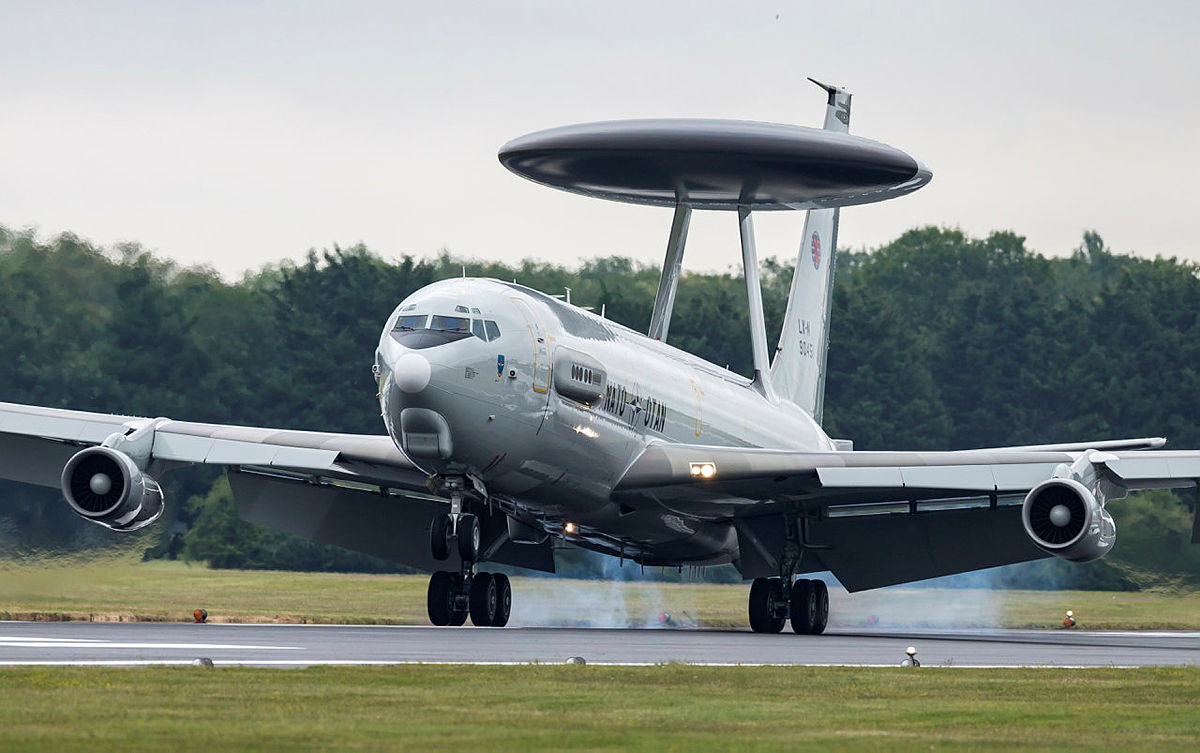
A NATO E-3 AWACS at the Royal International Air Tattoo (RIAT) in 2019. | Source: Crown Copyright 2021/Cpl Lee Matthews RAF
In a press statement acknowledging NATO’s decision, Saab noted that it “has not signed a contract or received an order related to the announcement.” Negotiations with the NATO Support and Procurement Agency (NSPA) will now start, however a timeline is not yet available.
“We are honoured and proud to support NATO in its next-generation AEW&C capability,” says Micael Johansson, President and CEO of Saab. “We are confident that GlobalEye is the right choice for the Alliance, delivering proven capability, adaptability and long-term operational advantage. Today’s announcement clearly positions GlobalEye as the world-leading solution for advanced airborne early warning and control. We look forward to the next steps in the negotiations.”
The news was also welcomed by Swedish Prime Minister Ulf Kristersson, saying that this represents “a moment of great pride for Sweden and even prouder for what it entails for NATO.” He further added that, “by 2027, we will see these GlobalEyes operating from Swedish bases,” according to Breaking Defense.
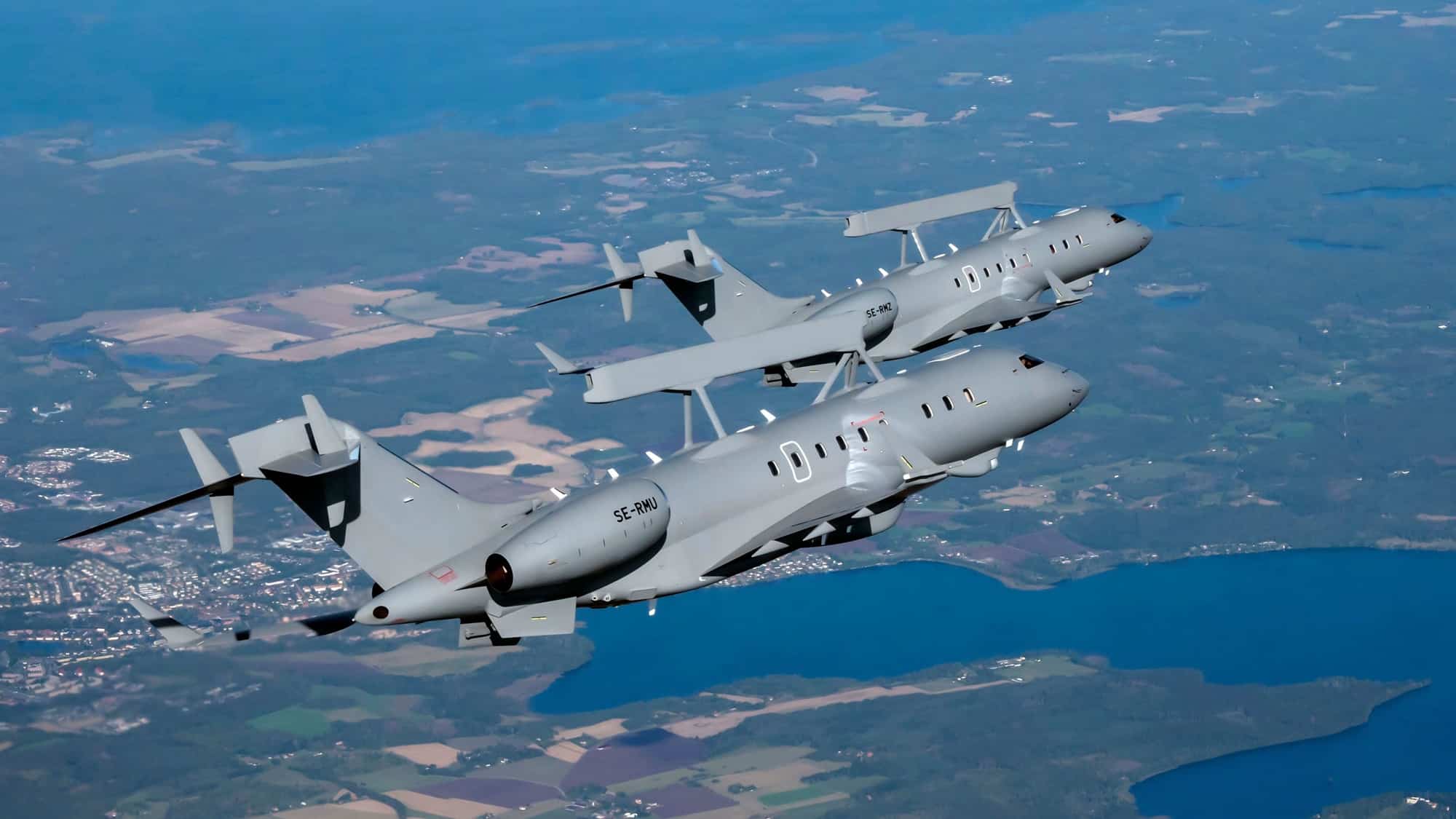
Two GlobalEye aircraft in formation. | Source: Saab
Botched Wedgetail Procurement
NATO initially decided in 2023 to replace its current fleet of 14 E-3A AWACS (Airborne Warning And Control System) aircraft with six new E-7A Wedgetail aircraft. The decision was part of the initial Alliance Future Surveillance and Control (iAFSC) capability deal would deliver an initial element to mitigate the risk of airborne surveillance and control capability gaps with the retirement of the AWACS.
At the time, the NATO Support and Procurement Agency (NSPA) said that “the E-7A is the only known system currently capable of fulfilling the strategic commands’ essential operational requirements and key performance parameters and available for delivery within the timeframe required.” The consortium that was proceeding with the procurement was composed by Belgium, Germany, Luxembourg, the Netherlands, Norway, Romania and the United States.
Among the NATO members, Turkey already operates the Wedgetail, while the United States and United Kingdom have selected the E-7 as replacement for their own AWACS aircraft. The program of the American and British Wedgetails has already been delayed.
An artist’s rendition of the E-7 Wedgetail in NATO livery. | Source: Boeing

In 2025, the Netherlands’ Ministry of Defense announced, on behalf of the iAFSC Support Partnership Committee nations, that alternatives would be sought to replace the ageing AWACS aircraft by 2035. The announcement came at the time when the U.S. Air Force’s plans were shifting away from the E-7, although it is unclear how much this could have influenced the decision.
Saab GlobalEye
The Saab GlobalEye is described as a multi-domain Airborne Early Warning and Control (AEW&C) aircraft designed to provide long-range surveillance across the air, maritime and land domains. The platform combines Saab’s Erieye Extended Range radar with additional surveillance sensors and a multi-domain Command and Control (C2) system on a Bombardier Global 6500 aircraft.
The long-endurance business jet airframe allows to support missions which are can last more than 11 hours. This enables extended surveillance missions over large areas while operating at high altitude.
The Erieye radar is the platform’s primary sensor, installed in a dorsal fairing above the fuselage. This Active Electronically Scanned Array (AESA) radar, which utilizes gallium nitride (GaN) technology, is designed to detect and track airborne targets at long range, including low-flying aircraft, while maintaining wide-area air surveillance.
Additionally, the GlobalEye incorporates a Leonardo Seaspray 7500E maritime surveillance radar, a FLIR Systems Star SAFIRE 380HD electro-optical/infrared (EO/IR) sensor, Electronic Support Measures (ESM), Identification Friend or Foe (IFF) systems and an Automatic Identification System (AIS) receiver, allowing it to detect, identify and track air, surface and ground contacts using multiple sensor types.
Information collected by the onboard sensors is processed through Saab’s mission system, which can fuse data from multiple sources and distribute it through existing command-and-control networks to support military operations. This enables operators to monitor activities across multiple domains while sharing real-time information with air, land and maritime forces.