UK to Lead $50 Billion European Effort for Deep Precision Strike Missile
The new Deep Precision Strike Missile is meant to touch distances between 300 km and 2,000 km, inspired by Ukraine’s extremely long-range strikes far behind Russia’s frontlines.
The United Kingdom announced on Jul. 8, 2026 at the NATO summit in Ankara that it will lead a $50 billion (£37bn) European initiative to develop long-range precision strike missiles. The capability, to be developed over 10 years, satisfies the need to hit with pinpoint accuracy targets at distances between 300 km and to 2,000 km, bolstering deterrence across the Allies.
The press release mentions the example set by the war between Ukraine and Russia, with the former proving “that the effective use of long-range systems can have game-changing impacts on the battlefield.”
It must be noted that the UK is also working with Germany on another Deep Precision Strike (DPS), under the Trinity House agreement, to develop stealth and hypersonic weapons with ranges exceeding 2,000 km. The UK is also poised to join the United States and Australia in the Precision Strike Missile (PrSM) Programme.
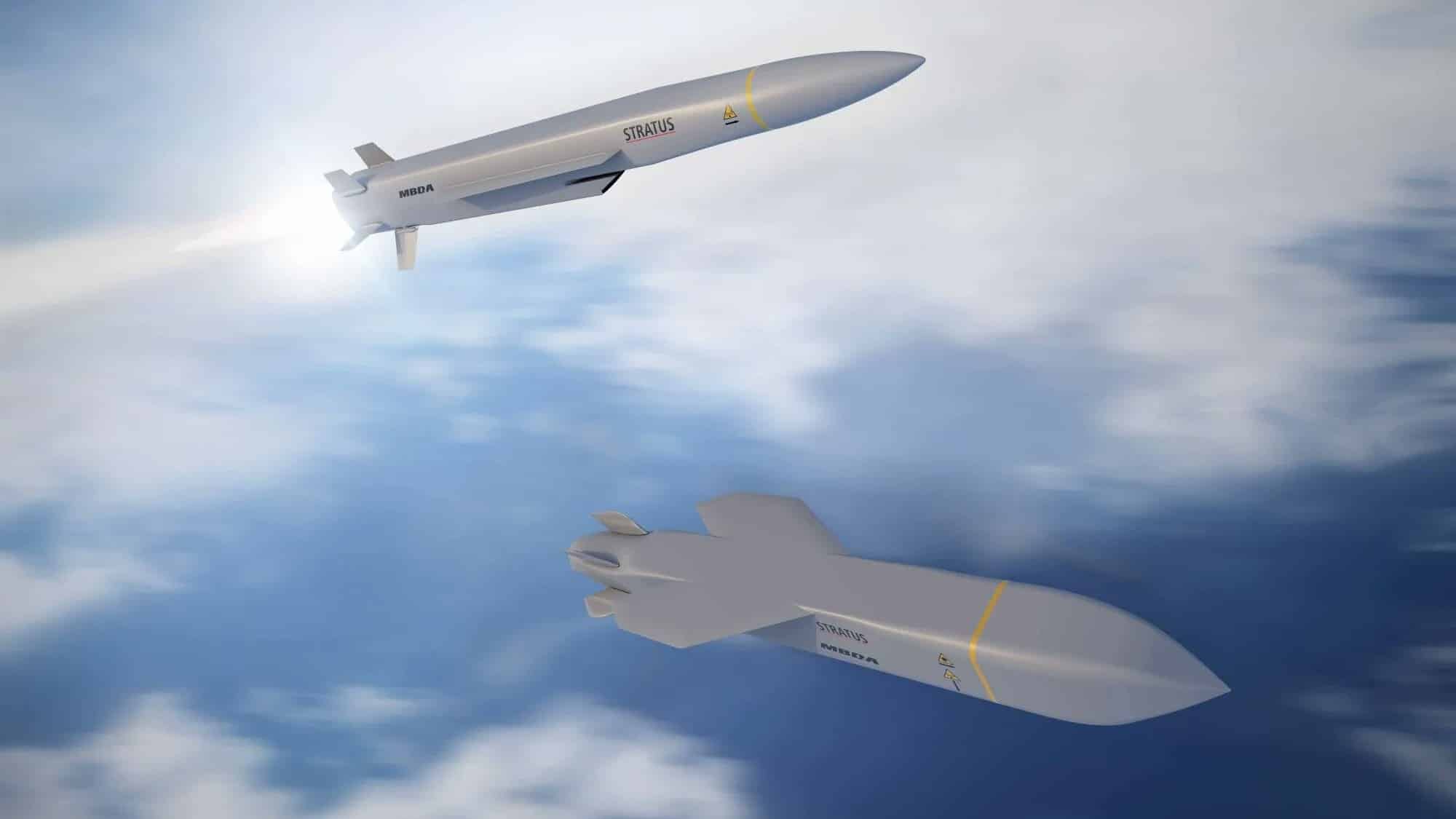
The British MoD released a short concept video of the MBDA Stratus, a future replacement to the British-French Storm Shadow/SCALP-EG currently under development. In its press release, the British government also quoted Prime Minister Keir Starmer who mentioned these three programs.
Stratus is the UK’s trilateral programme with France and Italy to develop the successor of Storm Shadow — one of our most battle-proven missiles.
The UK will put £1.4 billion into Stratus over the next four years. The project sustains more than 1,300 UK jobs at @MBDA_UK. pic.twitter.com/sSZrDl04I9
— Ministry of Defence (@DefenceHQ) July 8, 2026
Three Deep Precision Strike efforts
It is unclear whether there are different types of DPS missile projects bearing the same name at this time. A report by BBC talks about the DPS missile under the Trinity House pact getting this investment.
However, a closer reading of Prime Minister Keir Starmer’s statement suggests that the broader NATO-wide defence investment for the DPS covers all the three programs – the original Trinity House 2,000 km range DPS missile, the Stratus and the U.S. PrSM. This is because, as mentioned earlier, his statement mentions all the three programs.
As we reported in our coverage of the UK’s new Defence Investment Plan (DIP), Stratus is a future replacement for the British-French-Italian Storm Shadow/SCALP-EG. Notably, the Storm Shadow is now being freshly produced to replenish the stock following donations to Ukraine.
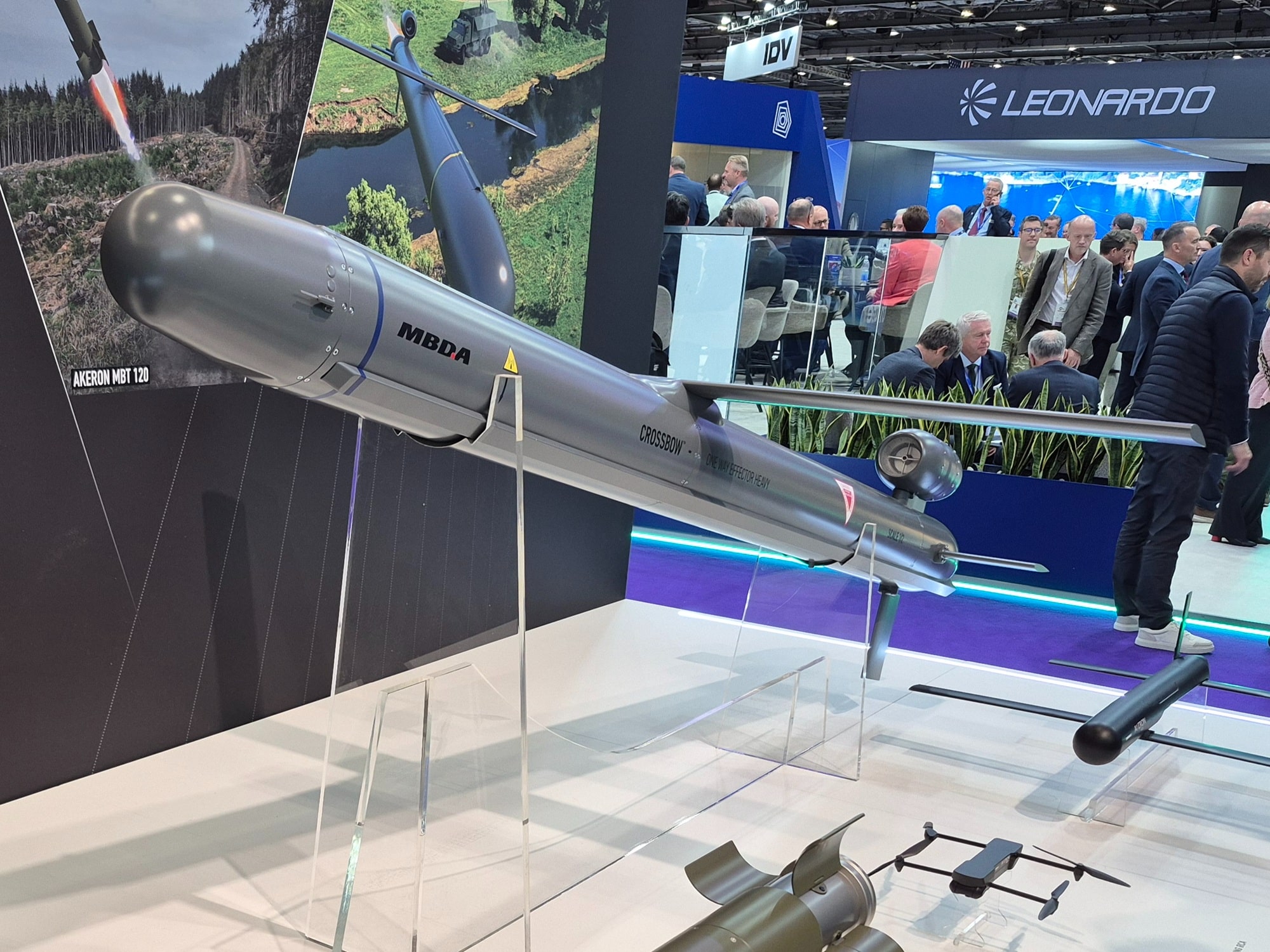
The new weapon will be supplemented by low-cost alternatives like Project Brakestop. The British MoD said it will pour £1.4 billion over the next four years into the Stratus missile.
A mockup of the Crossbow one way effector at DSEI 2025 produced by MBDA. Weapons like this will help replace the Storm Shadow, providing a low cost alternative to the high end weapon system. | Source: James Gray
The DIP outlays an investment of £3bn by 2030 for Britain’s own domestic deep strike capabilities. Both the domestic and international collaborative weapons programs are motivated by supporting jobs, with the defense industrial base driving the economic revival.
“The initiative will radically boost NATO’s defence and deterrence capabilities. The new initiative will enable European Allies to share expertise, technology advances and deepen industrial collaboration to rapidly advance NATO capabilities,” the release said.
PM Keir Starmer’s statement
The statement quoted Prime Minister Keir Starmer, who exhorted European NATO allies to combine industrial and technological resources to deter Russia. He then mentioned Ukrainian military achievements with long-range missile strikes.
“Ukraine’s Armed Forces have proved that the effective use of long-range systems can have game-changing impacts on the battlefield, giving the Armed Forces the ability to degrade enemy forces far behind the frontline,” said Starmer. “Ukrainian long-range strikes, such as those on key logistics hubs, have significantly impacted Russia’s ability to sustain their offensives.”
İngiltere’den yeni füze programlarına yatırım kararı
İngiliz Savunma Bakanlığı, Storm Shadow ve Meteor gibi uzun menzilli füzelerin modernizasyonu için artık yatırım yapmayacağını açıkladı.
İngiltere bunun yerine, başta Fransa ve İtalya ile ortak yürütülen Stratus… pic.twitter.com/eTlnnVKDxH
— M5 Dergi (@M5Dergi) July 3, 2026
He further mentioned the Trinity House agreement with Germany to develop both stealth and hypersonic systems that can go beyond 2,000 km. The weapon, expected to enter service by the 2030s, will initially be a ground-launched variant, but in the future will also have “air and naval capabilities.”
The UK will invest £770m into that joint capability over the next four years. “Expected to come into service in the 2030s, it will be among the most advanced system ever designed in the UK,” the statement added.
The Stratus, the “next-generation successor” to the trilateral British, French and Italian Storm Shadow, will have both high-speed and stealth variants to “defeat high-value targets, destroy enemy ships, and suppress enemy air defences.” The Stratus program is already supporting over 1,300 British jobs at MBDA’s facilities in Stevenage and Bolton.
NEW: The MoD has confirmed it is investing £190M for the UK to get a new precision strike missile
This is a ground-launched supersonic ballistic missile, first used by the Americans in combat against Iran.
It is capable of hitting stationary targets up to 500km away. Each… pic.twitter.com/4XIw7x0OgR
— Dominic Hauschild (@domhauschild) July 7, 2026
Lastly, Starmer mentioned the UK will join the U.S. and Australia in the Precision Strike Missile program, which will arm the “British Army with a supersonic ballistic missile capable of hitting targets up to 500km away.” He said that, “together, these programmes will provide UK forces with a family of long-range strike capabilities, able to operate from land, sea and air to deter adversaries, defeat threats and strengthen the UK and NATO security.”
Message to Russia and Putin
The statement touched upon the frequent intercepts of Russian aircraft and their provocative overflights around NATO assets. “During the Summit, the Prime Minister will also underline the substantial threat Russia poses to the UK and NATO,” said the statement.
It further added that, “in the past two years, NATO has scrambled fighter jets to intercept Russian aircraft approaching allied airspace more than 700 times and Russian military activity around UK waters has surged 30%.” You can read more about the most recent encounter here.
Ukraine’s Fire Point has assembled the first 10 test samples of its own turbojet engine for the FP-5 Flamingo cruise missile. Chief engineer Denys Shtylerman said the company has developed the engine and will gradually transition from the Soviet AI-25 currently used in the… pic.twitter.com/TJQV83u98y
— NOELREPORTS (@NOELreports) July 8, 2026
Defence Secretary Dan Jarvis said: “We are building the weapons of the future to keep the UK and NATO secure for decades to come, backed by billions of pounds and working with our closest European allies.” Foreign Secretary Yvette Cooper touched upon the strategic impact of hitting “high value military targets and the logistical engines that drive armies,” with the new plan “sending a clear message to President Putin.”