Sikorsky Completes Initial Flight Testing of Nomad 100 UAS
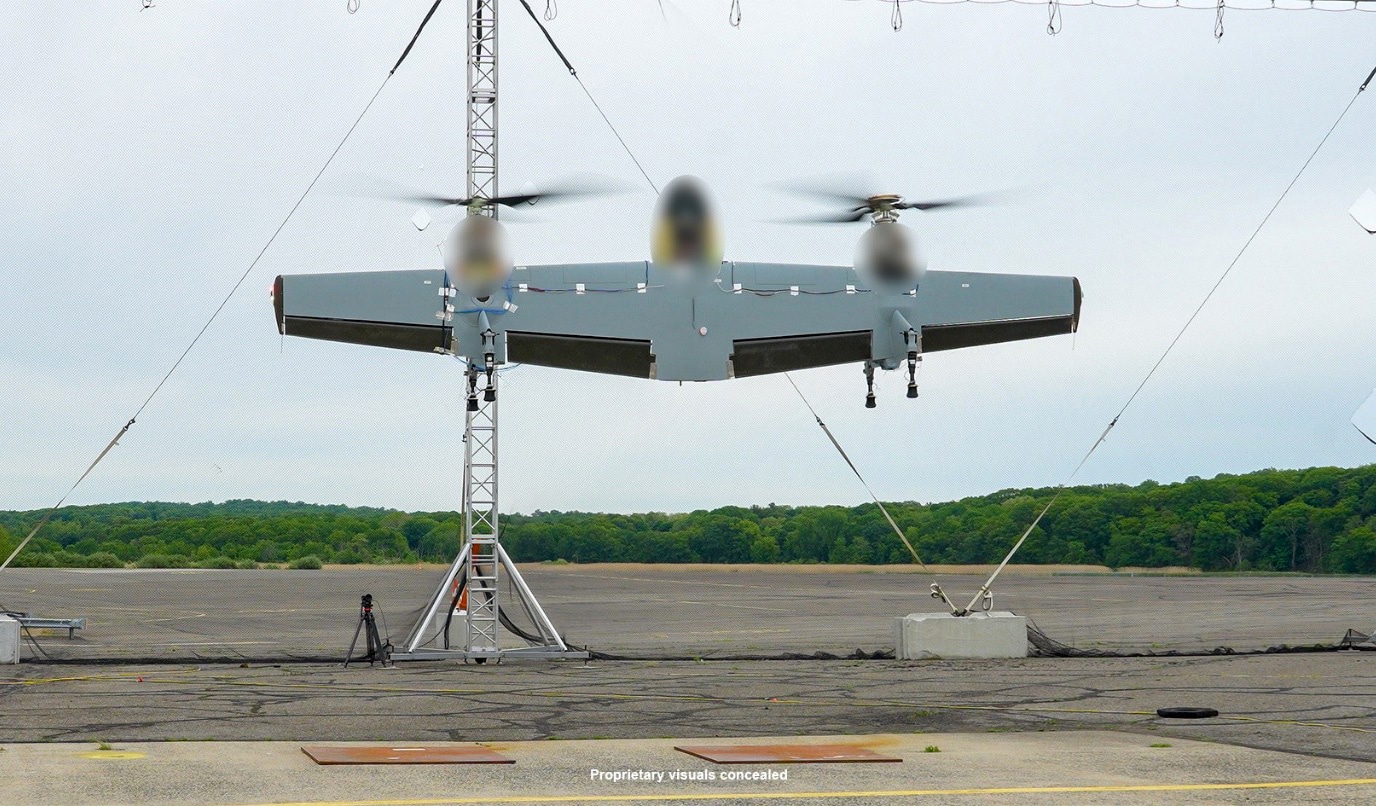
Sikorsky has completed the initial ground and flight testing of the Nomad 100 rotor blown wing VTOL drone as part of DARPA’s EVADE program.
Sikorsky has completed initial ground and flight testing of its Nomad 100 Uncrewed Aerial System (UAS), the novel rotor blown wing vertical take-off and landing (VTOL) drone first unveiled last year. The testing is part of the Defense Advanced Research Projects Agency (DARPA) Early VTOL Aircraft Demonstration (EVADE) program.
“Nomad 100’s ongoing flight testing reflects our commitment to advancing autonomous technology while delivering safe and reliable mission capabilities that equip customers to fill critical operational gaps,” said Rich Benton, vice president and general manager, Sikorsky. “Nomad will serve as part of a crewed-uncrewed team complementing missions anywhere from austere forward operating bases to ship decks and unimproved landing zones.”
.@Sikorsky, a @LockheedMartin company, has completed initial ground and flight testing of its Nomad 100 uncrewed aerial system (UAS) in collaboration with @DARPA‘s Early VTOL Aircraft Demonstration (EVADE) program. Click for more:
— Lockheed Martin News (@LMNews) July 22, 2026
Following this milestone, the company says it will continue with “an intensive flight test campaign at a government facility, replicating a host of multirole Nomad 100 missions.” While details about the next round of tests are not available, Sikorsky previously said that Nomad can conduct all-weather operations from reconnaissance, light attack and contested logistics.
In the press release, the company also noted that Nomad represents its entry into the UAS market, building on decades of advanced rotorcraft and autonomy expertise. The goal is “delivering high-performing uncrewed systems to servicemembers operating in rapidly evolving, contested environments.”
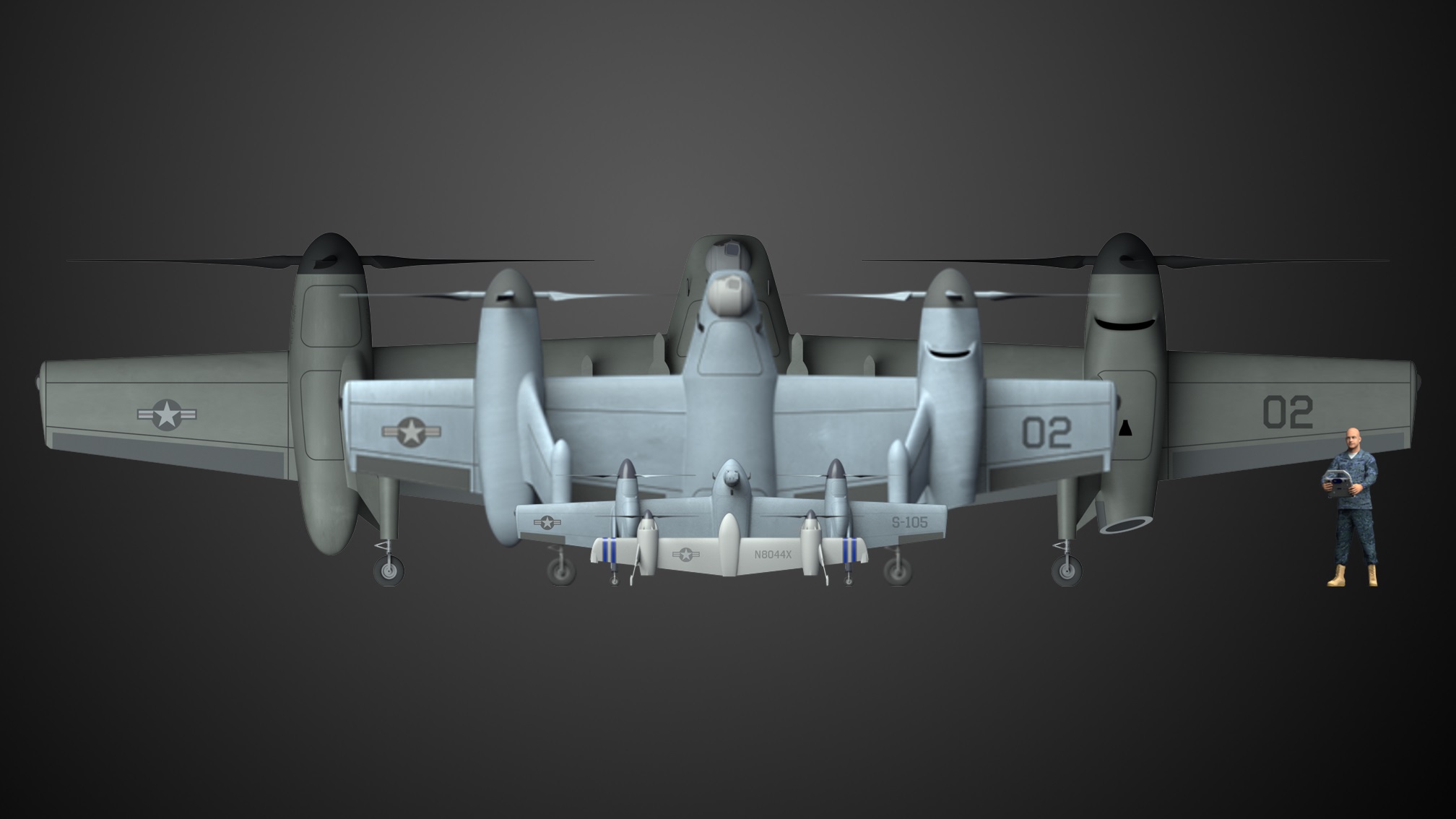
The Nomad family of VTOL drones can be scaled in size for a variety of sea and land-based missions. | Source: Sikorsky
Nomad 100
Sikorsky announced in October 2025 a new family of long-endurance, runway-independent drones, called Nomad, designed for reconnaissance, light attack, contested logistics and more. Nomad exploits the rotor blown wing architecture in a tail-sitting configuration.
The rotor blown wing architecture takes its name from the rotor wash which, due to the position of the engine nacelles, blows over the wing. This allows to increase lift once the transition from VTOL to airplane mode is complete.
In fact, the drone takes off vertically like a helicopter and then tilts the entire airframe to put the wings level and fly like a fixed wing aircraft. Sikorsky highlights that the twin proprotor design combines the versatility of a helicopter with the speed and range of a fixed-wing airplane.
The 10.3-ft wingspan prototype Nomad 50 aircraft is shown in flight test in spring 2025. | Source: Sikorsky
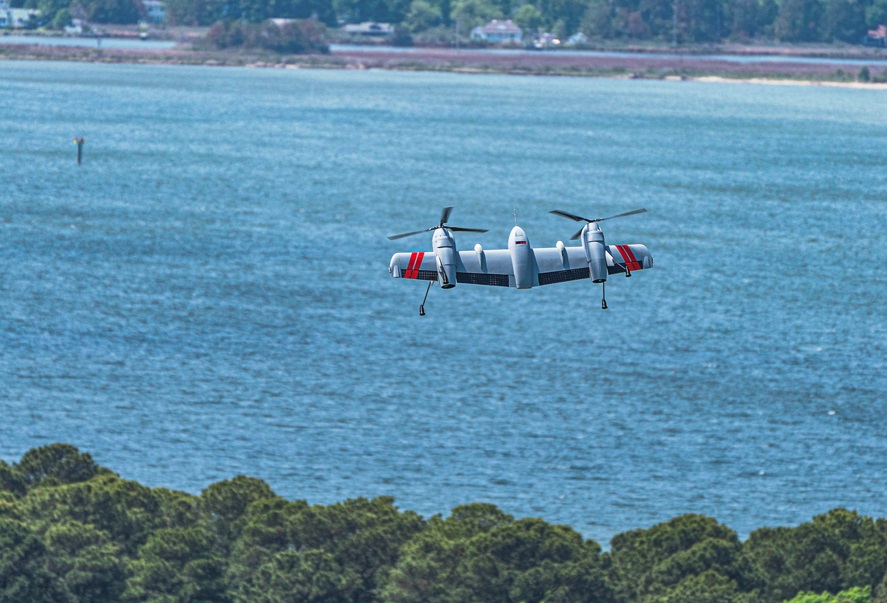
A first prototype with a 10.3 ft wingspan, called Nomad 50, was used to prove the design in March 2025. At the time of the announcement in October, the company said it was already building Nomad 100, described as a Group 3, 18 ft wingspan variant of the prototype.
Sikorsky specifically mentioned that the Nomad family can be scaled from a Group 3 UAS (56 pounds to 1,320 pounds) to Group 4/5 (1,320 pounds and up). The drones predominantly use fuel-efficient hybrid-electric propulsion, while future larger variants will feature a conventional drivetrain.
Furthermore Nomads are operated via Sikorsky’s MATRIX autonomy technology. The company has already demonstrated MATRIX across a range of applications, including aerial firefighting, logistics resupply, and advanced aerial mobility, and says it will allow seamless integration of Nomad with rotary and fixed-wing aircraft.