Lockheed Martin’s Ethos for Seamless, Cross-Platform Autonomy in Future Battlespaces
The Aviationist sat down with representatives from Lockheed Martin’s Skunk Works and Sikorsky divisions to discuss and understand the firm’s ambitions for the future of autonomous military capabilities.
Lockheed Martin first entered the uncrewed domain in the 1960s, producing the D-21 surveillance drone designed for launch by the M-21, a specially configured variant of the Lockheed A-12, and by B-52 Stratofortress bombers.
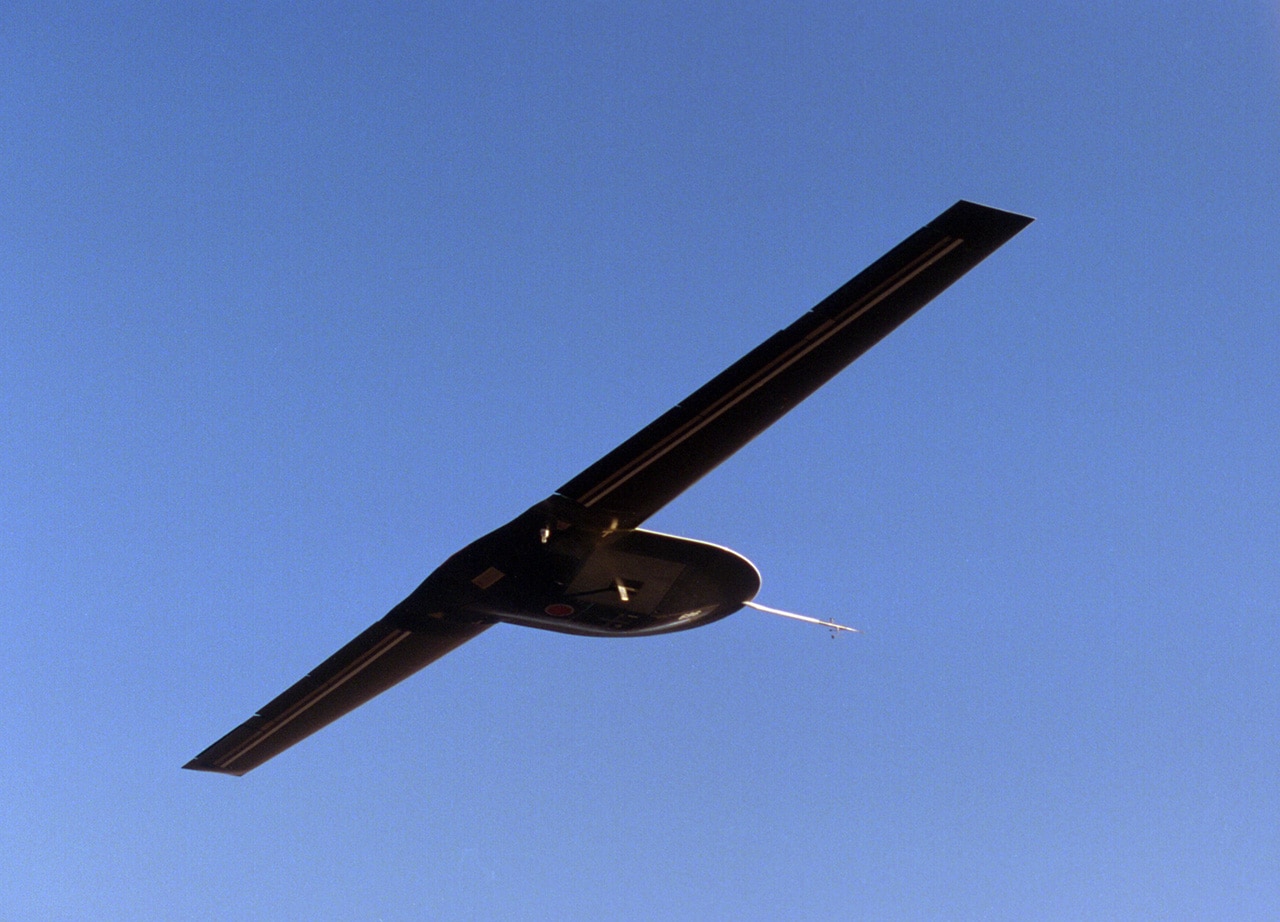
By the 1990s, Lockheed Martin was developing fully autonomous aircraft like the RQ-3 DarkStar. The DarkStar was notably among the first uncrewed aircraft to utilise the Williams FJ44 turbofan, now used by the Anduril YFQ-44A Fury and the Boeing MQ-28 Ghost Bat.
Lockheed Martin’s RQ-3 DarkStar, a high altitude UAV with stealth characteristics which first flew in 1996. | Source: NASA
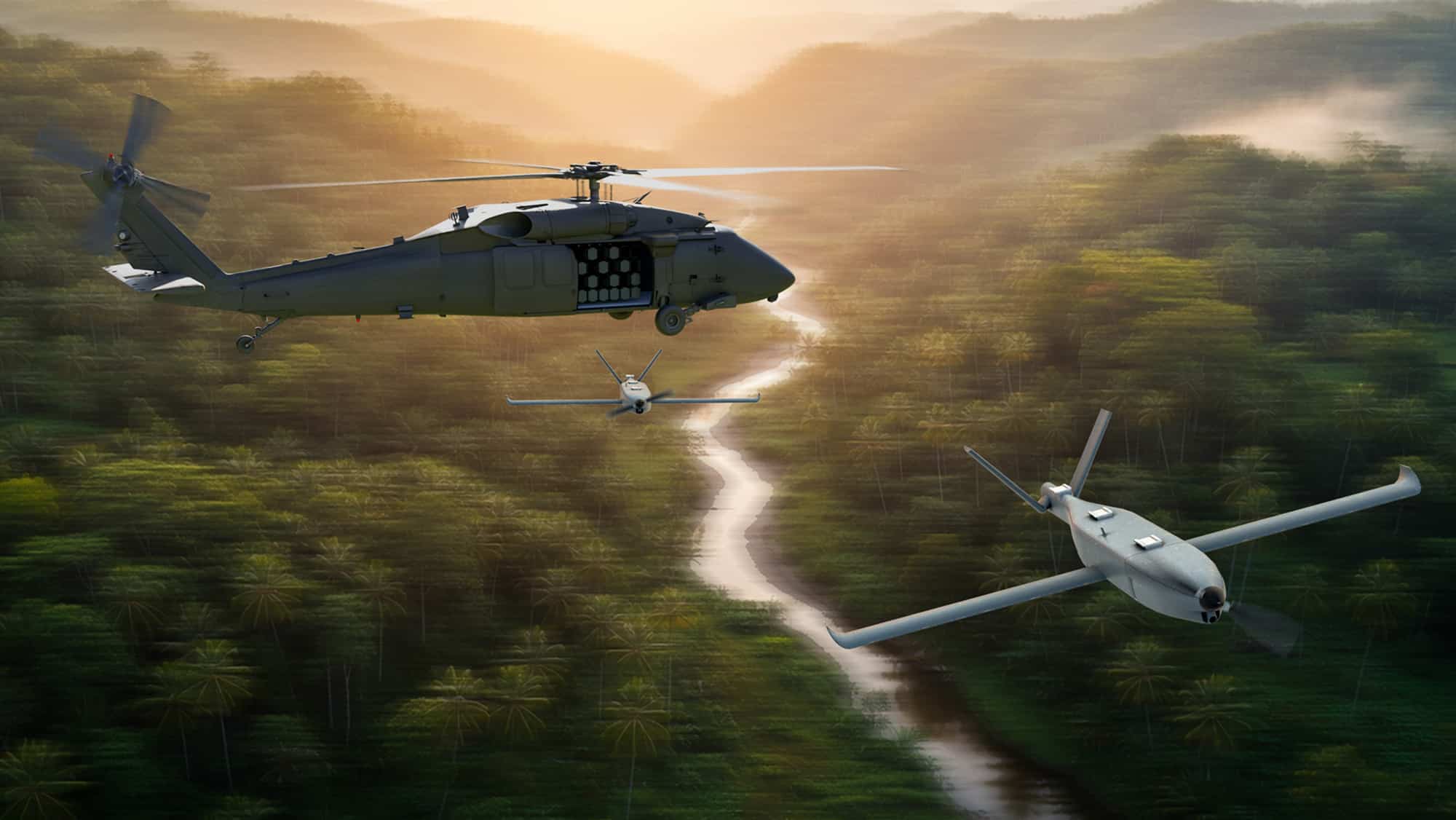
Today, Lockheed Martin, alongside its famous rotary-wing focused subsidiary Sikorsky, are presenting their concepts for how autonomous technology can best be integrated into military forces worldwide, enabling better capability, efficiency, and affordability.
At the heart is the firm’s ‘One LM’ culture. This ethos focuses on maximum autonomous systems compatibility between different platforms across all domains. An operator with familiarity with one type of autonomous Lockheed Martin product would be able to translate this familiarity to any other product, with basic software architecture shared across autonomous aircraft of all shapes and sizes (Group 1 through to Group 5) as well as to autonomous surface and underwater vehicles.
A new class of undersea capability has arrived.
LampreyMMAUV brings autonomous, adaptable power beneath the surface — designed to move fast, evolve quickly and meet tomorrow’s missions head-on.#UnderseaWarfare #Autonomy #DefenseInnovation pic.twitter.com/CfiNhsxSv7
— Lockheed Martin (@LockheedMartin) February 9, 2026
Michael Biorn, formerly of the U.S. Air Force, and Ramsey Bentley, formerly of the U.S. Army, both now bring their extensive experience in real-world combat deployments to Lockheed Martin. Speaking to The Aviationist and Defense One, they said that interest in autonomy from international customers is becoming much broader. This includes interest in fixed wing and rotary wing autonomy.
The company’s alignment with the Department of Defense (the company’s representatives used the Trump administration’s unofficial Department of War name) on Autonomy Government Reference Architecture (A-GRA) is viewed as a benefit for both U.S. and international interests. A-GRA calls for autonomy software to be as platform agnostic as possible. Lockheed Martin’s autonomy systems are, therefore, designed to be ‘plug and play’, allowing seamless integration of in-house and third party products.
Due to the cross-platform architecture, capabilities developed for one platform can very quickly be implemented on other platforms. How the autonomous software reacts to unfamiliar situations, for example, is something that can be applied in almost the same fashion to vastly different platforms like the Sikorsky U-HAWK and the Lockheed Martin Vectis.
Scale model of @LockheedMartin Vectis allows comparison withF-35. The thing appears to be huge. pic.twitter.com/kfZsYiCB5n
— The Aviationist (@TheAviationist) July 22, 2026
Re-use of existing platforms as autonomous vehicles is a specific focus alongside the development of new designs. One of the most notable examples of this is the Sikorsky U-HAWK, based on the ubiquitous UH-60/S-70 Black Hawk. The F-16 VISTA’s highly successful conversion into the AI-powered X-62 is an example of how even airframes built to be crewed can be converted into fully autonomous platforms.
Introducing the S-70UAS U-Hawk.#AUSA #AUSA2025 pic.twitter.com/43hXoxYFG7
— LMEvents (@LMEvents) October 13, 2025
Conversions along these lines open up even more avenues for increasing affordability and mass, particularly for overseas customers where this is a major concern. Different customers require different mission sets, which require different autonomy requirements. Lockheed Martin says it is “ready to address any particular requirement”.
Future trials are planned to expand the ability of autonomous systems to operate in realistic environments outside of clean, controlled test areas. The HAVE REMY program, it was said, has currently been working with “clean” and “pure” data. The next steps will see it operate with “unfiltered” data to make autonomy more effective in real world situations.
Autonomy also has a role to play on crewed platforms, whether it is to increase capability without increasing a crew members’ workload, or to add to existing safety measures on board an aircraft. The Automatic Ground Collision Avoidance System (Auto-GCAS) available for F-16 and F-35 aircraft has to date, the company says, saved 13 pilots and 12 aircraft.
Declassified footage of the Auto Ground Collision Avoidance System (GCAS) on a U.S. Air Force F-16 saving the pilot and the aircraft after he loses consciousness pulling 8.4Gs. Note that the aircraft sustained 9.1Gs when pulling out of the dive towards the ground. pic.twitter.com/r4m3GJbMN2
— U.S Military Clips (@usmilihist) July 24, 2026
More announcements on Lockheed Martin’s autonomous developments are expected to come. The company is able to confirm that it remains full engaged with the U.S. Air Force’s collaborative combat aircraft (CCA) program, but further details are unavailable at this time. Lockheed Martin missed out on a contract for Increment 1 of the program, with then Skunk Works General Manager John Clark saying this was due to the company’s proposal over-delivering with gold-plated capabilities that missed the U.S. Air Force’s marks for affordability.