End of an Era: JASDF Dismantles C-1 Prototype 002
The JASDF dismantled the C-1 transport aircraft’s second prototype and last flying airframe, still adorned in a commemorative Phoenix livery, at Iruma Air Base.
The Japan Air Self-Defense Force (JASDF) dismantled the C-1 prototype 28-1002 at Iruma Air Base, bringing an end to one of the most historically significant aircraft in Japan’s post-war aerospace industry.
Dismantling of the last flying C-1 aircraft
The aircraft, which wore a distinctive “Phoenix” livery during its final months of service, was seen being moved to the base’s dismantling area on the evening of Jul. 25, 2026, after over 16 months of storage within the base’s hangars. Demolition work began two days later, on the morning of Jul. 27.
The aft-section of C-1 28-1002 around 13:25 on Jul. 27, 2026. Internal elements like fuel pipes and hydraulic cables are clearly visible, alongside yellow primer. | Source: Rin Sakurai
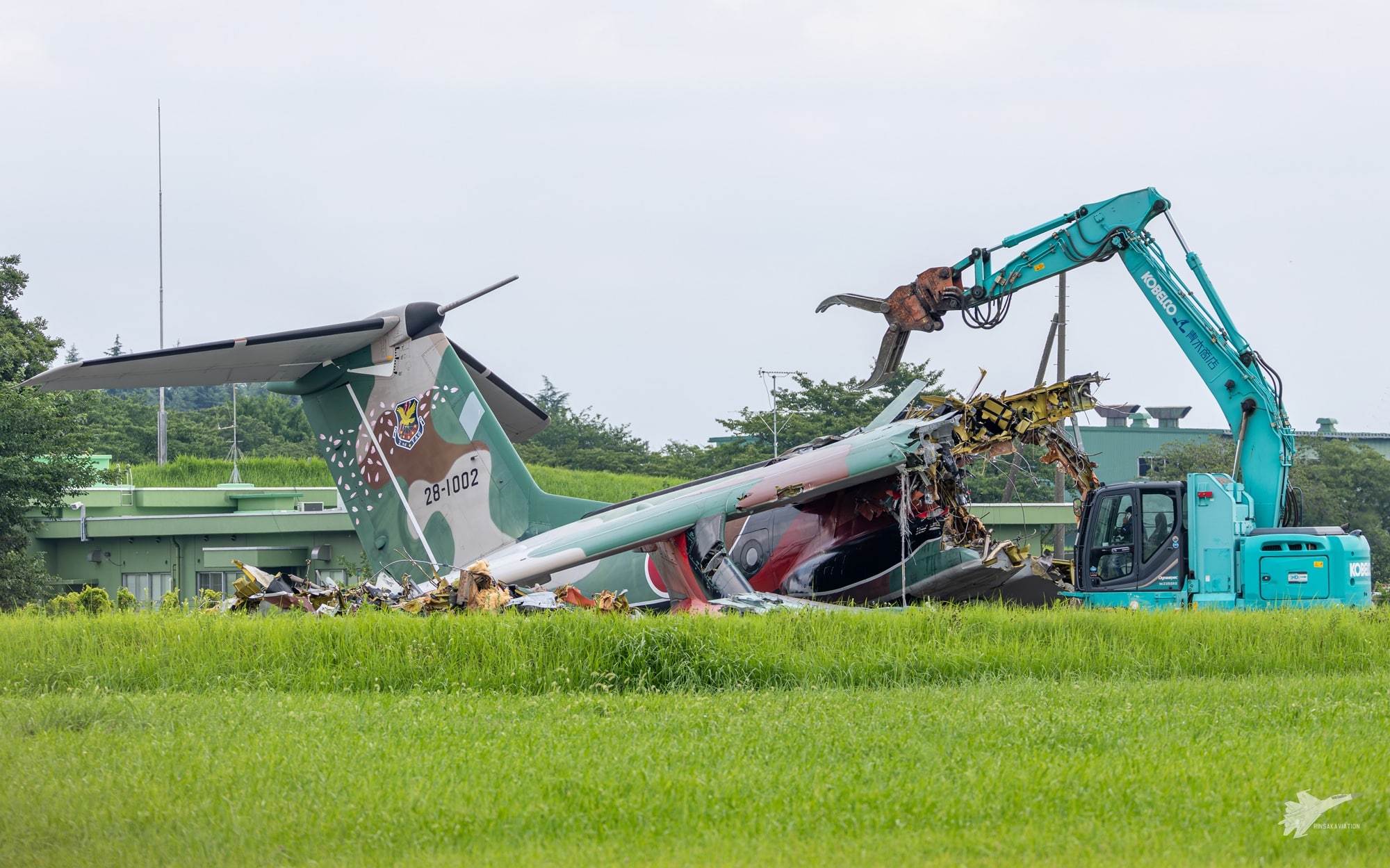
Around 10 A.M., a blue-green hydraulic excavator began to tear into the retired transport, beginning with its left wing before moving onto the cockpit. Interestingly, the dismantling process began without the prior removal of the airplane’s engines – something that is usually done before an aircraft’s demolition following its retirement from the JASDF.
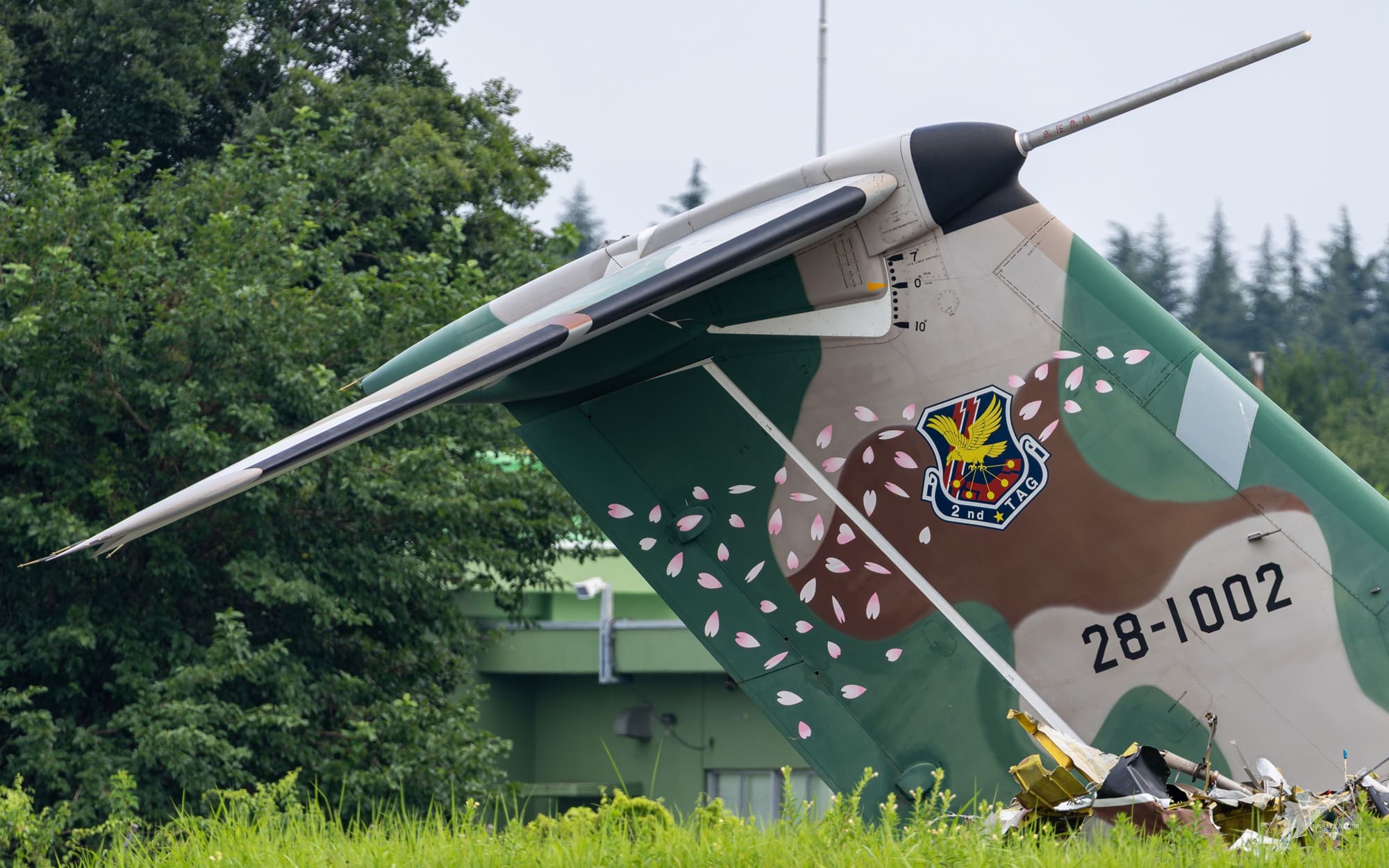
The excavator progressively removed the forward fuselage of the aircraft, before moving onto the left wing and aft fuselage. By the end of the day, much of the aircraft had already been reduced to scrap, leaving just the tail to be scrapped on Jul. 28 – marking an end to the aircraft that had served the JASDF for more than 50 years.
The tail of C-1 28-1002 at the dismantling area of Iruma Air Base in the late afternoon of Jul. 27. The tail was destroyed the next day. | Source: Rin Sakurai
C-1 28-1002
Although it saw the same final fate as most of the other C-1s, 28-1002 was one of the most unique C-1 airframes to ever exist. The aircraft flew for the first time on Jan. 16, 1971, as the second Kawasaki XC-1 prototype 18-1002, before being formally delivered to the JASDF on Mar. 20 of the same year.
During its time at the JASDF’s Air Development and Test Wing (ADTW), the airframe was redesignated 28-1002 and worked alongside prototype 001 in certifying Japan’s first indigenously developed post-war transport aircraft. Although 002 spent most of her life with the ADTW at Gifu Air Base, she was transferred to the 402nd Tactical Airlift Squadron at Iruma at the beginning of Fiscal Year (FY) 2012, where she entered frontline transport service.
XC-1 002 pic.twitter.com/aRvtL8ChPy
— nc39 306 J50 Z naruP (@306Z33) July 28, 2026
In January 2025, three months before the end of FY 2024 and the projected retirement of the C-1, the JASDF unveiled an elaborate Phoenix livery for 002 that made the aircraft the public face of the C-1’s farewell. On the afternoon of Mar. 14, 2025, 002 performed the final flight by an operational transport-configured C-1 – departing Iruma almost simultaneously with the final flight of the C-1 Flying Test Bed (FTB) 001 from Gifu Air Base.
The previous day had also seen the retirement of the only EC-1, bringing the operational careers of all C-1 variants to a close within the span of just two days. Interestingly, although the final two C-1s conducted their last flights on Mar. 14 – well within the Japanese FY 2024, which lasted from April 2024 to March 2025 – the Ministry of Defense’s 2025 Defense White Paper still recorded two C-1 aircraft in inventory for FY2025.
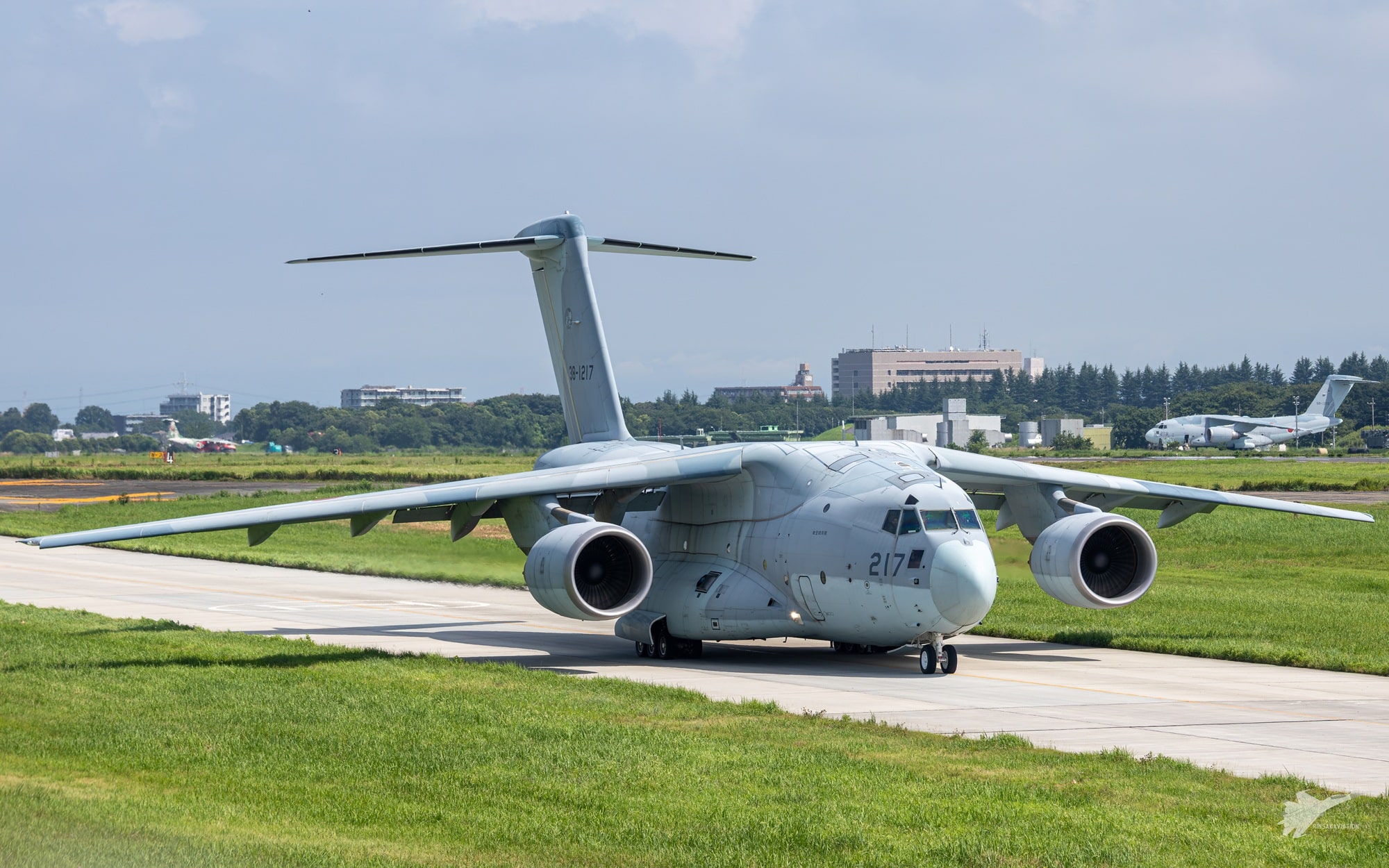
This is thought to reflect administrative procedures rather than continued operations, particularly as both 001 and 002 were stored in flyable condition in the hangars at their respective bases until the conclusion of FY 2025. Some reports indicate that this was done so that the C-1s could be returned to service if operational requirements could not immediately be met by their replacement, the Kawasaki C-2.
A C-2 at Iruma on the morning of Jul. 27 before the C-1’s dismantling process began. The C-1 28-1002 is visible in the background, alongside another C-2. | Source: Rin Sakurai
C-1s on Display
Due to budgetary constraints, both 28-1001 and 28-1002 – the two prototypes of the C-1 program – were ultimately scrapped rather than being preserved for museum display, despite hopes among many aviation enthusiasts that they would be retained. The EC-1, the other special variant of the C-1 besides the XC-1s, still remains at Iruma but is expected to be dismantled in the near future in a similar fashion to 28-1002.
私の悲願だった銀ちゃんの保存は叶わなかったけど、部品だけでも残せてよかった・・・ pic.twitter.com/50pqK2a5ka
— 林信宏 (@rinkun360408) July 21, 2026
Only a small number of C-1s have been preserved in complete form. Currently, the only aircraft officially displayed is 38-1003, which is exhibited in the outdoor display area at Miho Air Base, one of the type’s principal operating bases during its service career. While 28-1001, the C-1FTB and the program’s first prototype, was dismantled in March 2026, some parts were removed beforehand and its port-side paratrooper door is now displayed at the Gifu Kakamigahara Aerospace Museum, located adjacent to Gifu Air Base.
Another surviving aircraft, 08-1030, is currently positioned on the apron outside Hamamatsu Air Park. Although it has not yet been formally accessioned into the museum’s collection, it is parked immediately outside the museum’s main exhibition hall and is clearly visible to visitors through its large windows. It is widely expected to become part of the museum’s permanent display in the near future.
Kawasaki C-1 08-1030
航空自衛隊浜松広報館 エアパーク
2025/12/27 pic.twitter.com/vMGyd6cFQP
— HOKU (@Syuusui3432) December 28, 2025
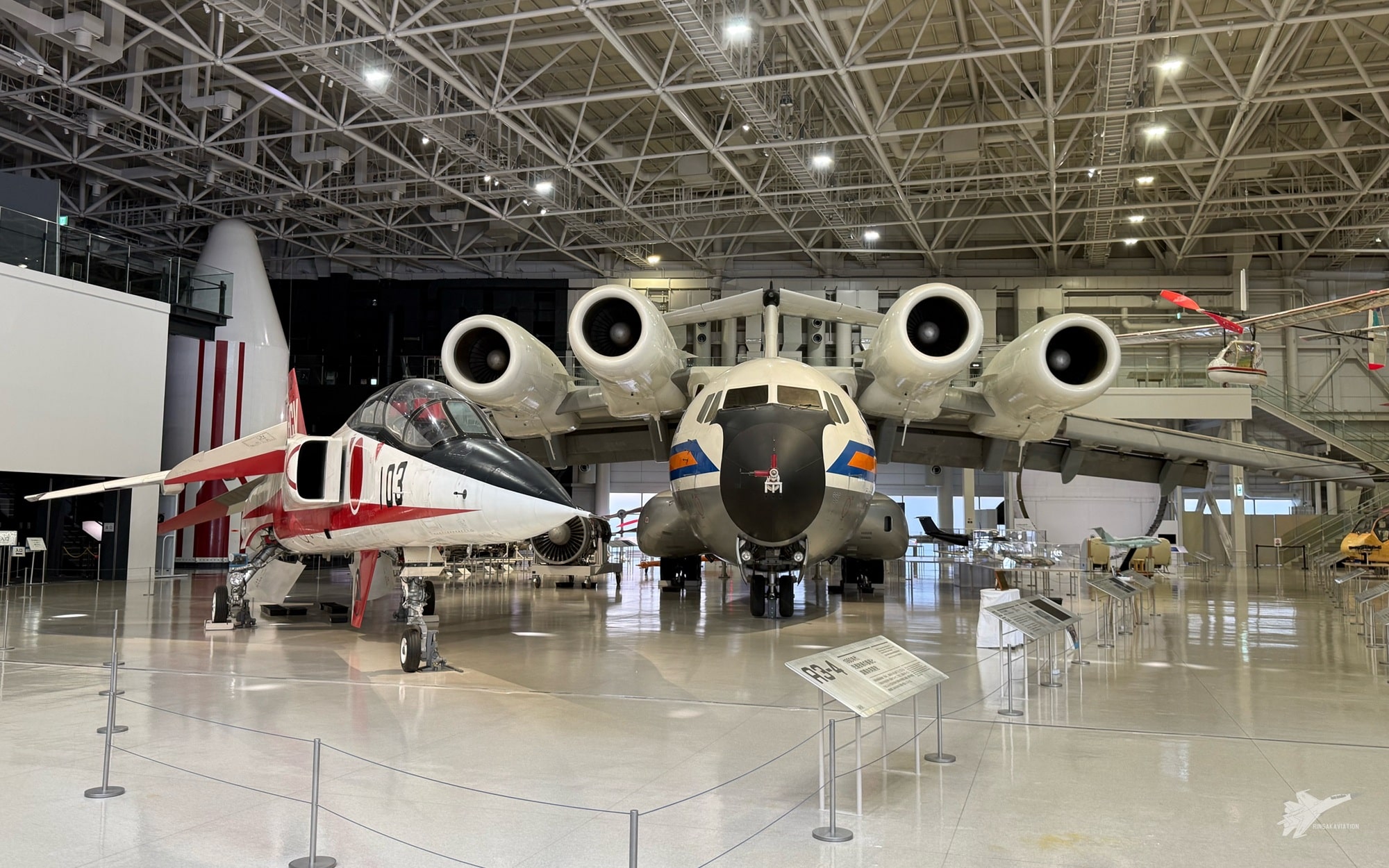
Furthermore, the Gifu Kakamigahara Aerospace Museum also houses the Asuka Quiet Short Take Off and Landing (QSTOL) test airframe, which was based upon the C-1. Although not technically considered a C-1 or a modified version thereof – the aircraft had a separate developmental budget from the 31 C-1s – its family lineage can easily be identified.
The Asuka QSTOL aircraft displayed at the Gifu Kakamigahara Aerospace Museum. The C-1 lineage is certainly noticeable. | Source: Rin Sakurai