RAAF F/A-18F Super Hornet Spotted with AIM-260 During Gray Flag Test Event
A RAAF Super Hornet was spotted with an inert AIM-260 missile during the Gray Flag 2026 test event, few weeks after Australia announced the procurement of the new weapon.
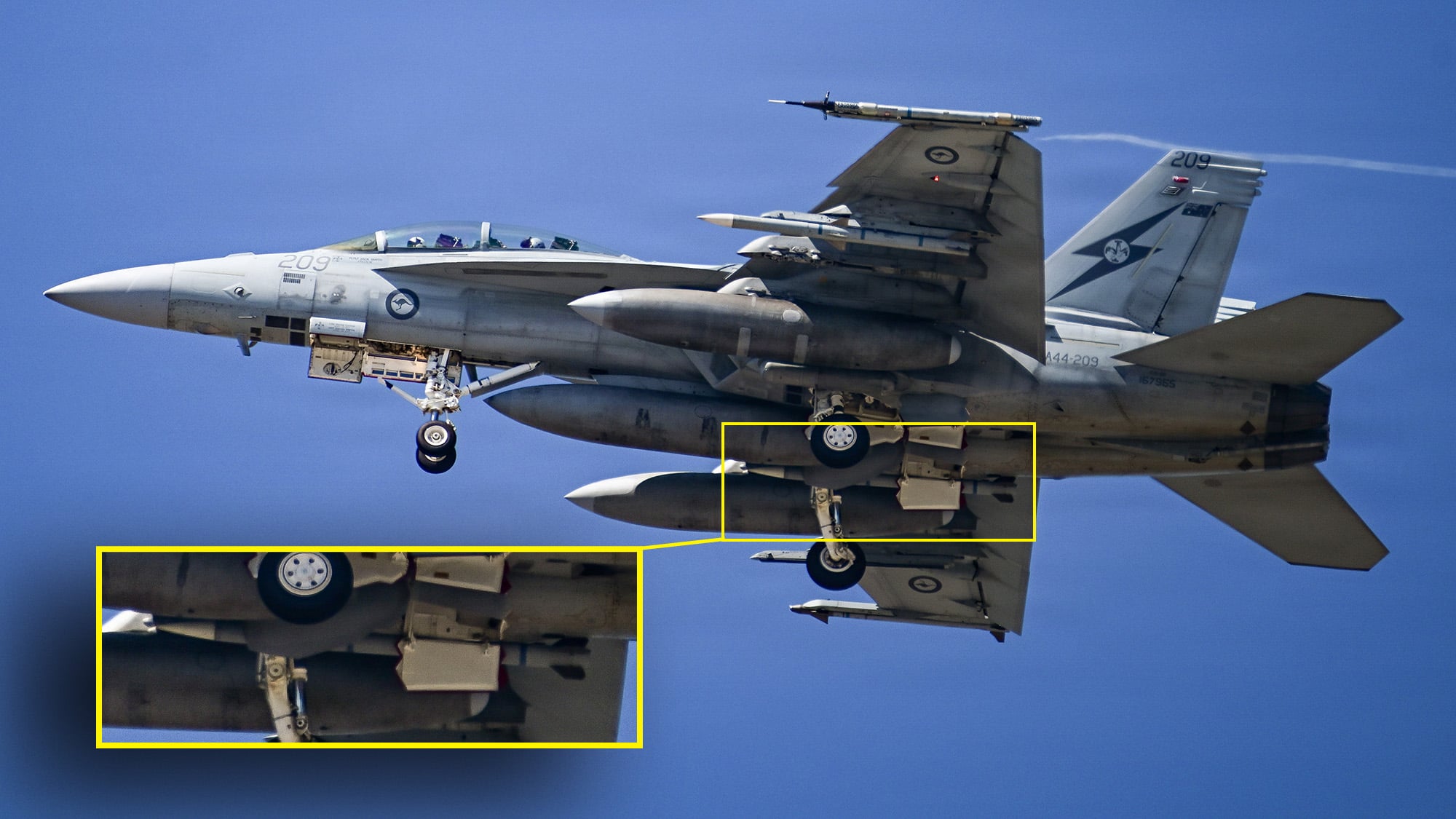
A Royal Australian Air Force F/A-18F Super Hornet was spotted carrying an inert AIM-260 Joint Advanced Tactical Missile (JATM) during the Gray Flag 2026 large-force test event at Naval Base Ventura County Point Mugu. The photo was captured on Sept. 11, 2026, although it was only released on Sept. 30.
The sighting comes few weeks after Australia announced that it would become the first country to operate the AIM-260 JATM outside the United States. In August 2026, the Australian government said it is investing almost $736 million to acquire the new missile via foreign military sales (FMS).
The AIM-260 will be first integrated onto Australia’s F/A-18F Super Hornet, followed by the F‑35A Lightning II and EA-18G Growler. The government said “The acquisition of the AIM-260 JATM will provide Air Force platforms with a credible deterrent against airborne targets, complementing existing air-to-air missile capabilities and other surface-based missile capabilities across the Australian Defence Force (ADF).”
AIM-260 on Australian Super Hornet
The photo captured at Naval Base Ventura County Point Mugu shows the F/A-18F Super Hornet, assigned to No. 1 Squadron, flying with a mixed loadout of inert air-to-air weapons. Similarly to the first sighting on a U.S. Navy Super Hornet, the AIM-260 can be seen installed on the weapon station 7, also known as “cheek station,” on the exterior of the air intake.
A Royal Australian Air Force F/A-18F Super Hornet assigned to No. 1 Squadron takes flight at Naval Base Ventura County Point Mugu during Gray Flag 2026, Sept. 11, 2026. | Source: U.S. Navy photo by Dana Rene White
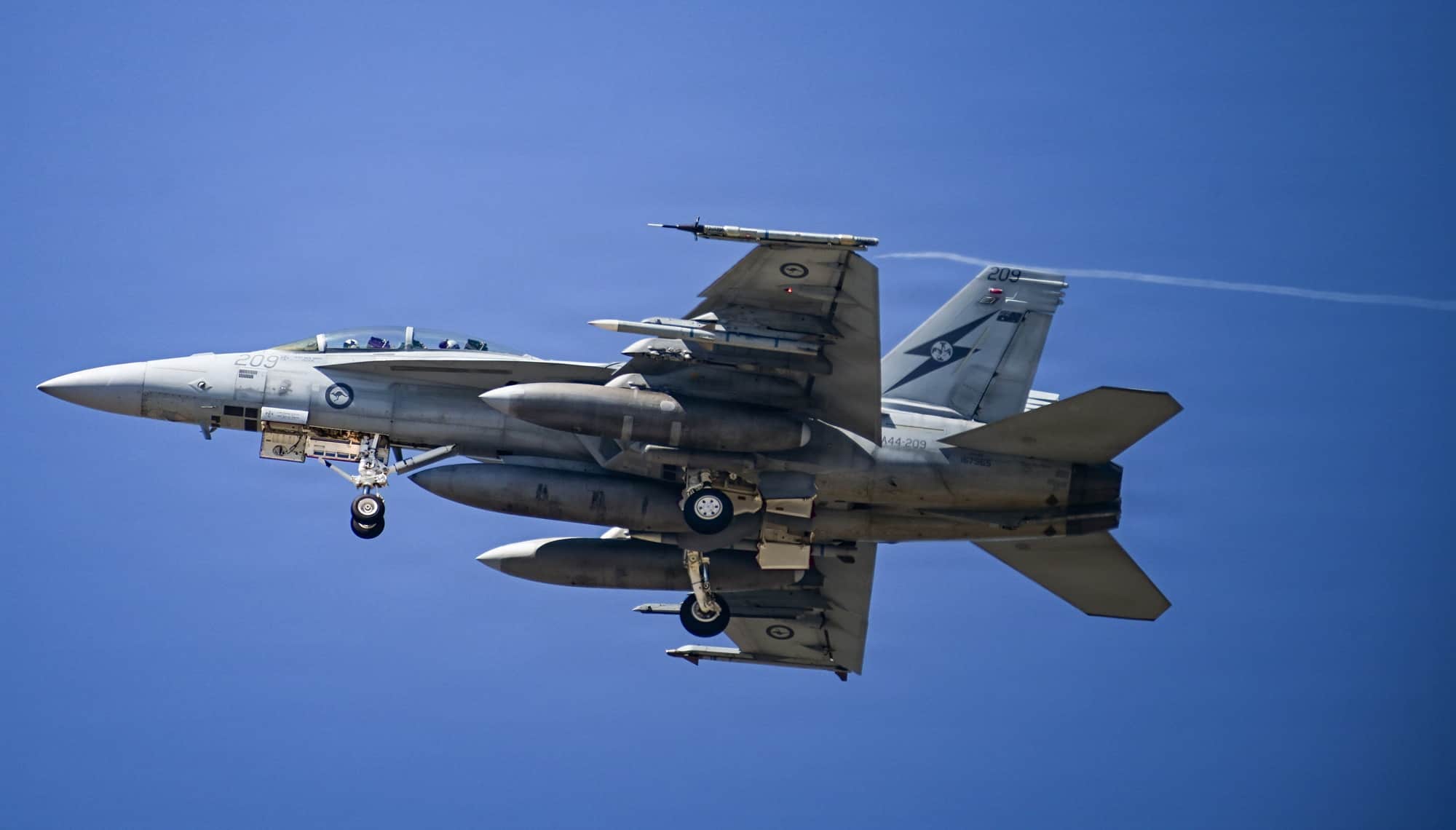
The loadout also includes a CATM-9X (the inert training variant of the AIM-9X) on the right wingtip, as well as a CATM-120 (the inert training variant of the AIM-120 AMRAAM) on the weapon station 2, the left wing’s outermost pylon. The payload is completed by three external fuel tanks, a Tactical Combat Training System (TCTS) pod on the left wingtip and the AN/ASQ-228 ATFLIR targeting pod on the other cheek station.
Details about the test mission are not available, although there are no reports of live firing activity with the new weapon. The test mission might have involved the captive carry of the JATM in a representative operational scenario.
Gray Flag 2026
Gray Flag, held annually at Naval Base Ventura County Point Mugu, is the naval aviation test community’s premier large-force test event. This year’s edition, which ended on Sept. 25, was the largest to date, according to the Navy, with more than 750 sorties flown.
Gray Flag 2026 was hosted by the Naval Test Wing Pacific and Air Test and Evaluation Squadron (VX) 9, which led test execution with Naval Air Warfare Center Weapons Division. The latter manages the Gray Flag program and operates the Point Mugu Sea Range, a 36,000-square-mile instrumented range.
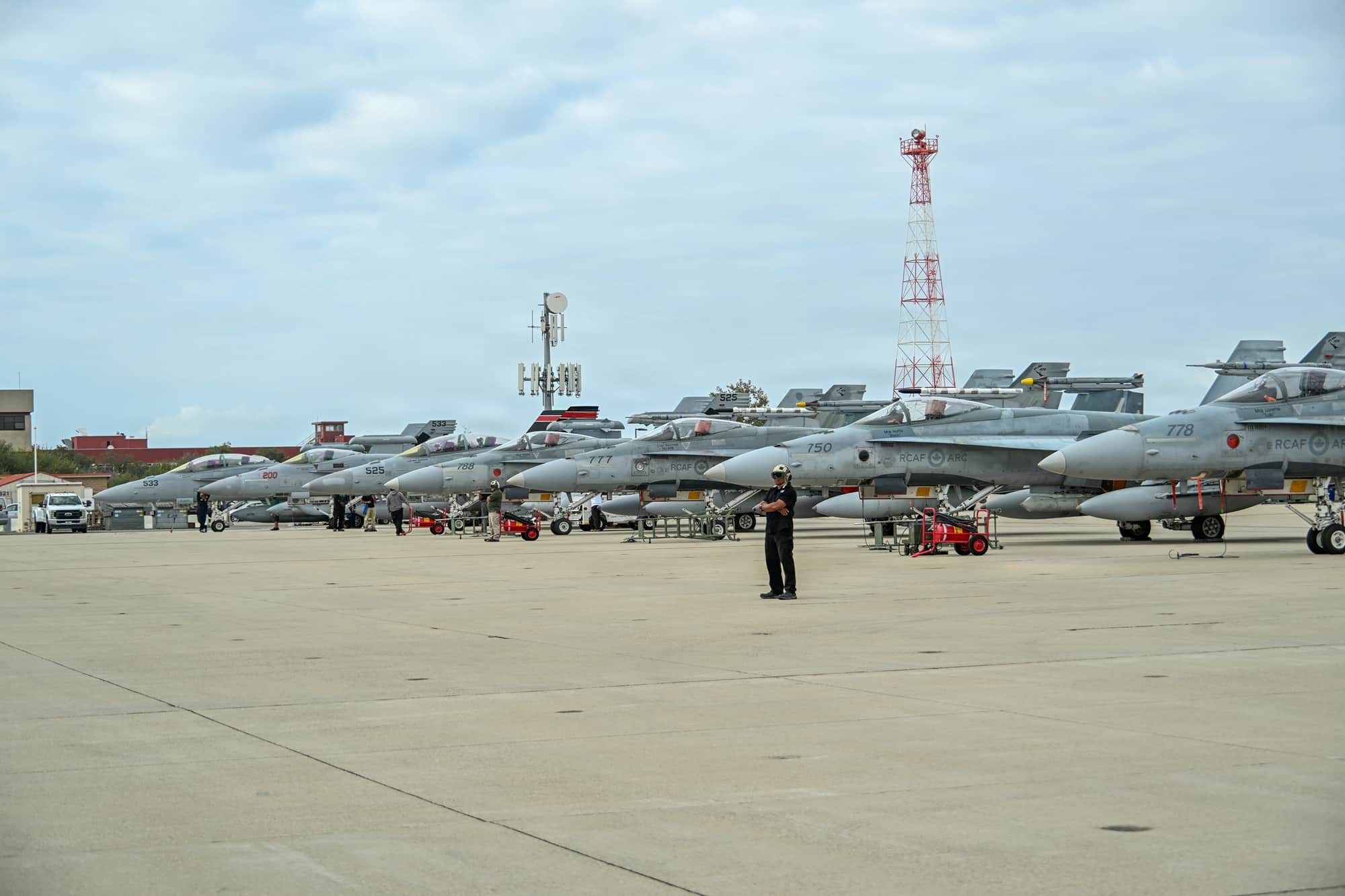
Royal Canadian Air Force CF-18 Hornets sit on the flight line at Naval Base Ventura County Point Mugu, Sept. 30, 2026. | Source: U.S. Navy photo by Katie Archibald
“Our range, combined with other test and training ranges around us, gives us the space and instrumentation to test new systems the way the joint force will use them,” said Rear Adm. Keith Hash, NAWCWD commander. “We want to find the problems here, fix them here and make sure what we send to the fleet works when the warfighter needs it.”
The service said the two-week event drew more than 3,000 participants from more than 150 organizations, and crews logged more than 2,000 flight hours covering hundreds of multi-domain test objectives for the fleet and joint force. U.S. Navy and Air Force test teams were joined by the Royal Australian Air Force, Royal Canadian Air Force and Royal Air Force.
“We leave much more informed with respect to future capabilities that enable Australia to shape our requirements for future projects and future platform upgrades that increase our lethality and survivability,” said RAAF Wing Commander Trent Baldry, commanding officer of No. 1 Squadron.
AIM-260 JATM
The existence of the AIM-260 Joint Advanced Tactical Missile was first revealed in 2019 by the Air Force, who is jointly developing the missile with the Navy. However, it was also revealed that the program had been ongoing for more than two years in 2019, meaning the program might have started in 2017 or earlier.
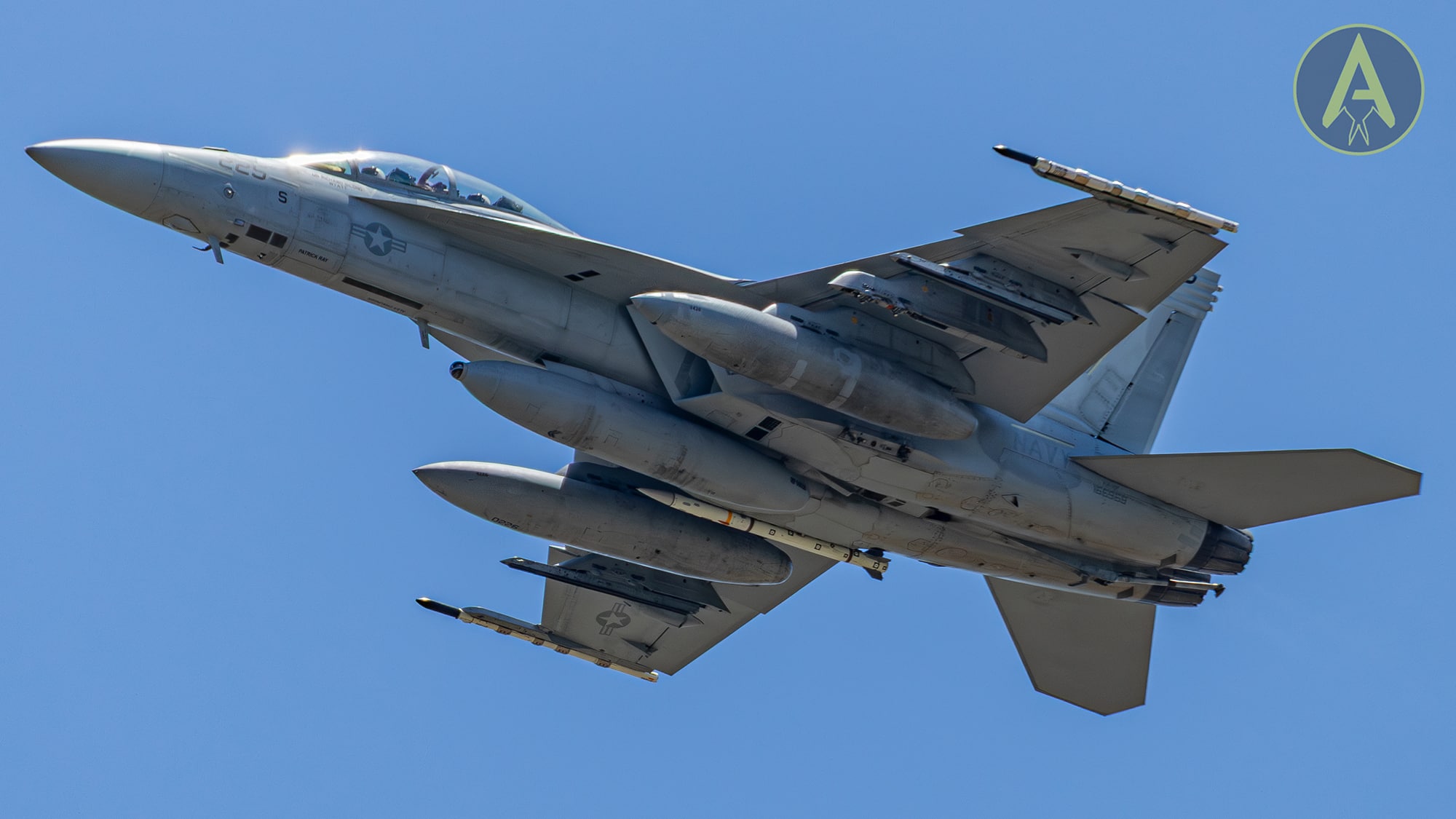
VX-31 F/A-18F carrying what appears to be an AIM-260 missile at Eglin AFB on May 13, 2026. | Source: Jonathan Tweedy
The AIM-260 is intended to serve as the primary long-range air-to-air weapon of both the U.S. Air Force and U.S. Navy in the coming years, becoming the successor to the AIM-120 Advanced Medium-Range Air-to-Air Missile (AMRAAM). The latter will continue to be developed, complementing the AIM-260.
The new missile will be compatible with the AMRAAM (Advanced Medium Range Air-to-Air Missile) dimensions, but with greater range, and is planned to be carried in the F-22 weapons bay and on the F/A-18 at first, with the F-35 to follow. The AIM-260 is also expected to be integrated on the U.S. Air Force’s upcoming unmanned Collaborative Combat Aircraft (CCA).
The missile is being developed and produced by Lockheed Martin. When the weapon was first unveiled, reports mentioned that AIM-260 production would overtake AIM-120 production by 2026, however, with the program’s details being highly classified and the recent boosts in the AMRAAM’s production, it is unclear if this goal still stands.
Initially, it was said the AIM-260 was also meant to counter the threat posed by the Chinese PL-15 and PL-17 missiles. The military in fact said the goal was to avoid foreign threats being able to outrange the AIM-120.
The project is an advanced state, with official saying in 2019 that flight tests would start in 2021 and Initial Operational Capability was expected in 2022, although the current timeline is unknown. Documents later showed that flight testing of the AIM-260 began as early as 2020.