U.S. Air Force Tests Mk21A Reentry Vehicle for Sentinel ICBM
The Mk21A reentry vehicle, designed to be carried atop the LGM-35A Sentinel, continues to be tested as the Air Force steadily pushes the new ICBM’s development ahead of a Critical Design Review and first test flight in 2027.
A Mk21A reentry vehicle (RV) was tested aboard a Minotaur I rocket on Oct. 9, 2026, from Vandenberg Space Force Base, California, the Air Force Nuclear Weapons Center (AFNWC) announced, further advancing the development of components of the Sentinel Inter-Continental Ballistic Missile (ICBM). The trial was described as an “in-flight environmental test.”
These tests are usually meant to generate general data on the surrounding physical conditions like heat, vibration, aerodynamic load, friction and the impact on internal physical components the RV might experience.The data is then used to refine computer simulation models and better predict the system’s performance – in this case the Mk21A RV – which is in the Engineering Manufacturing Development (EMD).
Regarding the rocket, the Minotaur I is an expendable launch system derived from the Minuteman II missile, and is often used to launch small U.S. government satellites. Additionally, it is also used for testing activities which do not require the use of a complete ICBM.
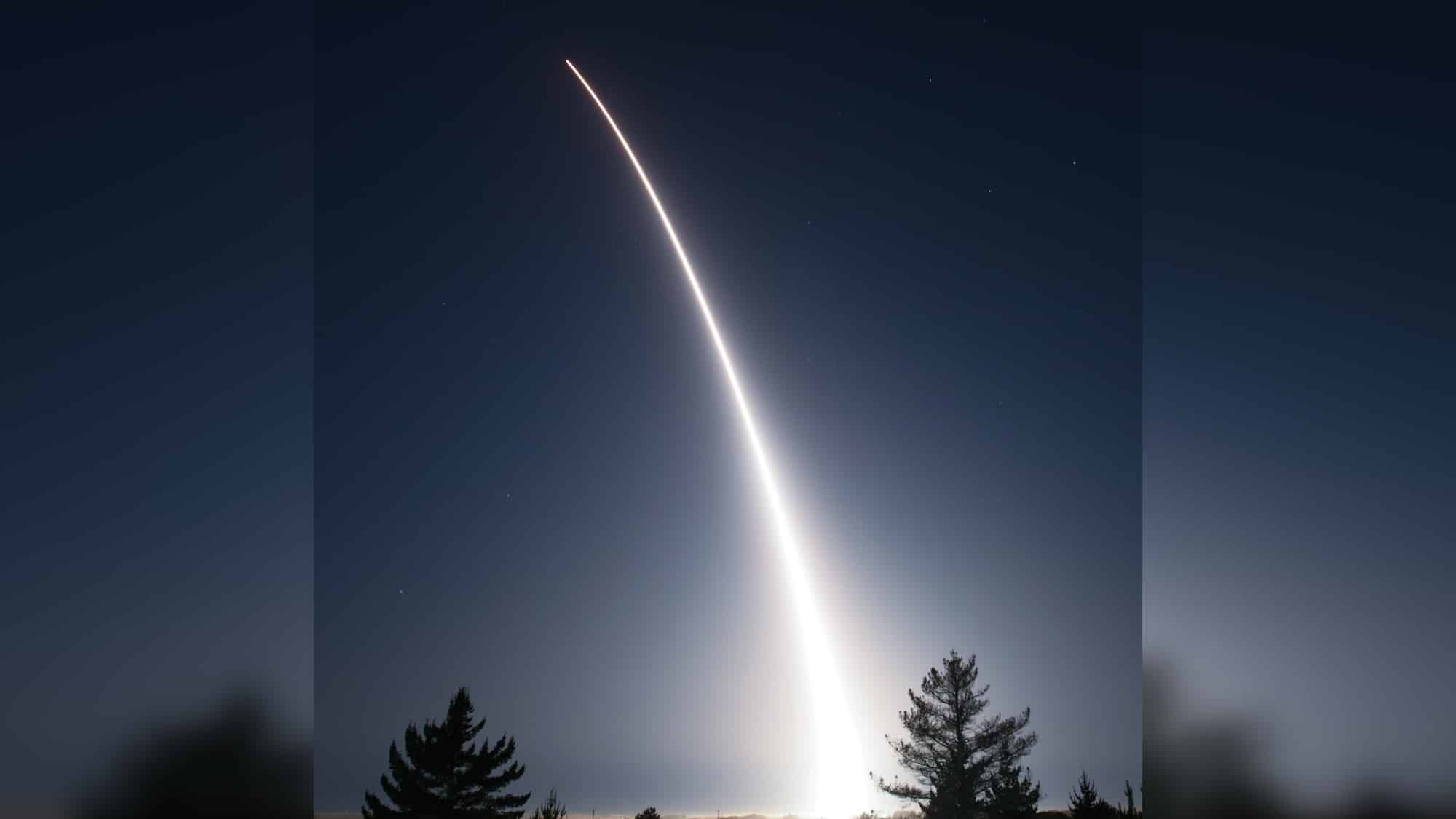
In fact, this is not the first time the Mk21A RV has been tested aboard the Minotaur I, with one trial taking place from Vandenberg SFB on June 17, 2024. The press release did not provide an image of the latest test, but rather shared a picture of the 2024 trial.
The U.S. Air Force recently flight tested its new Mk21A reentry vehicle, which is being developed for the future LGM-35A Sentinel ICBM.
The unarmed vehicle was launched aboard a Northrop Grumman-provided Minotaur I rocket from Vandenberg Space Force Base, California, in an in-flight environmental test overseen by the U.S. Space Force’s Rocket Systems Launch Program.
Minotaur rockets are used to test new payload technologies in operationally realistic environments.
Lockheed Martin is building the Mk21A under a contract for the engineering and manufacturing development (EMD) phase.
Once it reaches full operational capability, it will be integrated onto the Sentinel.
Sentinel, formerly the Ground Based Strategic Deterrent (GBSD), is being developed by Northrop Grumman and will replace the Air Force’s LGM-30G Minuteman III missiles.
— Comandante (@commandante_) October 14, 2026
The service said that, “after attaining full operational capability, the Mk21A RV will be integrated on a future intercontinental ballistic missile (ICBM).” The term “future” avoids explicit mention of the LGM-35A Sentinel ICBM, although the service already confirmed the relation between the two systems.
The Mk21A is being developed to accommodate the W87-1 nuclear warhead for the Sentinel program. In a multiple independently targetable reentry vehicle (MIRV) configuration, an ICBM can deploy multiple reentry vehicles, each carrying a warhead.
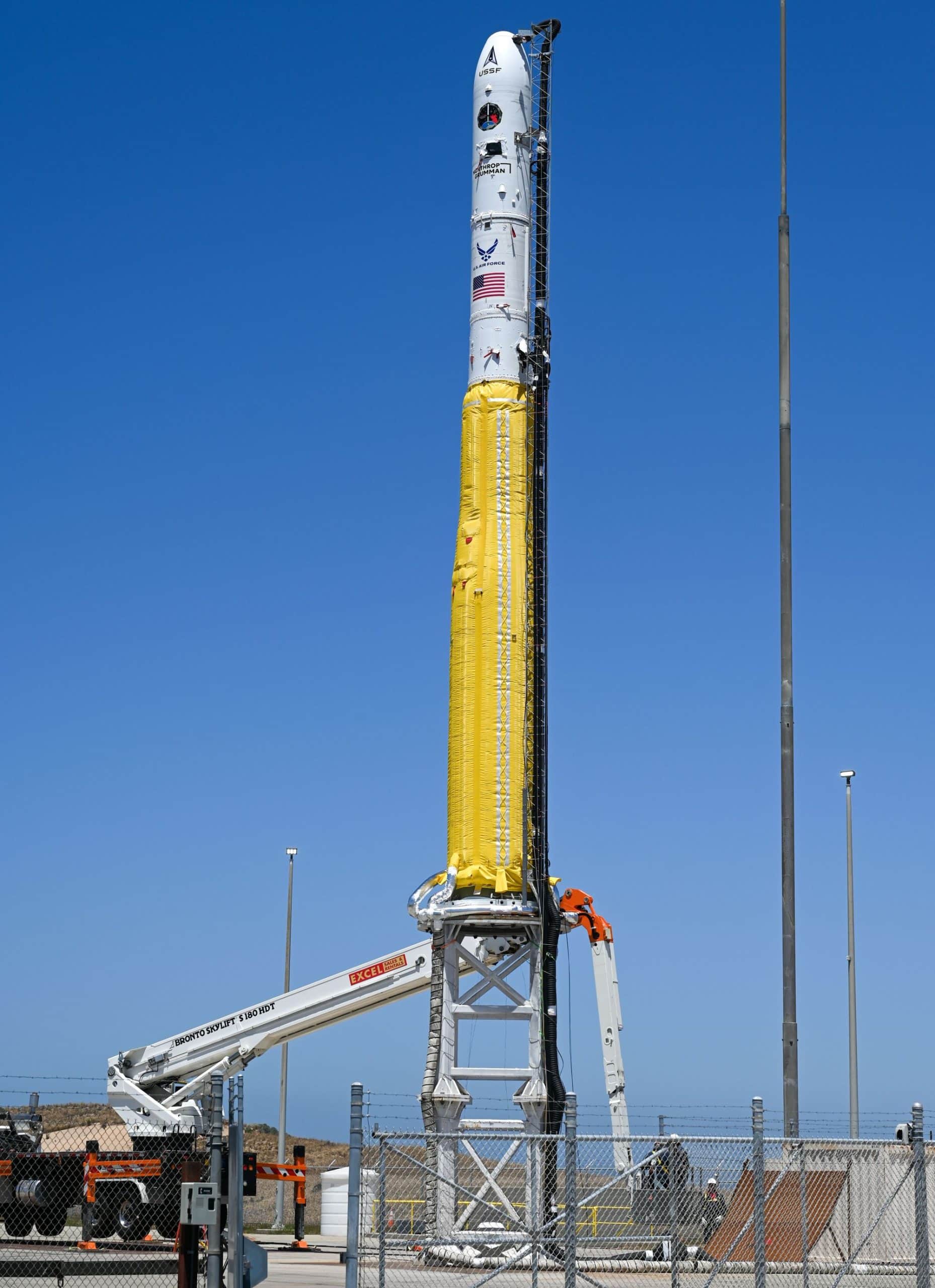
The test of the RV follows the announcement of the Sentinel ICBM being vertically stacked at Vandenberg SFB last month, in anticipation of its first test launch next year. This will be preceded by a Critical Design Review (CDR) for the entire Sentinel system by March 2027.
A Minotaur I rocket carrying an unarmed Mk21A reentry vehicle is prepared for launch at Vandenberg Space Force Base, Calif., June 16, 2024. | Source: U.S. Air Force/Senior Airman Joshua LeRoi
The test launch
According to the AFNWC, the unarmed Mk21A reentry vehicle tested from Vandenberg SFB on the morning of Oct. 9 aboard a Northrop Grumman Minotaur I was part of “an in-flight environmental test supporting the development of the Air Force’s new Mk21A RV.” The test was overseen by the U.S. Space Force’s Rocket System’s Launch Program.
The release explained that “Minotaur launch vehicles support testing and demonstration of new payload technologies in operationally realistic environments.” AFNWC also confirmed that “The Mk21A RV is currently under contract with Lockheed Martin for its engineering and manufacturing development phase.”
Maj. Gen. William Rogers, U.S. Air Force’s portfolio acquisition executive for ICBMs and AFNWC director of ICBM systems, described the Mk21A as “crucial to modernizing our ICBMs in response to the rapidly changing global threat picture posed by our adversaries.” He further said “The reentry vehicle’s development will ensure a safe, secure and effective deterrent for generations to come.”
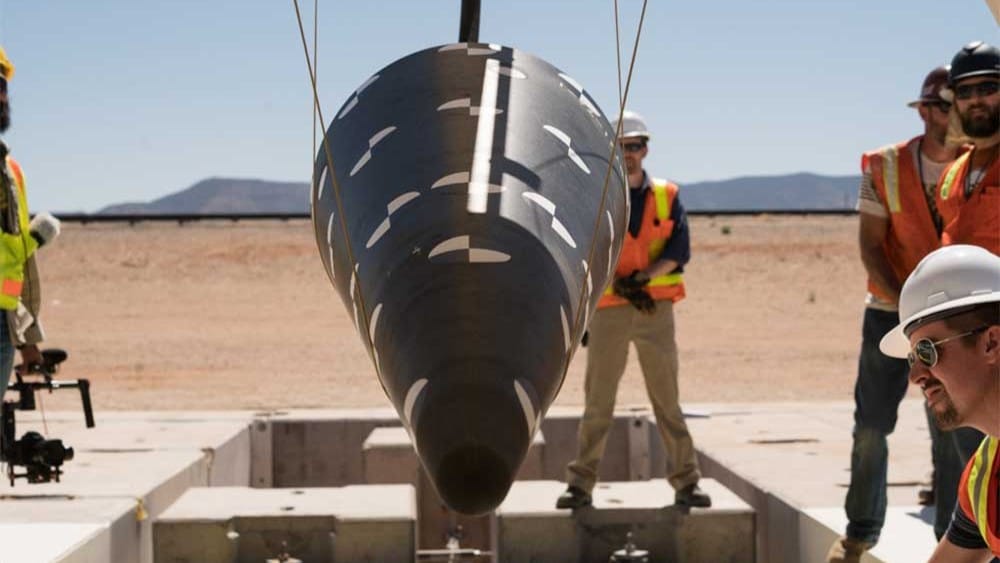
An April 18, 2024 image released by Sandia National Laboratories showing preparations for a test of a Mark 21 fuze, designed for deployment on both the Minuteman III and the upcoming Sentinel ICBM. | Source: Sandia National Laboratories
Brig. Gen. Amanda Okeson, program manager at the AFNWC’s ICBM Systems Directorate, said “investment in modernization of the ICBM mission remains a top priority for the Air Force.”
The Air Force Nuclear Weapons Center is the lead for the Air Force’s Mk21A reentry vehicle’s acquisition effort. The center is responsible for synchronizing all aspects of nuclear materiel management on behalf of Air Force Materiel Command (AFMC), while supporting the Air Force Global Strike Command (AFGSC).
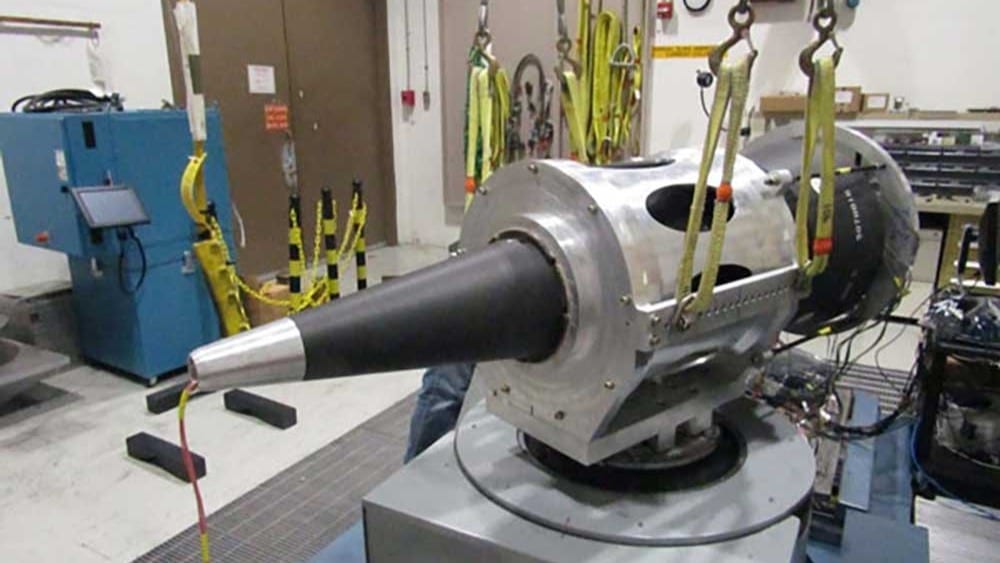
A Mark 21 Fuze in the laboratory. | Source: Sandia National Laboratories
Mk21A contracts and Sentinel ICBM
For the Mk21A Reentry Vehicle, the AFNWC had awarded Lockheed a $996 million contract in October 2023, followed by an additional $453 million contract modification in November 2025. An April acquisition report released by the Pentagon in September said that the last contract modification was part of a new baseline, intended to “decouple [the Mk21A’s] schedule from external programs and continue development with an updated, more resilient plan.”
The aforementioned Pentagon acquisition report describe the Mk21A RV’s components as the “shape stable nose tip; high impulse transducer; arming and fuzing subsystem (AFS); aeroshell forward section, body section, and rear cover; radio frequency subsystem with antennas; RV spin subsystem; in-flight disconnect cable; and other electrical cables.”
We’re moving with speed and scale to deliver Sentinel to the @USAirForce – accelerating the path to flight test with a fully integrated Sentinel missile assembly and successful Critical Design Review. Learn more: https://t.co/neDmHIVoHF https://t.co/67b1HMqLVW
— Northrop Grumman (@NGCNews) September 14, 2026
As The Aviationist has reported previously, the Sentinel program has experienced its share of cost overruns, compounded by the relatively recent decision not to re-use existing Minuteman silos. The price escalation had also triggered a Congressional review under the Nunn-McCurdy Act, which qualifies a project to be cancelled if the cost overshoots 25% of the original baseline, until the Department of War certifies to lawmakers that the program meets criteria to continue.