USAF Adopts Contracted HondaJets for B-1 Aircrew Currency
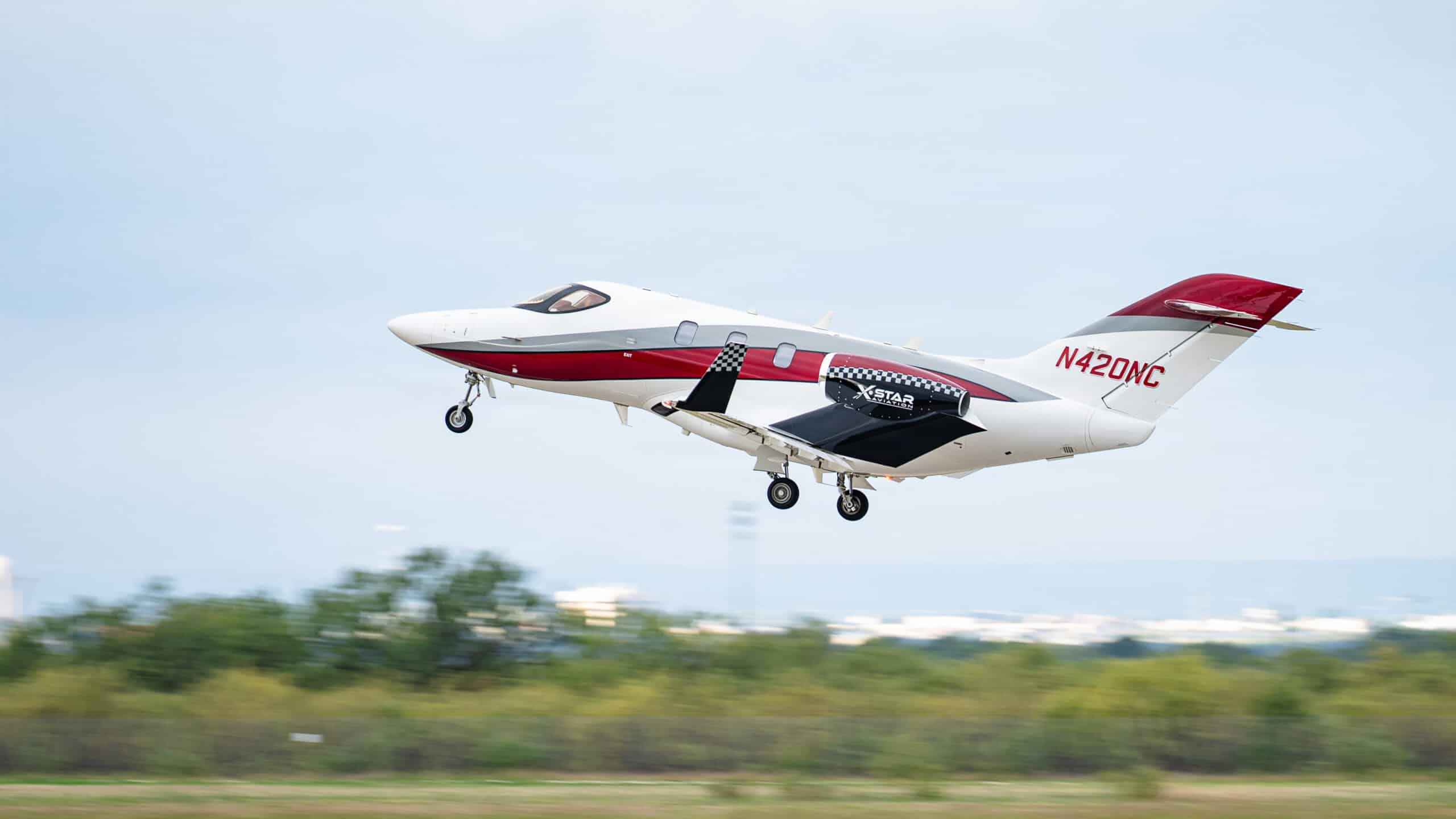
The first B-1B Lancer aircrews began flying commercially-provided HA-420 HondaJet aircraft as part of the Bomber Supplemental Trainer for Aircrew Readiness (BSTAR) initiative in early November.
The U.S. Air Force has partnered with private firm XSTAR Aviation to introduce contractor-owned, contractor-operated Honda HA-420 HondaJet light executive jets into the fold to support ongoing the training and currency requirements of personnel assigned to fly the B-1B Lancer strategic bomber.
Operating from Abilene Regional Airport, located just a short drive from Dyess Air Force Base, the civilian jets allow B-1 aircrews to train for general flight operations without the need to take operational B-1B Lancer aircraft out of circulation for active operational duties or higher end training exercises.
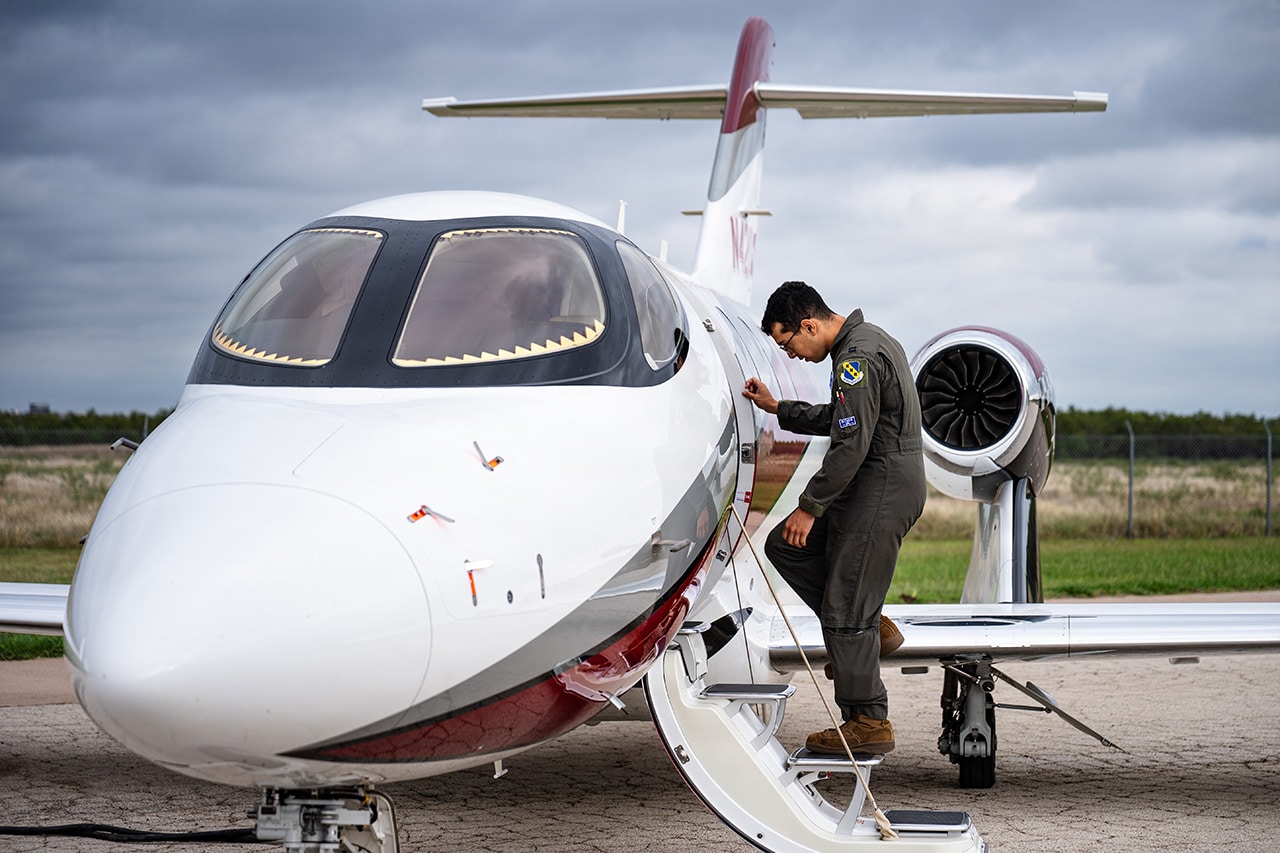
A U.S. Air Force B-1B Lancer pilot exits a contractor-operated aircraft following the inaugural military training flight of the Bomber Supplemental Trainer for Aircrew Readiness initiative at Abilene Regional Airport, Texas, Nov. 2, 2026. Each prototype sortie is tracked and debriefed to evaluate training effectiveness and assess how supplemental flight hours support long-term aircrew readiness. | Source: Senior Airman Jade M. Caldwell
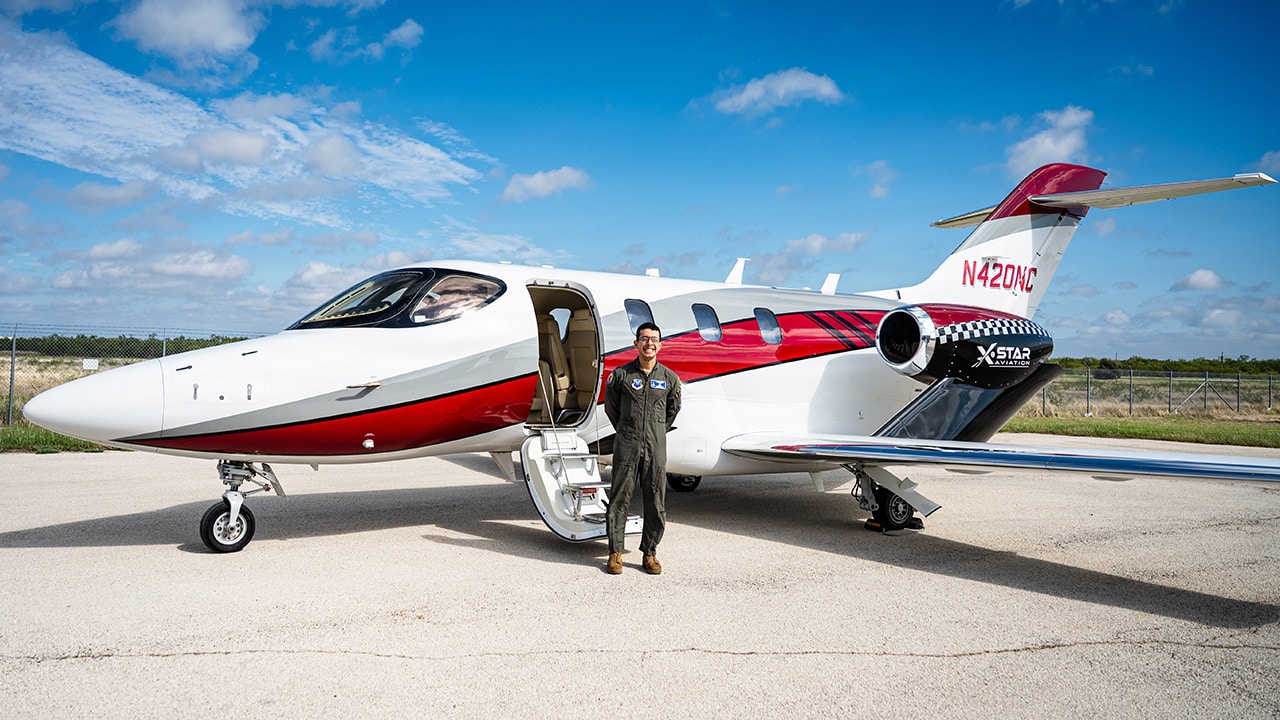
This arrangement is similar in nature to the T-38 Talon jets operated from Whiteman and Beale in support of the B-2 Spirit and U-2 Dragon Lady fleets, though differs in that the surrogate aircraft here are civilian-owned and registered.
“Combat-ready aircrews are built on foundational airmanship, sound decision-making and time in the air,” said General Stephen L. Davis, Commander of Air Force Global Strike Command (AFGSC). “We expect BSTAR’s innovative approach will allow us to better develop and experience our pilots by providing additional flying opportunities that complement the specialized training they receive in the B-1 at a much lower cost.”
Major General Ty Neuman, commander of the U.S. Eighth Air Force (which oversees AFGSC’s B-1, B-2, and B-52 fleets), added: “Our B-1 aircrews must be prepared to execute complex missions that demand precision, discipline and sound judgment. BSTAR increases airmanship, which translates to safer, more effective and lethal B-1 operators, while preserving B-1 flight hours for our specialized, mission-specific training.”
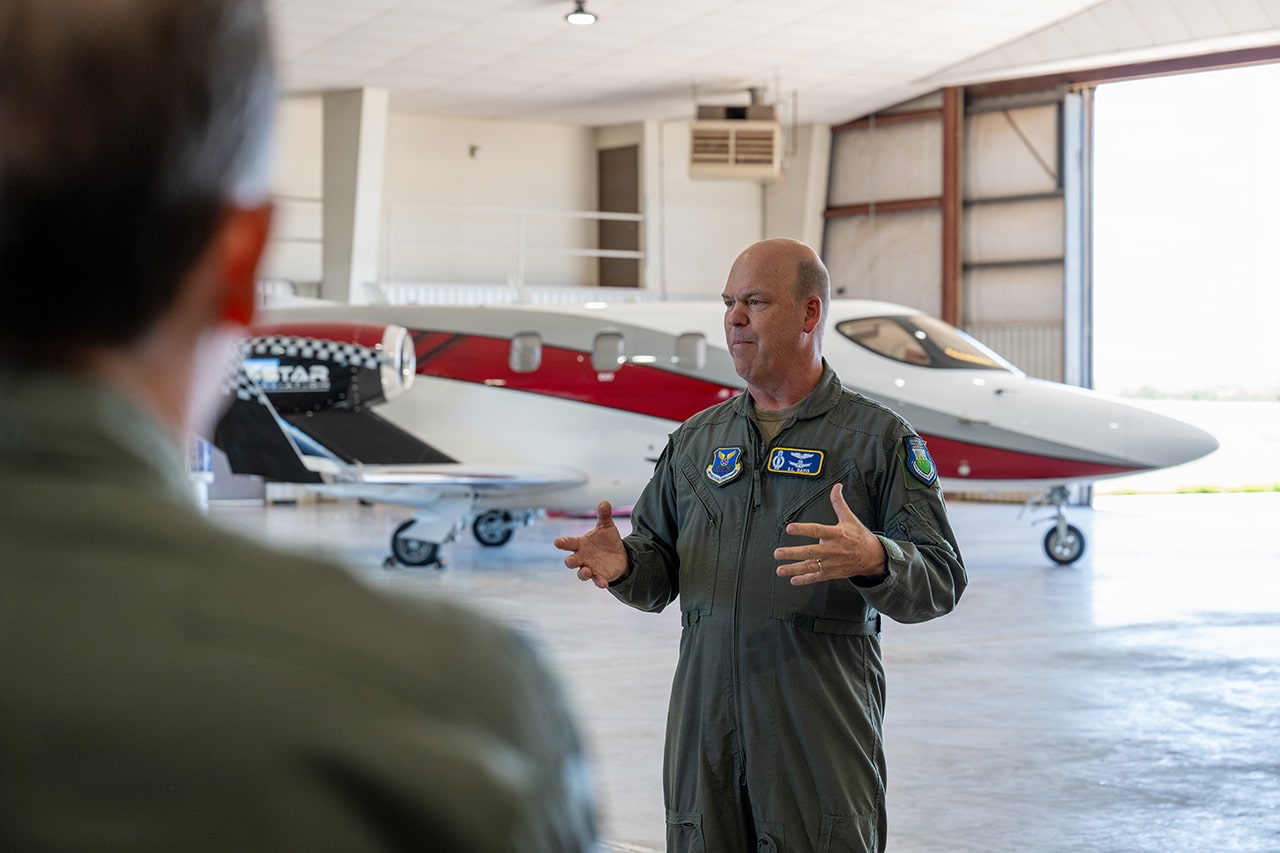
U.S. Air Force Gen. S.L. Davis, commander of Air Force Global Strike Command, discusses the Bomber Supplemental Trainer for Aircrew Readiness initiative with Airmen and XSTAR Aviation contractor personnel at Abilene Regional Airport, Texas, Nov. 4, 2026. | Source: U.S. Air Force photo by Senior Airman Adrien Tran
Modern flight simulators have allowed a lot of training to be offloaded from physical aircraft, although the implementation of these simulators has often come alongside reductions in the number of available airframes. As realistic as these simulators can be, they are also still limited by nature compared to real world flight where pilots must cope with constantly changing weather, air traffic, and crew resource management (CRM) dynamics.
“Flying in different conditions, working through instrument procedures and making decisions in real time reinforces skills we rely on as pilots,” a B-1 pilot said. “Having another way to develop that foundation helps make the most of our training in the B-1.”
Commander of the 7th Bomb Wing Colonel Robert Sturgill said: “I want our pilots flying as much as possible. Every additional hour they spend in the air builds experience they bring back to the B-1. BSTAR gives us that opportunity without taking away from the training they need in the bomber.”
As well as freeing up valuable flight hours on the B-1 fleet, the cost per flight hour of the HondaJet is significantly lower than that of the massive Lancer with its complex swing-wing mechanism and four afterburning GE F101 turbofans. With the HondaJets’ maintenance being the responsibility of the private contractor, an additional burden is lifted from the shoulders of the personnel who maintain the B-1s.
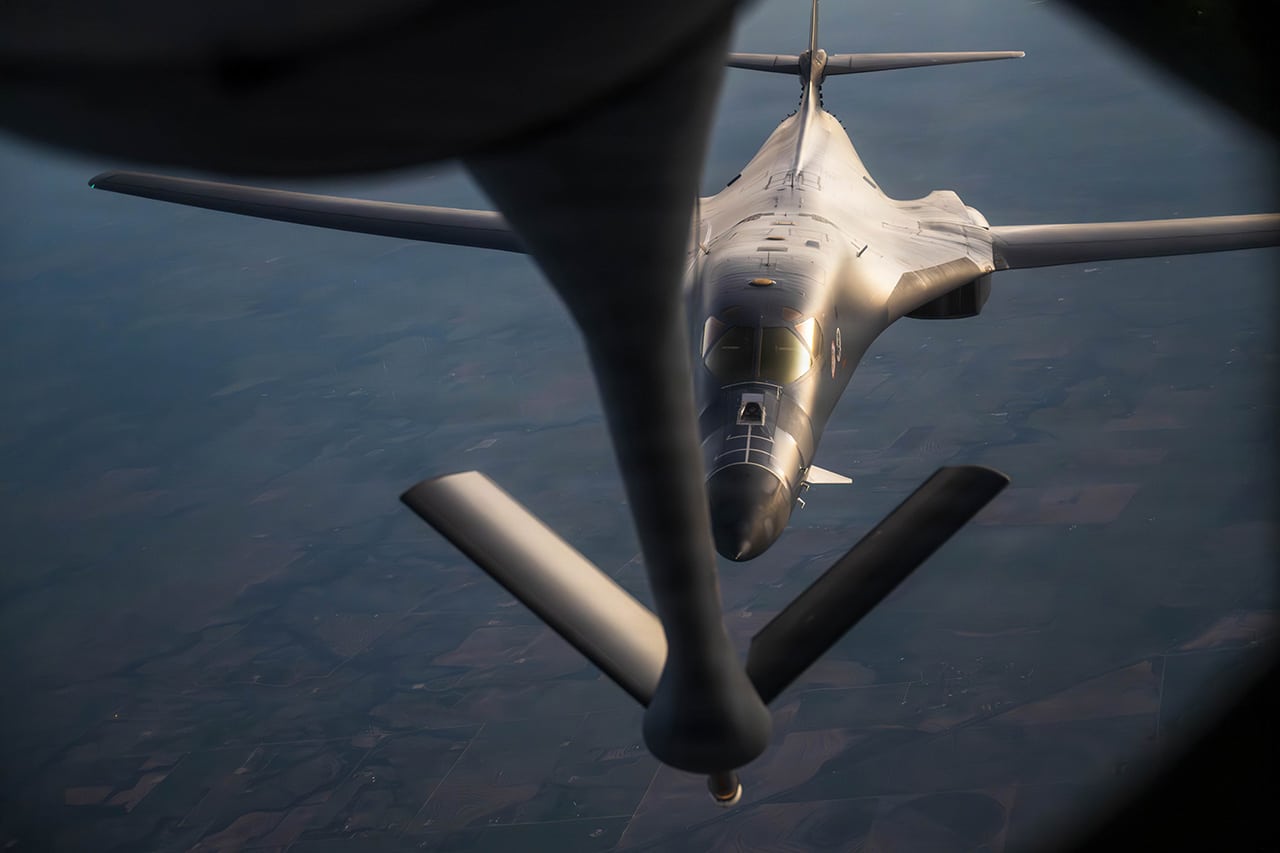
A B-1 Lancer assigned to the 7th Bomb Wing lines up with a KC-135 Stratotanker assigned to the 22nd Air Refueling Wing over Texas, July 21, 2026. Pilots are routinely tested to keep their skills honed. | Source: U.S. Air Force photo by Airman 1st Class Patrick O’Neill
The initiative, still in its prototype phase and subject to adjustment as it is validated, is designed to offer B-1 pilots around 100 additional hours in the air each year. Mission-specific training, involving weapon employment, air to air refueling, or tactical operations which fall outside the parameters of civilian registered aircraft will still make use of B-1 airframes.
The HondaJet
Honda’s foray into the realm of aircraft manufacturing kicked off twenty years ago in 2006 with the founding of the Honda Aircraft Company. Though owned as a subsidiary of the Japanese automotive giant, it is headquartered in Greensboro, North Carolina, and all of its aircraft are manufactured within the United States.
Focusing specifically on the light executive jet market, the HondaJet is the company’s only product line. The initial variant offered up to six seats, with later models expanding this slightly along with other iterative improvements. A larger, increased range variant is in development under the model number HA-480 and the name ‘Echelon’.
Honda Aircraft Company announces the completion of the first wing structure of the HondaJet Echelon test unit, marking a significant milestone in the aircraft’s development and advancing the program toward mainline final assembly.
Details: https://t.co/1be7yJpx4u https://t.co/auFnKFE5VH
— Aeronews (@AeronewsGlobal) September 17, 2026
After gaining its certification from the Federal Aviation Administration (FAA) in 2015, the HondaJet became the world’s best selling twin engined light business jet in 2017. Over 250 airframes have now been produced.
December 8 marks a major milestone! On this day in 2015, the HA-420 HondaJet received Federal Aviation Administration Type Certification, enabling Honda Aircraft Company to mass produce and sell its state-of-the-art very light jet.
10 years later, we’ve taken four models of the original HondaJet to market, delivered over 260 aircraft around the globe, and have the HA-480 HondaJet Echelon development program well underway.
We can’t wait to see what the next 10 years bring to the HondaJet family!
#Honda #HondaJet #Aviation
— HondaJet (@hondajet) December 8, 2025
The aircraft’s fuselage is constructed from composite materials, and its wing is made from aluminium. Rather than mounting its two bespoke GE Honda HF120 turbofans on the tail, like many executive jets, they are mounted on pylons extending upwards from each wing, granting the HondaJet a unique signature look. It is rated for both single and dual pilot operation.
A U.S. Air Force B-1B Lancer pilot boards a HondaJet HA-420 for a training flight of the Bomber Supplemental Trainer for Aircrew Readiness initiative at Abilene Regional Airport, Texas, Nov. 2, 2026. | Source: U.S. Air Force photo Senior Airman Jade M. Caldwell
Despite its rapidly growing popularity in the civilian market across the globe, the HondaJet has yet to secure a military or state customer, meaning this U.S. Air Force contract is the type’s first known introduction into a form of military use. One of the most notable private owners of a HondaJet is in fact Tom Cruise, star of Top Gun and Top Gun: Maverick.