
Trouble in Whitehall: UK Armed Forces Chief Warns of Operational Cutbacks Without Additional Funding
Days after the high profile resignations from the Ministry of Defence’s political leadership, the professional head of the UK’s armed forces, Sir Rich Knighton, has said that without more funding the UK will need to ‘dial back’ both its military exercises and frontline operational activities.
The Royal Air Force Air Chief Marshal, who has served as Chief of the Defence Staff since September 2025, told the House of Lords International Relations and Defence Committee on Jun. 16, 2026, that the UK would need to “dial back our activities; our exercise, operational activity, if the level of resource funding that is available to us does not increase”.
“If you look back at the position 20 years ago, the split between resource spending and capital spending was about 80/20. Today it is about 60/40 – 60% on activity and resources, and 40% on capital. On the current projection, by the time we get to 2030 it will be 50/50.”
Rich Knighton, CDS freely saying to a House of Lord Committee that the DIP settlement that @JohnHealey_MP resigned over does not provide enough RDEL budget (day-to-day running expenses) for defence – operations and training will have to be cut.
If this is imposed, a resignation… pic.twitter.com/PJpbHeoHQ4
— Navy Lookout (@NavyLookout) June 16, 2026
Knighton here refers to what is known as the Ministry of Defence (MoD) RDEL (Resource Departmental Expenditure Limit) budget, which covers the day to day expenses of running the armed forces. Boosts to the MoD’s budget for capital expenditures, which cover the development and procurement of new equipment, have far outweighed any uplift of the RDEL budget.
This mismatch has partially resulted from several major, costly procurement programs currently ongoing – the Dreadnought class of ballistic missile submarines, the Global Combat Air Programme (GCAP) sixth generation fighter, the Type 26 frigates, and the problematic Ajax armored vehicle program to name just a few. These expensive programs have required large injections of funding into the MoD’s non-RDEL budget.
Why is the RDEL budget is critical for UK Defence?
The UK’s Ministry of Defence operates under two key funding streams: Resource DEL (RDEL) for day-to-day running costs — personnel pay, training, equipment support, operations, and maintenance — and Capital DEL (CDEL) for new… https://t.co/KOHoH9khlp
— Scotty (@scottyeders) June 17, 2026
Meanwhile, though, the RDEL costs themselves are facing major increases. Fuel costs have surged dramatically, while the MoD is simultaneously tasked to stretch itself wider than it has been at any time since the Cold War. A pivot back to Europe and the North Atlantic envisioned post-Afghanistan has been left in tatters following continual unrest in the Middle East, which has required the deployment of additional UK forces to protect national interests and support regional partners.
Ministerial Resignations
An unavoidable backdrop to Knighton’s comments, the MoD itself has undergone a rapid, unplanned change with the departure of John Healey from the role of Secretary of State for Defence. Healey had held this role since the current government took office in 2024, having served in the shadow counterpart of the role in opposition since April 2020.
Joining Healey was the now former Under-Secretary of State for the Armed Forces Al Carns, who, until being elected to Parliament in 2024, previously served in the Royal Marines and attained the rank of Colonel. Though it has not been officially confirmed, it is an open secret in British political circles that Carns served as a senior officer in the elite Special Boat Service (SBS) and saw action in every major conflict the UK has been involved in for the last quarter of a century.
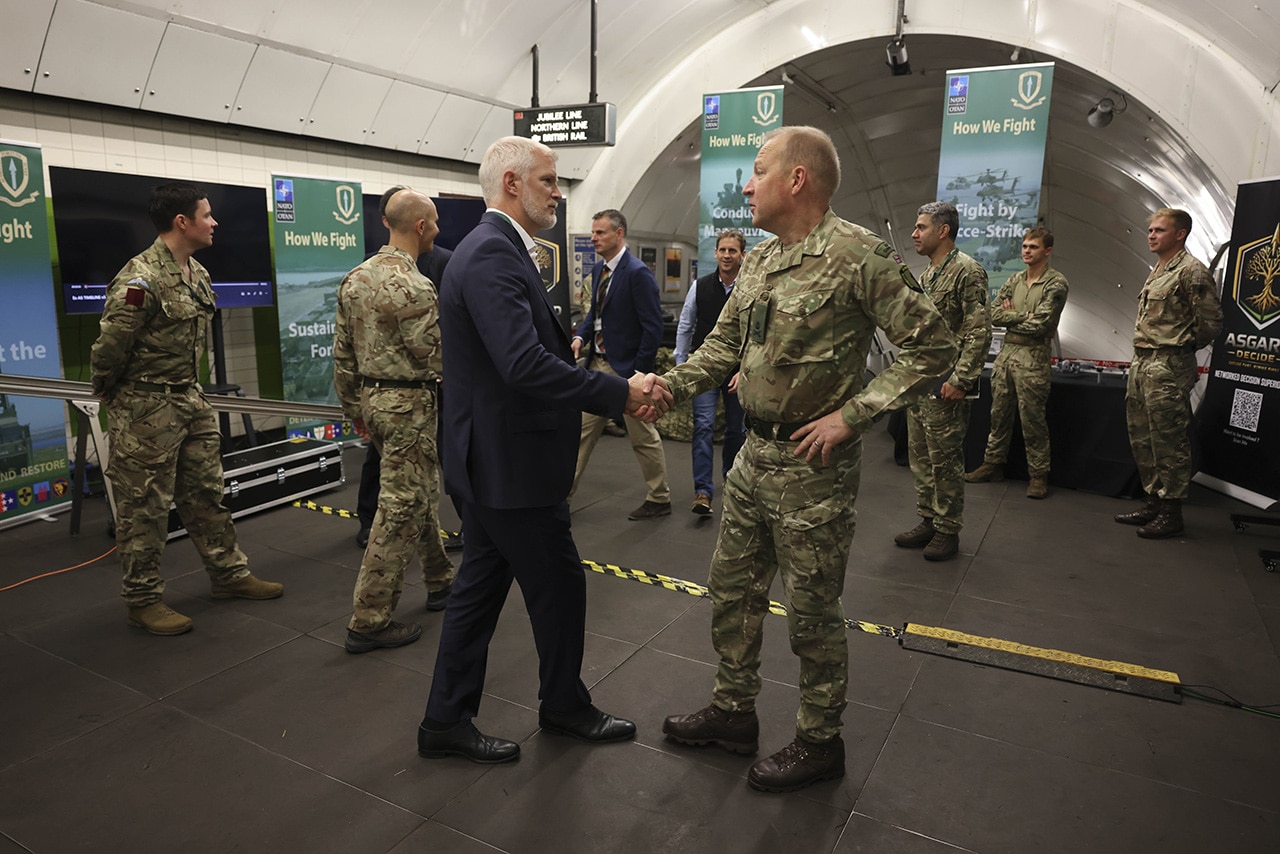
Al Carns (centre left), talking with Commander ARRC, Lieutenant General Mike Elviss (centre right). | Source: Crown Copyright 2026
Healey’s bombshell resignation took aim at the heart of the Government he had loyally defended, accusing it and the Prime Minister of failing to “to commit the resources that the nation needs to defend the country at this time of rising threats”. Insiders have said that his resignation came as a shock to the entire cabinet, and one that worsens Keir Starmer’s position amid the still open threat of leadership challenges.
One of his main critiques revolves around the still-unpublished Defence Investment Plan (DIP), which was promised to follow last year’s Strategic Defence Review. Major procurement decisions have been delayed until the DIP is finalised, which has put immense strain on businesses waiting to be awarded significant defence contracts. In one noteworthy case, Aeralis, a firm that hoped to produce an all-British modular jet trainer, collapsed into administration.
Carns added fuel to the fire, claiming that even as a defence minister he had not been included in DIP discussions until two weeks before his resignation. He has since labelled it “not fit for purpose”.
“I haven’t been included in the defence investment plan from the start. I only got read into it two weeks ago.”
Al Carns shares what “ruffled [his] feathers” enough to prompt him to resign as armed forces minister and says that in the event of a leadership race, “if someone… pic.twitter.com/0gQDNYKpfO
— Times Radio (@TimesRadio) June 13, 2026
Speaking to The Guardian, Carns lambasted what he saw as excessive waste and bureaucracy within the ministry. “It is unbelievable. You turn a stone over and get another shock – how has that been allowed to go on? And you turn another stone over, and it is just layers of bureaucracy which now cost us more than the product you’re getting itself. I can’t describe the level of inefficiency in the system that we’ve been left with and we’re trying to unpeel. But it’s actually exceptionally difficult to do.”
The new Secretary of State for Defence is Dan Jarvis, who came to the role from the Home Office where he served as Minister of State for Security. Jarvis, like Carns, is a decorated military veteran. Serving in the British Army, he attained the rank of Major before leaving the forces in 2011 after 14 years.
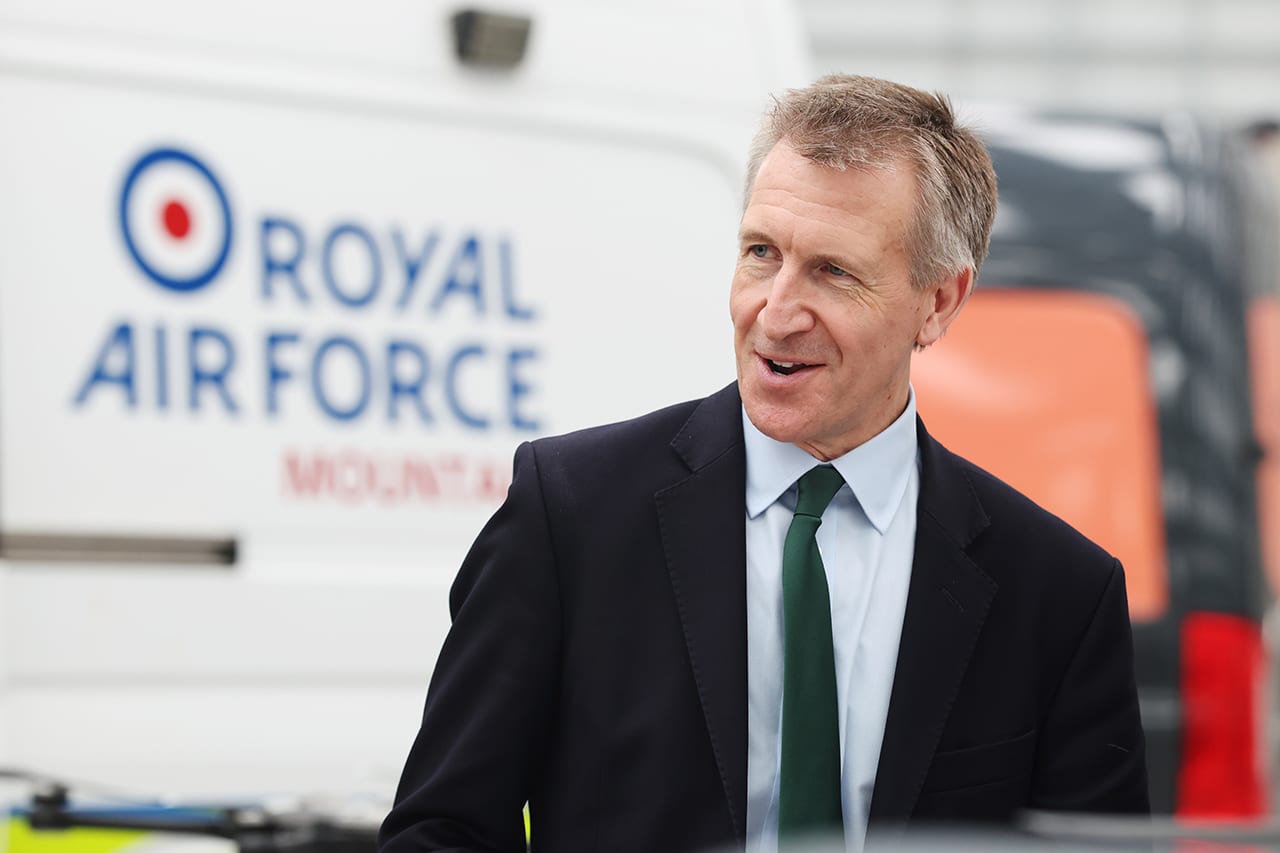
The new Secretary of State for Defence, Dan Jarvis MBE MP. | Source: Crown Copyright 2026
Jarvis notably served as staff officer to General Sir Mike Jackson in Kosovo when Jackson refused an order from Supreme Allied Commander Europe (SACEUR) General Wesley Clark (U.S. Army) to continue with a plan to seize Pristina International Airport despite it then being under the control of Russian forces. Best-selling singer James Blunt was also present for this affair, serving under Jackson as a Captain.
EXC: Dan Jarvis faces having to make “very significant cuts” inside the MoD if he cannot get more money.
– Options on the table last week included reducing investment in drones and artificial intelligence, cutting reserve days, and cutting exercises
– the £13.5 bn offer included…
— Larisa Brown (@larisamlbrown) June 16, 2026
Stuck between a rock and a hard place, the new secretary is said to be re-evaluating the DIP, now reportedly delayed until (at least) July. The loss of Healey and Carns is thought to have potentially swayed opinions within cabinet to back spending increases, which means Jarvis may have a smoother road. The fear of losing another defence secretary should they face a similar stumbling block will also force the hand of Starmer and the Treasury, headed by Chancellor Rachel Reeves.