B-2 Spirit Stealth Bomber Takes Part in RAAF’s Exercise Diamond Storm
A U.S. Air Force B-2A Spirit stealth bomber was integrated in Exercise Diamond Storm, part of the Royal Australian Air Force’s Air Warfare Instructor Course.
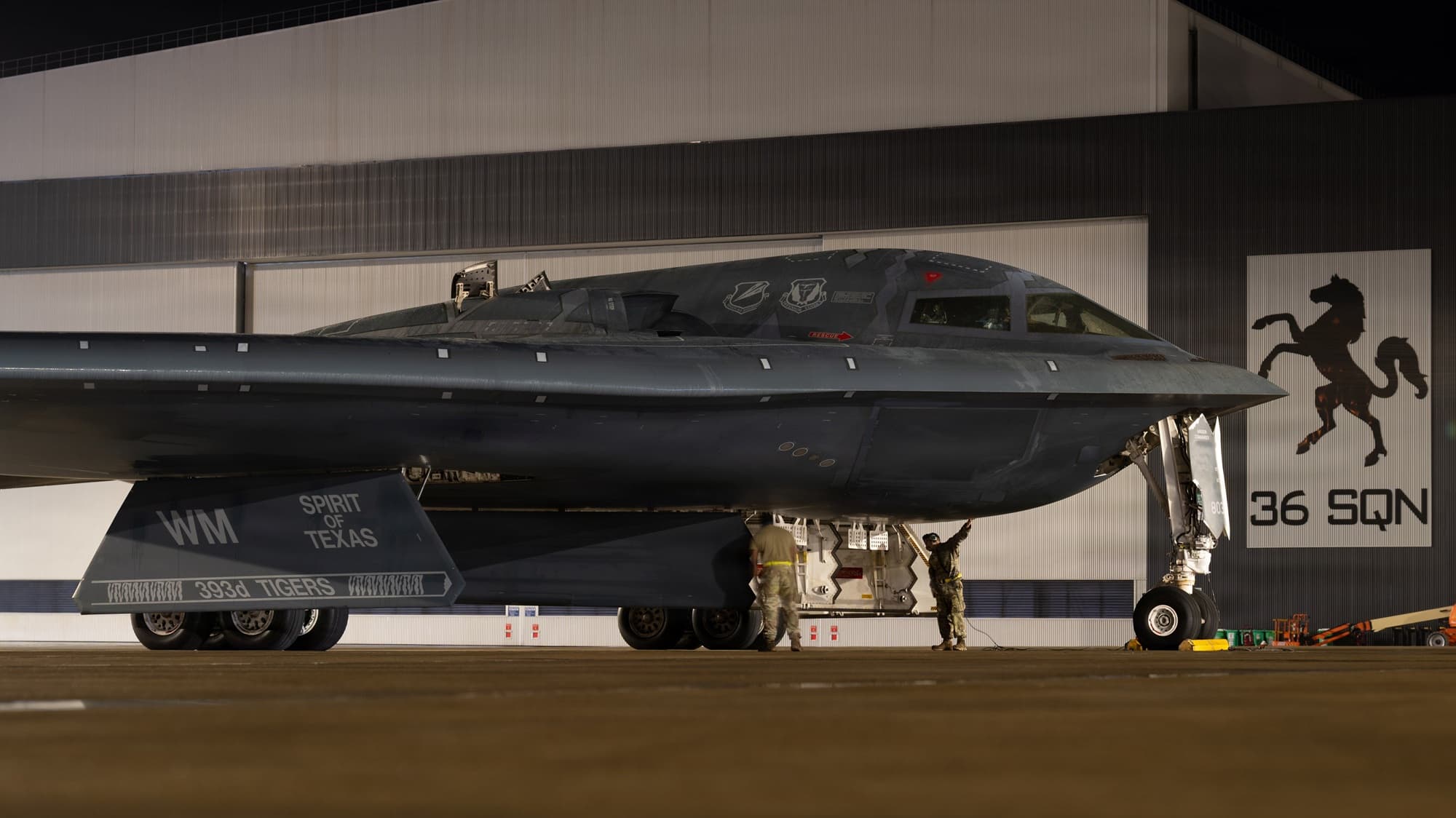
A U.S. Air Force B-2A Spirit stealth bomber recently took part in a Bomber Task Force mission at Royal Australian Air Force Base Amberley, Queensland, Australia. The aircraft, Spirit of Texas, arrived there on June 11, 2026, to be integrated in the RAAF’s Exercise Diamond Storm.
Diamond Storm is the culmination exercise of the Air Warfare Instructor Course’s (AWIC) final phase. The Australian Department of Defense said the B-2’s presence allowed AWIC students “to practice mastery in the integration of advanced air effects.”
“The Air Warfare Instructor Course is vital to ensure the preparedness of Royal Australian Air Force personnel, and to train the next generation of experts in integrated air power effects to enable a collective strategy of denial in our region,” Air Commodore Peter Robinson said. “The inclusion of the B-2 stealth bomber in the exercise is a clear example of the strong relationship and trust between Australia and the United States and proves our ability to develop practitioners who can operate at the high end of an international force.
Exercise Diamond Storm and the B-2
The Royal Australian Air Force’s Air Warfare Instructor Course (AWIC), held every two years, is a six-month intensive training activity that graduates experts in Air Domain integration. The course, which runs until June 2026,includes academic briefings in addition to the Diamond-series of exercises across Australia.
A U.S. Air Force B-2 Spirit aircraft receives fuel from a Royal Australian Air Force KC-30A multi-role tanker transport aircraft over the South Pacific Ocean during a Bomber Task Force deployment, June 11, 2026. | Source: U.S. Air Force photo by Staff Sgt. Joshua Hastings
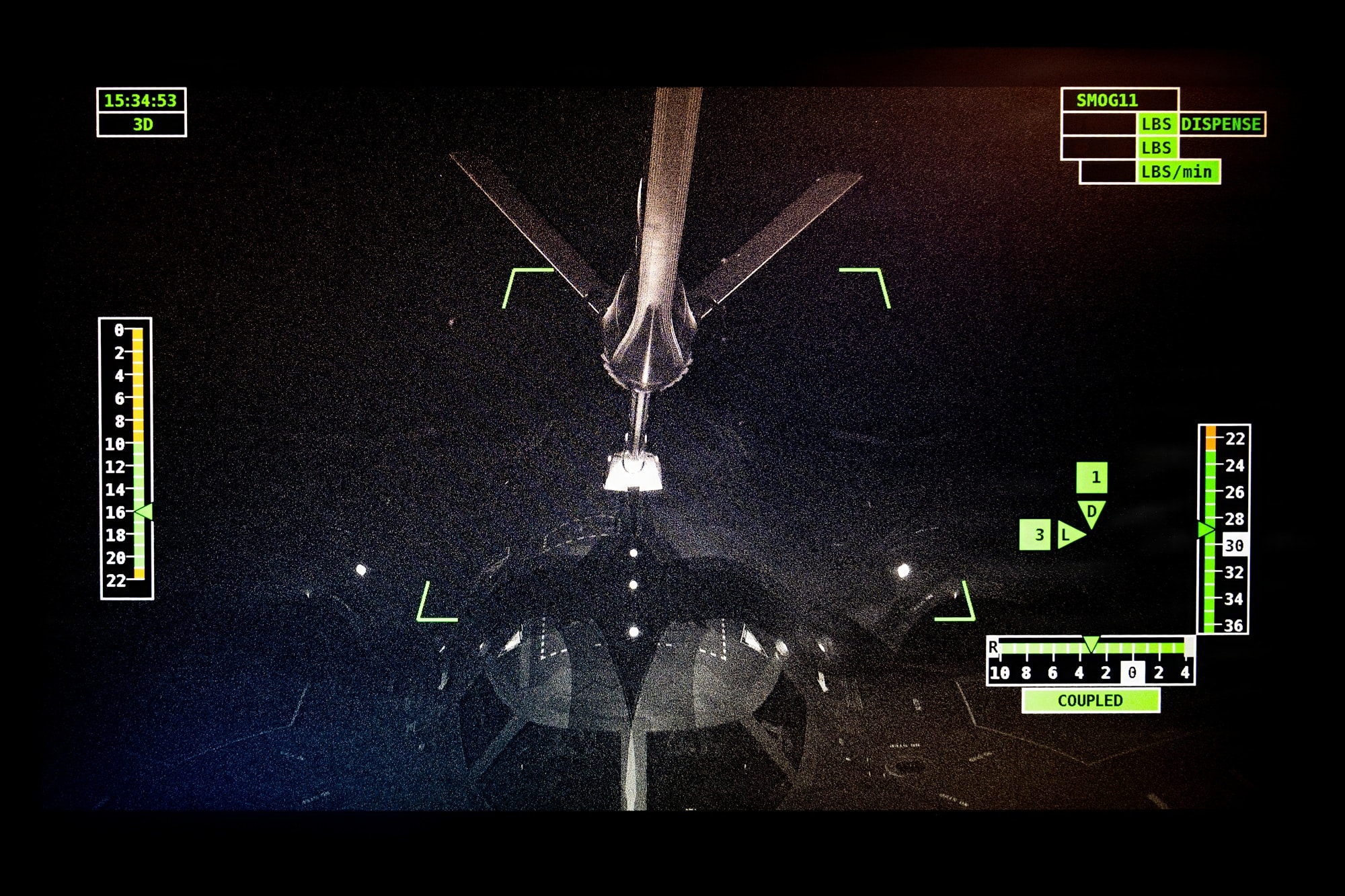
During these exercises – Diamond Seas, Shield, Spear and Storm – Air Warfare Instructor (AWI) students apply the lessons they have learnt in challenging scenarios. The Australian DoD described Diamond Storm as the final high-intensity assessment across Australia’s northern approaches.
The B-2’s participation in Diamond Storm included fifth-generation integration with Australia’s F-35s, air-to-air support and ground-based refueling in a high-tempo scenario. RAAF personnel provided security and logistics support for the B-2 while it was on the ground at RAAF Amberley.
The B-2 Spirit recently integrated with RAAF air power during Exercise Diamond Storm in Australia. This high-end training strengthens interoperability with our partners and improves our global strike capabilities in support of a free and open Indo-Pacific. pic.twitter.com/Qz8cWzSgW8
— Whiteman AFB (@Whiteman_AFB) June 26, 2026
“This high-end, all domain integration is invaluable to maintaining a top-of-state readiness, our always-ready global strike capability, and integrated lethality with our coalition partners,” said the commander of the USAF 393rd Expeditionary Bomb Squadron. “This exercise reinforces that the United States does not face the challenging international environment alone.
Additionally, the U.S. Air Force said in a caption that “this activity is valuable as part of efforts to support collective deterrence in the region – deepening advanced air-to-air integration between the Australian Defence Force and United States air elements to enable the two countries to operate together seamlessly.”
U.S. Airmen assigned to the 393rd Expeditionary Bomb Squadron conduct hot-pit refueling operations for a B-2 Spirit aircraft as part of a Bomber Task Force deployment at Royal Australian Air Force Base Amberley, Queensland, Australia, June 11, 2026. | Source: U.S. Air Force photo by Staff Sgt. Joshua Hastings
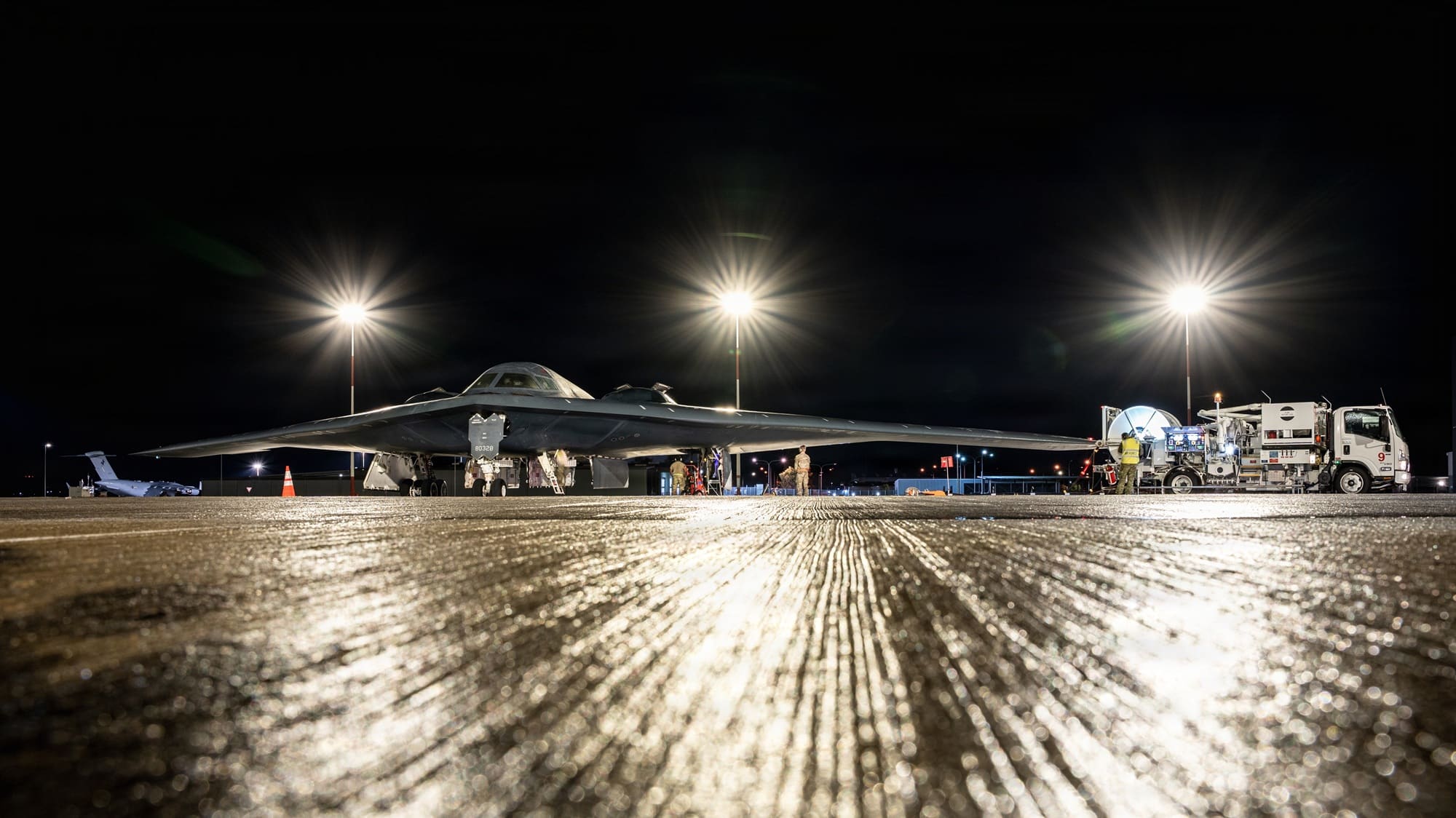
The captions for the images released by the U.S. Air Force on the DVIDS network mention the B-2 demonstrated Agile Combat Employment maneuvers, including a hot pit refueling, and long-range strike capabilities. A RAAF KC-30 tanker also refueled the bomber during the mission.
The images also show the bomber sported the white patches that were first posted during the round-trip missions as part of Operation Epic Fury. At that time, the patches were spotted on Spirit of Mississippi and Spirit of Louisiana.
B-2 and Australia
The U.S. Air Force’s B-2 Spirit stealth bomber has become an increasingly visible component of U.S.-Australia defense cooperation. In fact, in recent years, a series of Bomber Task Force (BTF) deployments highlighted the growing strategic importance of Australia in the Indo-Pacific.
The first major recent deployment occurred in July 2022, when four B-2s from the 509th Bomb Wing at Whiteman Air Force Base, Missouri, arrived at RAAF Base Amberley in Queensland. The deployment, one of the largest overseas B-2 detachments in recent years, was also framed under the Enhanced Cooperation Initiative between the United States and Australia.
A Royal Australian Air Force Air Refuelling Officer assigned to the No. 33 Squadron refuels a U.S. Air Force B-2 Spirit aircraft from a KC-30A multi-role tanker transport aircraft over the South Pacific Ocean, June 11, 2026. | Source: U.S. Air Force photo by Staff Sgt. Joshua Hastings
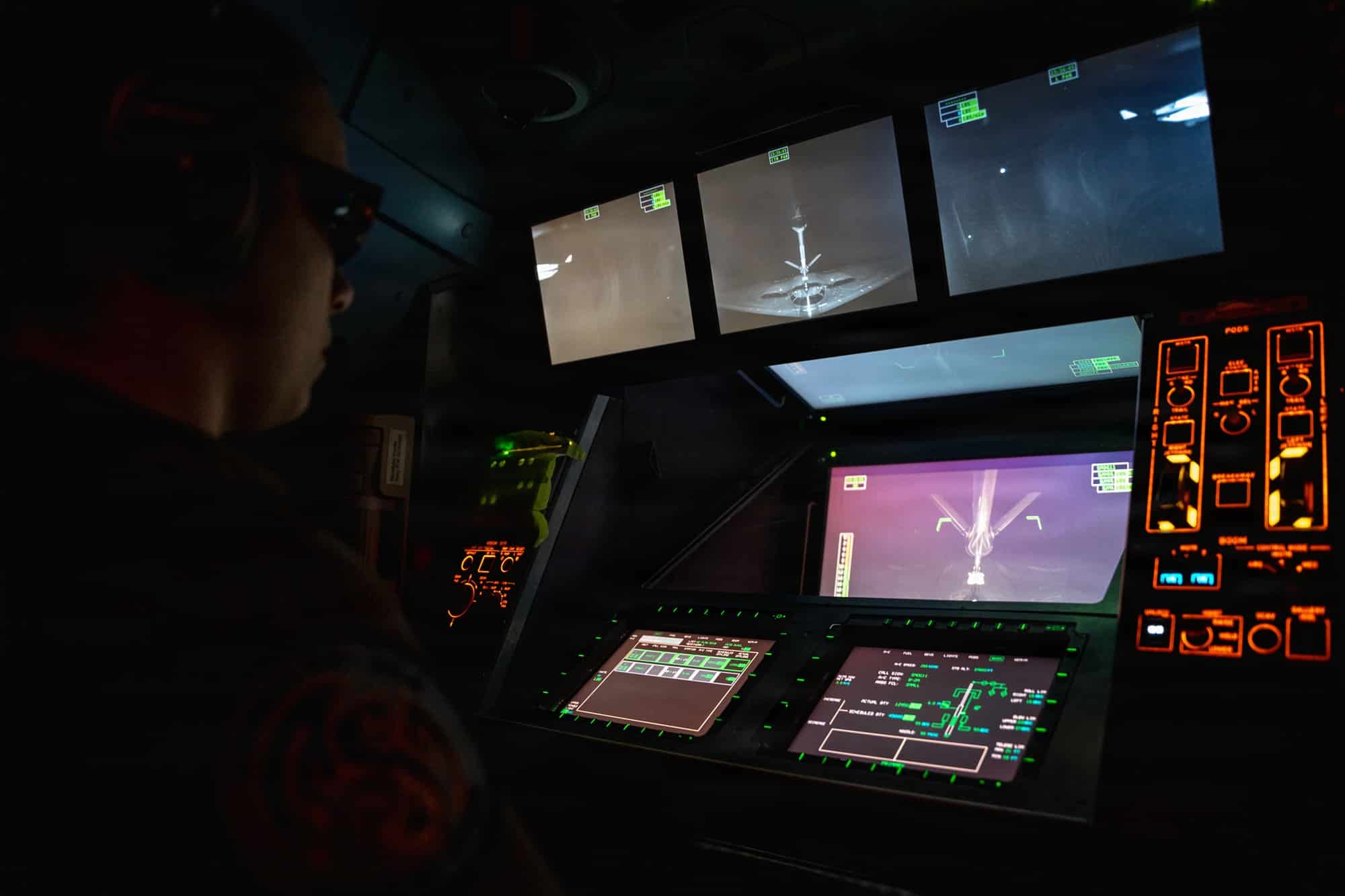
During the 2022 deployment, the stealth bombers participated in Exercise Koolendong 22, flying alongside Royal Australian Air Force F-35A Lightning II fighters and conducting interoperability training with Australian personnel. The exercise demonstrated the ability of both air forces to operate together in complex scenarios while reinforcing strategic deterrence throughout the Indo-Pacific.
The B-2 returned to Australia in August 2024, when two aircraft, supported by KC-135R Stratotankers, deployed to RAAF Base Amberley as part of another Bomber Task Force rotation. That deployment followed broader U.S. and Australian efforts to expand rotational American military presence across northern Australia.
The BTF deployments also fit within the U.S. Air Force’s Agile Combat Employment and Dynamic Force Employment concepts. These emphasize operational unpredictability, dispersed basing, and the ability to rapidly project combat power from forward locations, with Australia becoming a key hub for allied air operations.