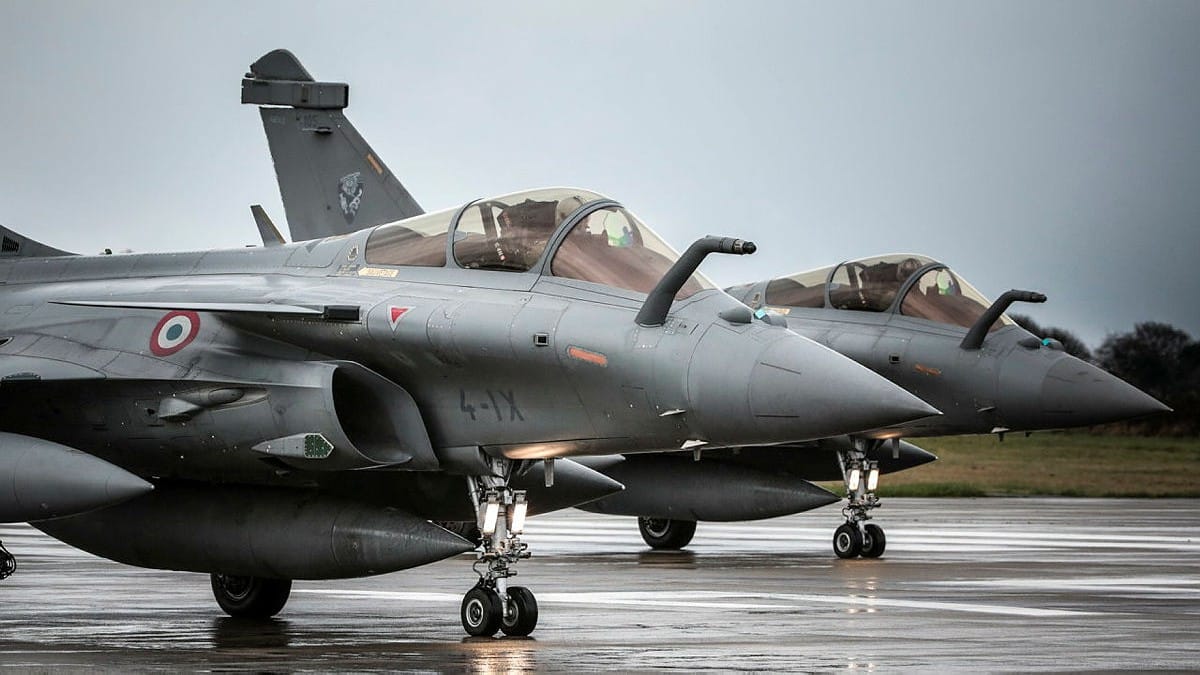
Ukraine to Receive 16 Rafales and License for SCALP and Aster-30 Production
Ukraine will procure 16 Rafales and receive the license to manufacture SCALP and Aster-30 missiles, whilst two SAMP/T batteries will be immediately delivered.
Ukraine will receive four Rafale aircraft as soon as their pilots and mechanics finish training, which will begin this year, whilst two SAMP/T batteries will be immediately delivered to the nation. The announcement was made by French President Emmanuel Macron, following a meeting of the Coalition of the Willing in Paris on July 13, 2026, with clarification on the agreement published in a joint declaration.
He stated that “This involves a project to acquire 16 Rafale aircraft and their accompanying weapons systems. The first flights could take place as early as 2028–2029, and personnel training will begin in the coming months.” These aircraft come out of the 100 that France and Ukraine originally planned for acquisition in November 2025.
However, it is not yet known if these will be new-build aircraft, or if they will come out of existing French stocks. Dassault currently has an order backlog of 220 Rafales awaiting production, so there is a chance some of these 16 aircraft could be second hand.
A Rafale fighter aircraft showing off the extent of its capabilities, carrying 2x MICA IR (wing tips), 2x MICA EM, 2x SCALP/Storm Shadow and 3x fuel tanks. | Source: Alexandre Paringaux/MBDA
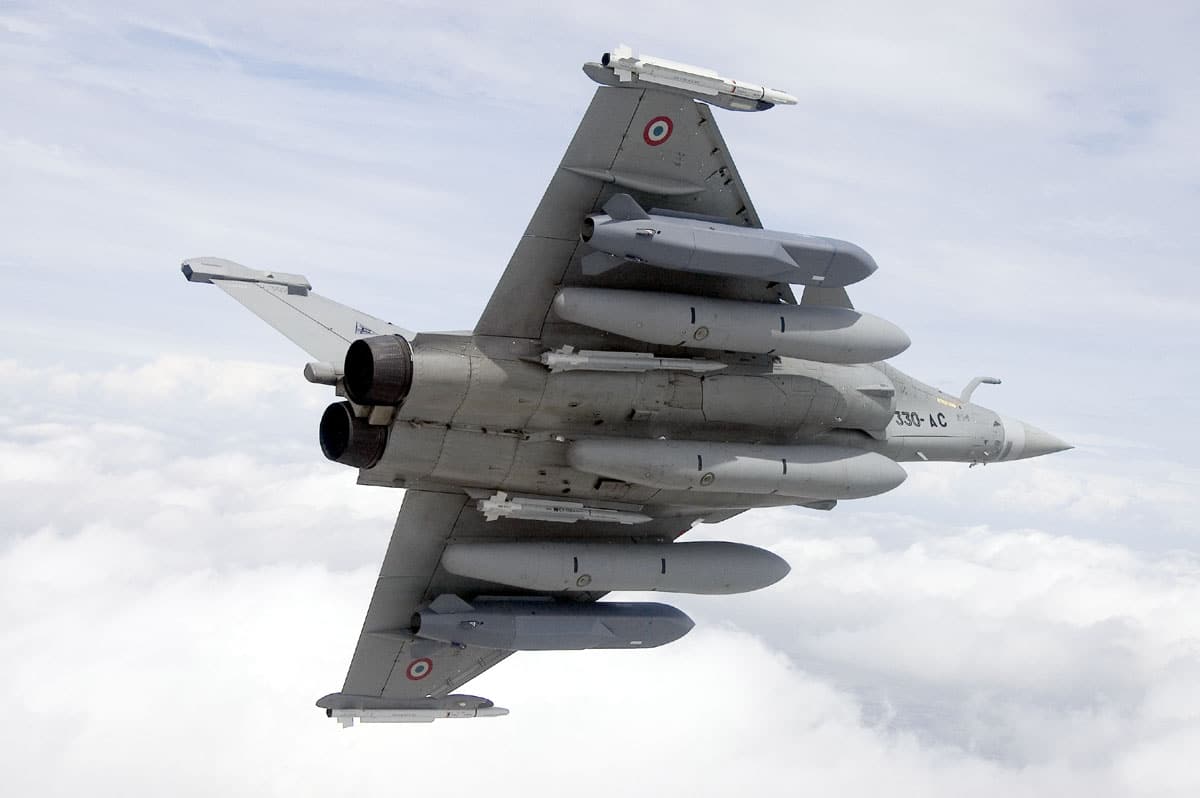
These aircraft will be paid for using the 2026 and 2027 Ukraine Support Loan alongside other forms of financing, indicating that these are not direct transfers of older military equipment, which has been done so far free of charge to Ukraine. Each aircraft will be joined by a variety of air-to-ground and air-to-air armaments, including AASM bombs, MICA and METEOR missiles.
Ukraine will also receive a newly tested 68mm laser-guided anti-drone rocket for the Rafale, under the programme name Lutte anti-drone sur avion de combat (LADAC, meaning anti-drone capability for combat aircraft). They are fired from the 12-round Thales Telson JF12 rocket pods and operate in the same manner as the 70mm Advanced Precision Kill Weapon System (APKWS) used on both U.S. and British aircraft.
La roquette guidée laser sur #Rafale, c’est validé !
La DICOD confirme l’arrivée de la capacité LADAC (Lutte Anti-Drone sur Avion de Combat). En quelques mois, la DGA et le CEAM ont intégré la roquette de 68mm via la nacelle TALIOS.
La chasse aux drones Shahed est ouverte pic.twitter.com/oheVbHkVpb
— bruno aviation (@Bruno_Aviation) July 13, 2026
Alongside the delivery of these weapon systems France has also authorized the licensed production of AASM bombs and SCALP missiles in Ukraine before the end of 2026, with the intention that production start as soon as possible.
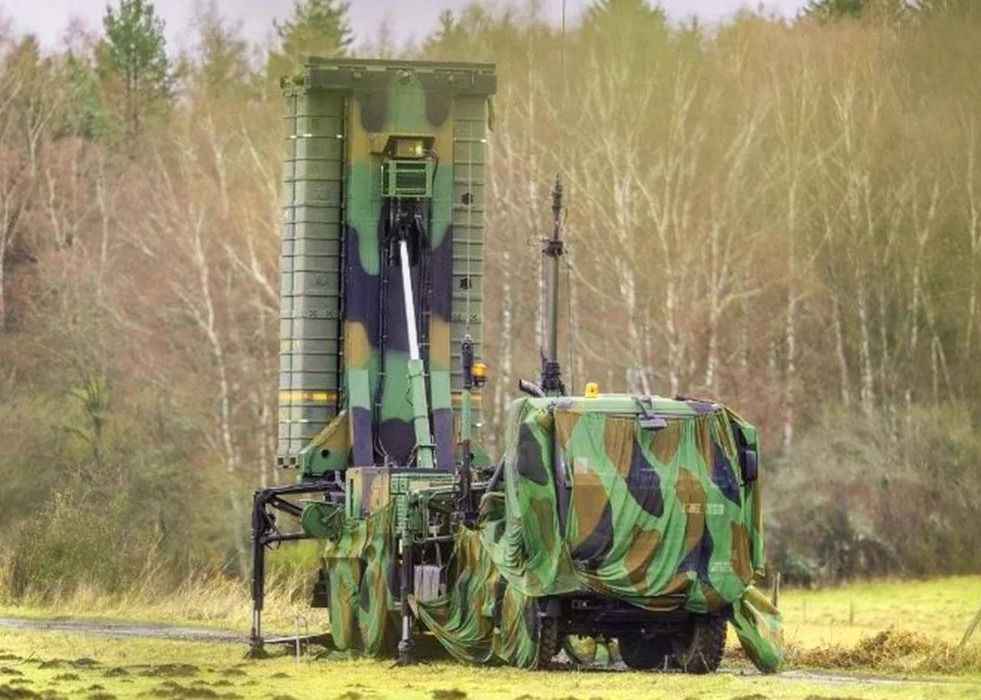
On the Air and Ballistic Anti-Missile Defense front, Ukraine will acquire two batteries of SAMP/T on a short term loan, to enable the nation to make up for the current small number of available Patriot missiles. These systems will be replaced by four newly built SAMP/T NG batteries which will also be paid for by the Ukraine Support Loan.
Additionally, Ukraine will get five GM400 radars, one GF300 radar, and one Kronos radar, which will enhance the radar picture over the country. Each component of the SAMP/T NG will be supplied as it is constructed, with a GF300 radar to be deployed in the country by the end of 2026.
French President Macron announced that Ukraine has received a license to manufacture Aster-30 anti-aircraft missiles for SAMP/T, AASM Hammer guided aerial munitions, and SCALP cruise missiles. pic.twitter.com/FgqBNbD2fK
— WarTranslated (@wartranslated) July 13, 2026
France and Italy have also authorized the licensed production of Aster 30 missiles in Ukraine, as they begin to accelerate the delivery of Aster 30 missiles they had already agreed to supply Ukraine with. The Aster 30 is capable of taking down ballistic missiles fired by Russia, which should help to alleviate the burden currently placed on the Patriot PAC-3 missile.
The supply of the 16 Rafales will join the 32 Gripen C/D/E/Fs also promised to be delivered to Ukraine over the coming years, shifting Ukraine’s Air Force into the future. The nation already operates a significant number of F-16 Fighting Falcons and a small number of Mirage 2000-5s, alongside an ever declining fleet of ex-Soviet MiG-29 Fulcrums, Su-27 Flankers, Su-24 Fencers and Su-25 Frogfoots.
The supply of 4.5th generation aircraft will enhance Ukraine’s air combat arm, allowing the nation to fight back against the ongoing Russian invasion.
Ballistic Missile Defence and the Freyja Programme
The decision to allow Ukraine to licence produce its own missiles for both air defence and strike purposes follows a similar decision by U.S. President Trump to allow Ukraine to produce its own Patriot PAC-3 missiles, for the anti-ballistic missile role. Due to the ongoing war with Iran, there is now a premium placed on air defence missiles in the Gulf, with Patriot’s being re-prioritised for the defence of U.S. bases in the region.
The Gulf States of Qatar and Kuwait, amongst others, have also made emergency orders of Patriot missiles from the U.S., placing considerable strain on the American production line.
Ukrainian troops marched in a parade in Paris to mark France’s national holiday – Bastille Day.
For the first time in history, Ukrainian soldiers are participating in this parade. They marched along the route from the Arc de Triomphe, while two Ukrainian pilots flew French… pic.twitter.com/DI9mOMBGip
— MilitaryNewsUA (@front_ukrainian) July 14, 2026
As a result, Ukraine has seen its steady supply of PAC-3 missiles reprioritized away from the country, leading to the Ukrainian Air Force stating that there was a “serious shortage” of interceptor missiles for ballistic missile defence in the country. On July 5, 2026, of 23 ballistic missiles fired by Russia at Kyiv, none were intercepted, causing significant damage to the capital, the deaths of 15 people and injuries to 56 others.
Subsequently, the lack of air defence missiles in Ukraine has taken centre stage at the NATO summit in Ankara, in which Trump made his promises to Ukraine to build its own PAC-3 missiles. This benefits both Ukraine and the U.S., with Ukraine receiving an assured supply of the missile, whilst America expands its international production capacity, in case there is a future need to surge production in a crisis.
A SAMP/T NG (Surface-to-Air Missile Platform, New Generation) battery comprises four main components, including an engagement module for C2, a 360 degree multi-function radar that can be either the Thales Ground Fire 300 or the Leonardo Ground Mobile High Power, and up to six launchers that can carry eight missiles each, for a total of 48 Aster missiles ready to fire. | Source: Eurosam
Ukrainian President Volodymyr Zelensky had appealed for his allies to take “strong decisions” at this week’s Nato summit to provide Kyiv with air defences and it appears that in the long term they shall do so.
It was also announced in Paris at the meeting of the Coalition of the Willing that an Integrated Anti-Ballistic Missile Coalition was launched by Denmark, France, Germany, Italy, the Netherlands, Norway, Spain, Sweden, Ukraine and the UK. Here the nations will work collectively under Ukrainian leadership on the creation of a pan European missile defence system called ‘Freyja’, which will supplement the Patriot and SAMP/T missile systems already in place.
The concept will utilise a Ukrainian designed and built Fire Point’s FP-7.X interceptor, whilst the European partners will provide the radar, tracking and command-and-control systems. This will hopefully allow Ukraine to field a weapon system designed to hit a ballistic target at roughly 15 miles altitude within as little as twelve months.
FirePoint has presented a Ukrainian counterpart to the Patriot SAM missile – the FP-7.x. An anti-aircraft missile designed for the Ukrainian “Freya” missile defense system. The FP-7.x is capable of reaching speeds of 1,500-2,000 m/s and has a length of 7.25 meters. pic.twitter.com/lIo24ONkx1
— WarTranslated (@wartranslated) July 13, 2026
The Coalition’s leaders were joined by representatives from several European defense companies who will work together to produce the system, including: Destinus, Diehl Defence, Eurosam, Fire Point, HENSOLDT, Kongsberg Defence & Aerospace, Leonardo, MBDA, Saab, Safran, Thales and Weibel Scientific.
“We believe that the protection of Europe requires a global solution of integrated missile defence architecture to deter and defeat future missile threats – developed through collective effort, technological openness, and trusted industrial cooperation,” officials wrote in the joint statement formalizing the new coalition.