
U.S. Air Force Confirms Two-Pilot Crew For B-21 Raider
The U.S. Air Force confirmed that the B-21 will be flown by two pilots, launching a transition program for Weapons System Officers and Combat Systems Officers who will be chosen to attend pilot training.
The U.S. Air Force has officially confirmed on July 9, 2026, that the B-21 Raider will operate with a two-pilot crew. The confirmation ended months of speculation over whether the new stealth bomber would instead be flown by a pilot and a Weapon Systems Officer (WSO).
However, WSOs and Combat Systems Officers (CSOs) will still play a part in the B-21 community. In fact, the service is launching a transition program that will allow selected WSOs and CSOs to attend Undergraduate Pilot Training before receiving follow-on assignments to the Raider.
The announcement settled an internal debate that became public in late 2025 after reports revealed that former Air Force Global Strike Command (AFGSC) commander Gen. Thomas Bussiere had recommended replacing one of the pilots with a WSO. The service later conducted an evaluation to determine the best composition for the crew.
Two pilots remain the preferred solution
In its press release, the Department of the Air Force stated that the decision followed an extensive review of the Raider’s capabilities and requirements.
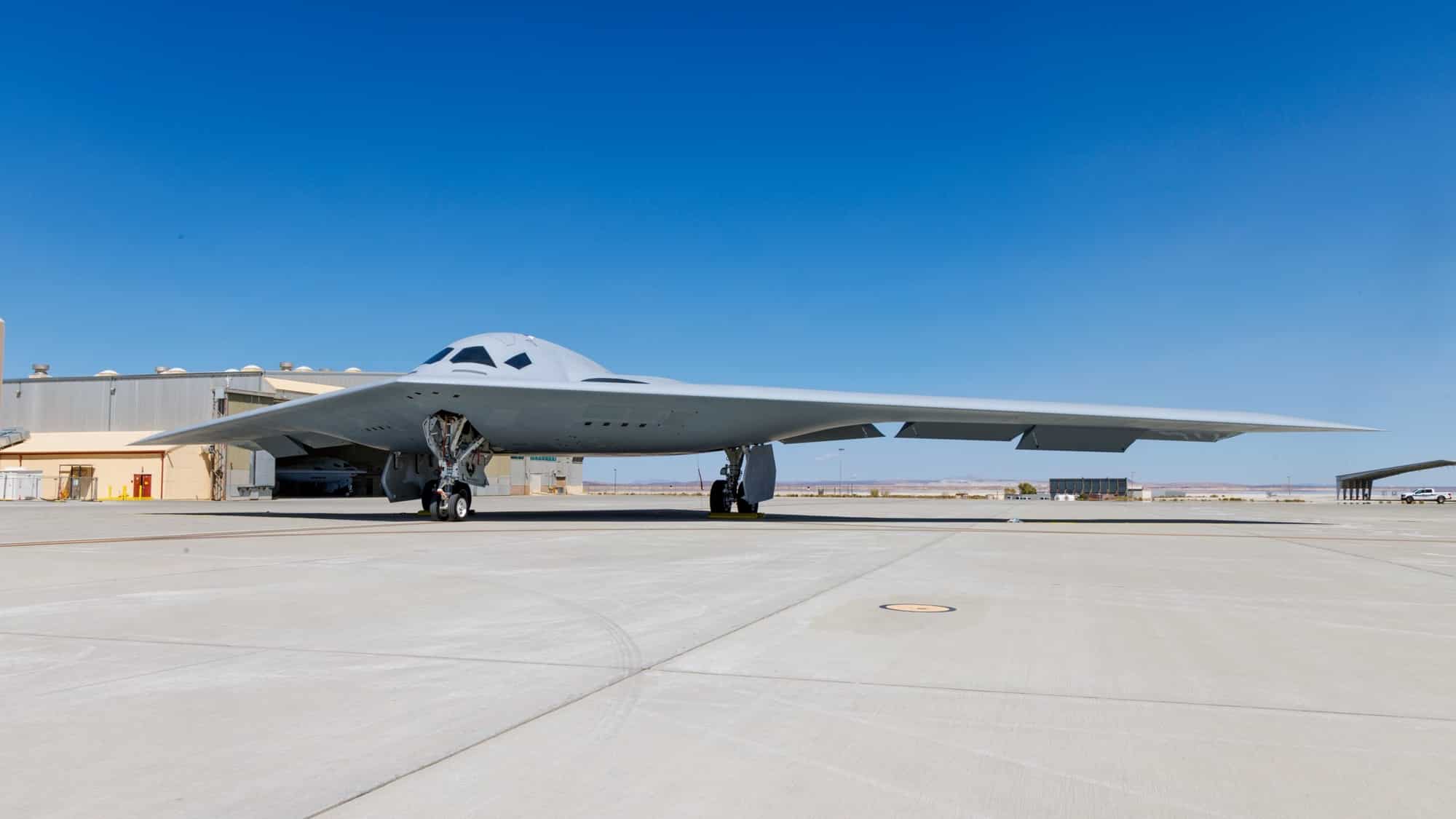
The second B-21 Raider stealth bomber at Edwards Air Force Base, California. | Source: U.S. Air Force
“Following careful analysis of the B-21’s advanced capabilities, Air Force leadership determined that a two-pilot configuration optimally supports the aircraft’s mission profile,” mentioned the statement. “To maximize the lethality and survivability of the Raider, it is imperative to retain the deep tactical and combat experience currently residing within the WSO and CSO communities.”
This way, the B-21 will have two qualified pilots in the cockpit and, at the same time, will also retain the competencies of the WSOs and CSOs. The service further explained that eligible officers will receive further guidance through their command channels, although a timeline for the transition program has not been disclosed.
Reversing the proposed pilot-WSO concept
The announcement effectively overturns a proposal that emerged last year, first reported by the Aviation Week. The report mentioned a memo by then-head of Air Force Global Strike Command (AFGSC) Gen. Thomas Bussiere.
“Unleashing the Raider’s full potential demands a complex blend of skills: airmanship, weaponeering, electromagnetic spectrum operations, sensor management, real-time battle management and agile replanning in combat. For this reason, the B-21 will be crewed by one pilot and one weapon systems officer,” wrote Bussiere.
The tanker, serial number #61-0320, designated as an NKC-135 because it carries special equipment required to support the testing of other aircraft, refuels the B-21. | Source: U.S. Air Force

The report was released in August, although the first public reports only arrived months later, in November. At the time, this crew-complement was still a recommendation, and it was not yet a final decision towards a new Air Force policy.
However, as we reported back then, the service also previously announced in 2020 plans to allow current WSOs from current B-52 Stratofortress and B-1B Lancer units to retrain as pilots ahead of the B-21’s arrival. It is unclear whether this developed beyond the proposal stage and if any WSOs did undergo such role conversion training.
Long-duration missions remain a key factor
Although the Air Force has not detailed every factor behind the decision, the nature of the B-21’s expected missions makes the rationale relatively straightforward. Like the B-2 Spirit it will eventually replace, the Raider is designed for round-trip strike missions from its home bases in the U.S. lasting well over 24 hours.
For instance, during Operation Midnight Hammer, B-2 Spirit bombers flew approximately 37-hour round-trip missions from Whiteman Air Force Base, Missouri, to strike Iranian nuclear facilities before returning directly to the United States. Similar durations were reported also for the missions during Operation Epic Fury.
U.S. Air Force Airmen with the 912th Aircraft Maintenance Squadron prepare to recover the second B-21 Raider to arrive for test and evaluation at Edwards AFB, Calif., Sept. 11, 2025. | Source: U.S Air Force photo by Kyle Brasier

Such sorties require pilots to alternate flying duties, allowing one crew member to rest while the other remains at the controls. The B-2 already incorporates facilities – such a toilet and a small galley – to support the crew during these extended flights, and AFGSC has previously indicated that the B-21 will provide similar accommodations.
Additionally, maintaining two fully qualified pilots also offers additional redundancy during demanding missions and reduces workload during critical phases such as aerial refueling and attack runs in heavily contested airspace.
Looking ahead
The Air Force continues to prepare for the Raider’s operational debut in the near future. Two production-representative aircraft are currently conducting flight testing at Edwards Air Force Base, California.
The first operational B-21 unit is expected to stand up at Ellsworth Air Force Base, South Dakota, in 2027. Air Force Secretary Troy Meink confirmed that the unit will receive one of the two jets currently at Edwards, according to Air and Space Forces Magazine.
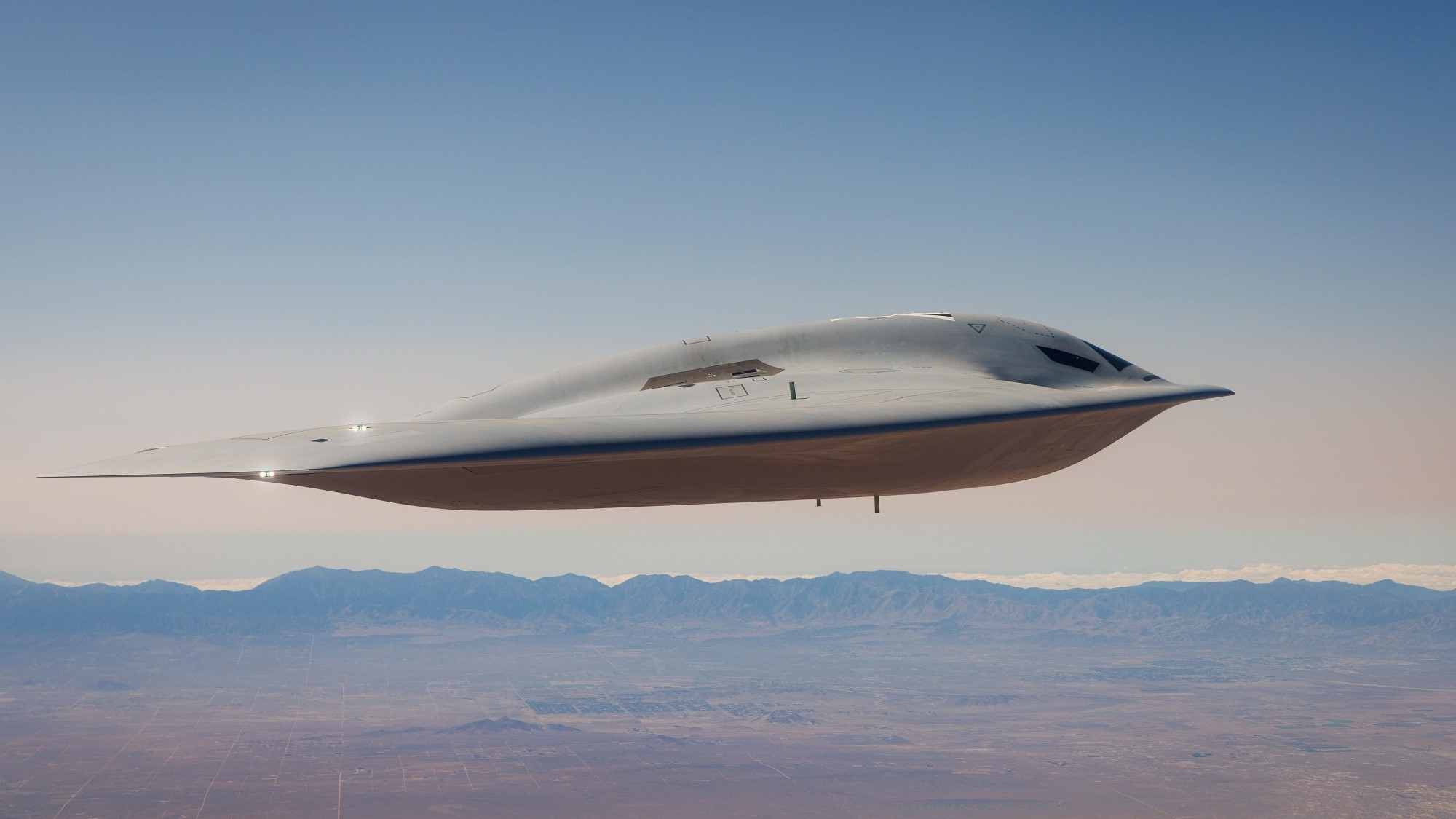
The second B-21 in flight on its way to Edwards AFB. | Source: U.S. Air Force
“The test aircraft will be going there,” Meink said. “We’re going to actually turn the test aircraft into operational aircraft at some point in time. They’ll be going there and starting to really do the things you need to do to prepare the base to get the long-term operational aircraft there.”
The service is working to accelerate the fielding of its new stealth bomber. Work is already ongoing at Ellsworth to build the required facilities and prepare to receive the new aircraft.
“We really pushed to accelerate a lot of this activity,” Meink said. “It’s going to get those aircraft into the hands of the actual units, so that they can start figuring out how they’re going to operate it. It’s pretty exciting.”
Personnel will soon start to familiarize with the bomber in order to be ready for its induction in service, establishing Standard Operating Procedures (SOPs) and policies. With the crew composition now formally established, the service can also begin building the required pilot pipeline.