First Production KF-21 Boramae Delivered to ROKAF
South Korea’s indigenous fighter program enters a new phase as the first serial production KF-21 joins the ROKAF.
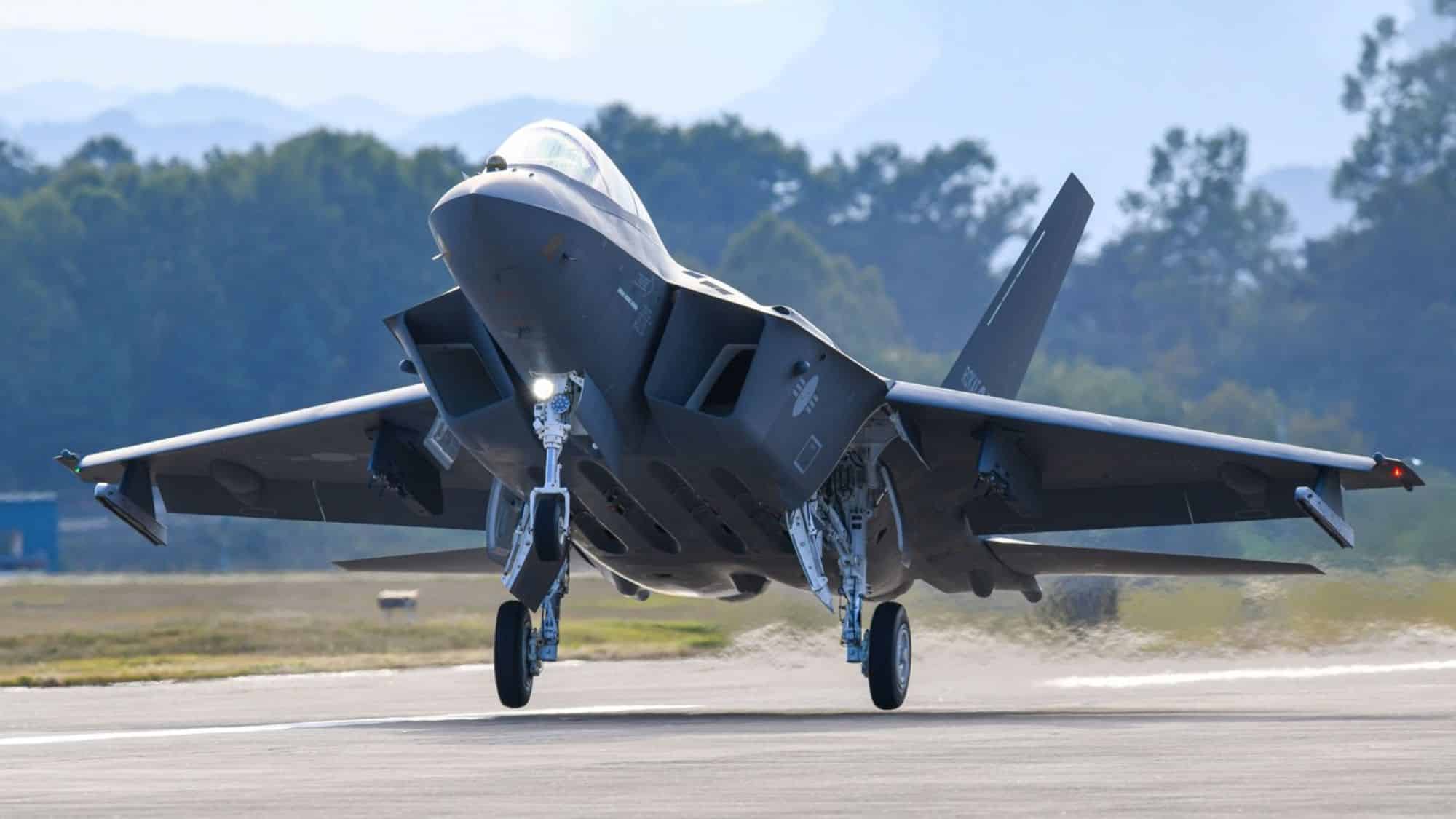
The Republic of Korea Air Force (ROKAF) received its first serial production KF-21 Boramae fighter on Sep. 22, 2026, marking the transition of South Korea’s indigenous fighter program from development to service introduction. Tail number 25-001, bearing full ROKAF markings, left Korea Aerospace Industries’s (KAI) Sacheon plant, and was flown to its initial operating location at Yecheon Air Base in North Gyeongsang Province.
The twin-seat airframe was piloted by Maj. Han Jae-seok, one of the ROKAF’s first KF-21 pilots, who signed the acceptance and delivery documents before flying it to Yecheon Air Base. During the delivery flight, the KF-21 was escorted by an FA-50 light attack aircraft, a TA-50 fighter trainer and a T-50 jet trainer.
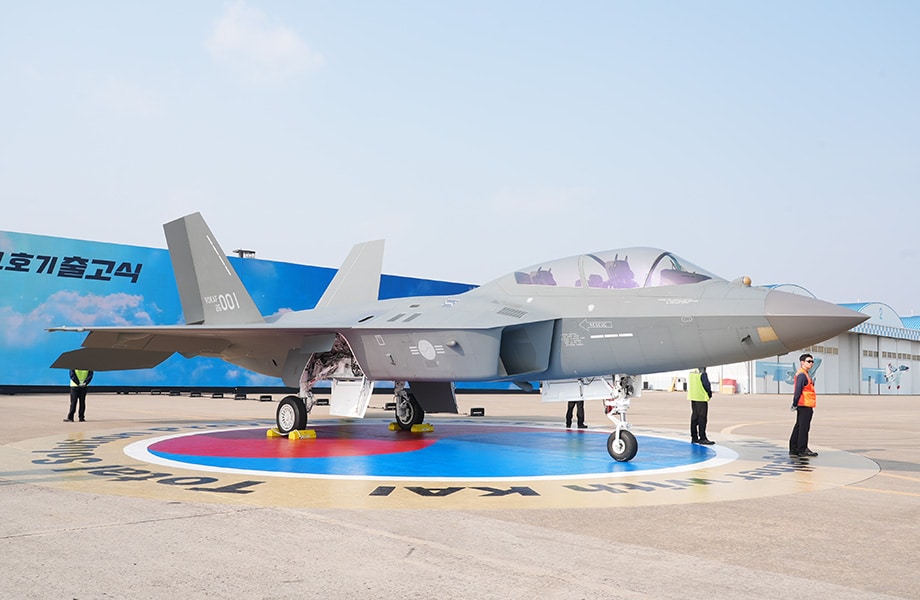
Aircraft ‘001’ rolled out of the factory on Mar. 25, 2026, before going through acceptance trials. The milestone carries considerable national significance, as the KF-21 is South Korea’s first domestically developed fighter aircraft.
This first aircraft was delivered 25 years and six months after then-President Kim Dae-jung announced a domestic fighter aircraft program in March 2001, and approximately ten years and nine months after the start of system development in December 2015.
Güney Kore tarafından geliştirilen FA-50 hafif savaş uçağı, TA-50 ve T-50 eğitim uçakları, teslimat sonrası gerçekleştirilen uçuşta 001 numaralı KF-21 savaş uçağına eşlik etti. https://t.co/OsDS7EHb1j pic.twitter.com/R5azDV2ebd
— Defence Turk (@Defence_Turk) September 22, 2026
In ROKAF service, the KF-21 Boramae ‘001’ – which is a Block I variant – will be assigned to the 156th Fighter Squadron (156th FS), according to Yu Yong-won TV. A former F-4E Phantom II unit, under the 16th Fighter Wing, that was disbanded in 2012, the 156th FS was reactivated on June 1, 2026, as a new KF-21 unit.
National pride and responsibility
ROKAF Chief of Staff, Gen. Sohn Seok-lak, who welcomed the aircraft on the tarmac at Yacheon, said he felt “high pride and immense responsibility in operating Korea’s masterpiece fighters.” Seok-lak added, according to Chosun: “The KF-21, born after overcoming numerous challenges and difficulties, was introduced to the Air Force today and has begun flight operations. Join forces so that the KF-21 can quickly take its place as the highest power protecting Korea.”
The initial ROKAF pilots qualified to fly the aircraft have also received instructor ratings, and will oversee the conversion of future KF-21 pilots. Meanwhile, maintenance personnel have also completed their training on the jet and will support KF-21 logistical operations at the bases.
The production KF-21 during its rollout ceremony. | Source: Korea Aerospace Industries
KF-21 program
The KF-21 prototype was unveiled when it rolled out of the factory in April 2021, and flew for the first time in July 2022. Six pre-production prototypes were subsequently rolled out, logging more than 2,000 hours of test sorties through 2025, according to Yonhap.
KAI then received a 1.9 trillion Won award for the first 20 Block I jets. The ROKAF is looking at a fleet of 40 KF-21 Block I jets, to be delivered by 2028, followed by 80 Block IIs by 2032.
The Block IIs would have a significant air-to-ground capability. The Block III meanwhile would have capabilities and features that would bring it closer to a fifth generation class.
These include low-observable coating, internal weapons bays – replacing the four recessed hardpoints on the underside – advanced computing, sensor fusion and indigenous KTF16000 engines being developed in parallel under DAPA’s Advanced Aviation Engine Development Project.
Replacing the current General Electric GE414 that Hanwha Aerospace manufactures locally under license, the KTF16000 is expected to produce 16,000 pounds of dry thrust and 24,000 pounds with afterburners. The manufacturing and ground testing phases are reportedly scheduled to allow a first KF-21 Block III flight with the new engine by 2040.
Reports have said that these future variants would have a progressively increasing volume of indigenous subsystems and components, reducing export restrictions and increasing the chances to secure foreign sales.
Future
The ROKAF’s introduction of the KF-21 could provide an operational reference point for KAI in future export campaigns, enhancing the fighter’s international appeal. Indonesia, the first foreign user of the type, was originally a development partner in the KF-21 program, but its role was subsequently reduced amid disputes involving funding, workshare, and allegations of industrial espionage.
The Philippines has long been reported by local and defense media to be considering the Boramae, with reportedly unofficial talks ongoing between KAI, the Philippine Air Force and the Department of National Defense. The status of the discussions is however unclear.
— Para Bellum (@ReHorizon3) September 22, 2026
According to the reports, Manila expects KAI to set up a large Maintenance Repair and Overhaul (MRO) facility in the country. KAI on its part has communicated that such an installation can be viable only with a large fleet of its aircraft.
The Philippine Air Force already operates 12 of KAI’s FA-50 light attack aircraft, and has ordered 12 more which will be delivered by 2030.