Dassault Tests Rafale with New AI Technologies for Crew Support
The flight tests support Dassault Aviation’s efforts to integrate AI into the Rafale cockpit as France advances development of the F5 standard.
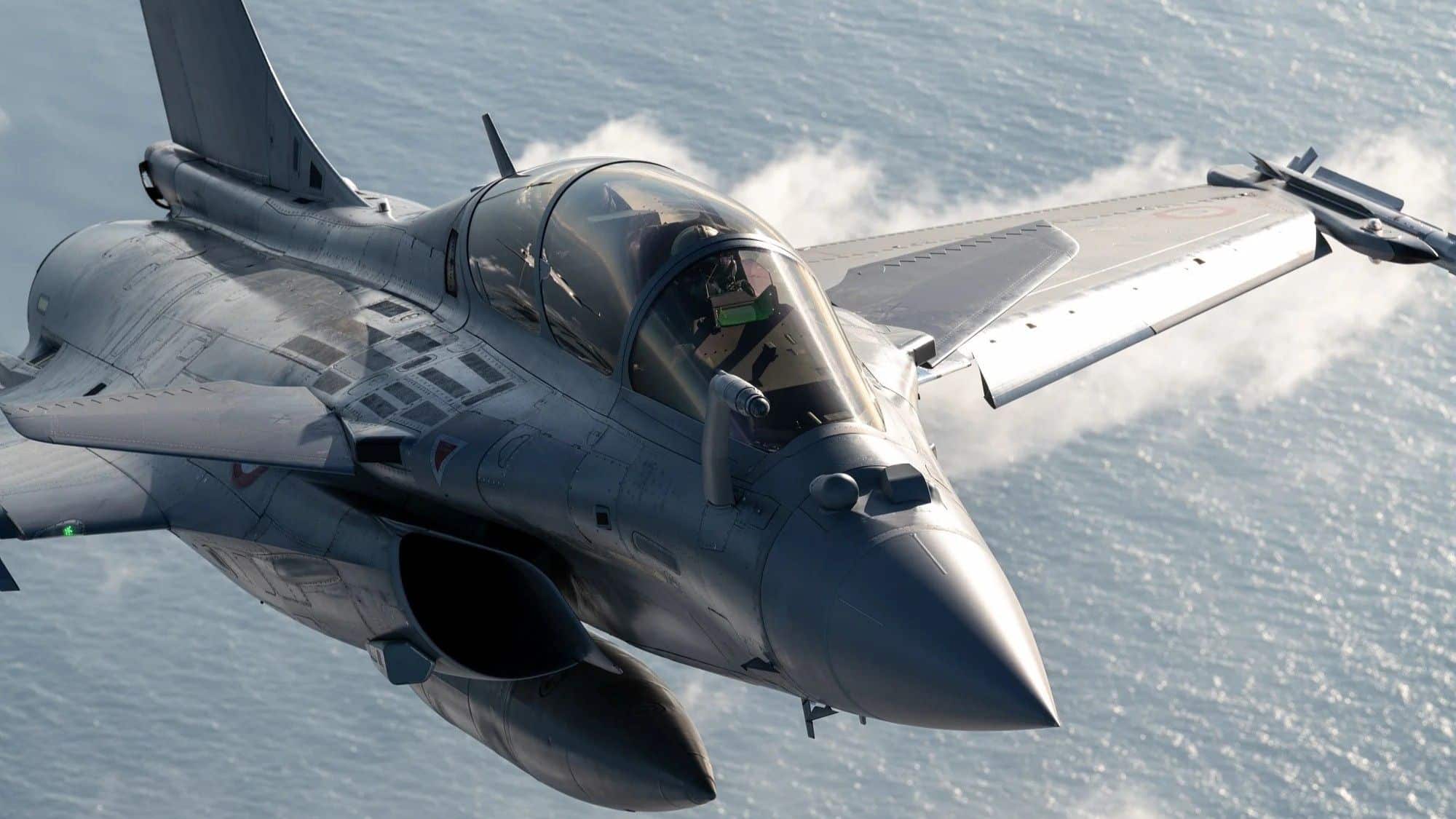
The Rafale fighter has been flight-tested with two new Artificial Intelligence (AI) technologies designed to support the human crew, which could potentially be included in future upgrades for the fighter, Dassault Aviation announced on Sep. 22, 2026. The announcement comes as France advances the development of the Rafale F5 standard, after the DGA awarded initial technology-development contracts earlier this month.
According to Dassault, the two new “sovereign AI algorithms” include one developed in-house by the company’s engineers and another developed in collaboration with Thales/cortAIx. The company said: “The development of these new functions is part of a broader initiative to integrate controlled and supervised AI into the cockpit, serving the human crew. They have reached a level of maturity that makes them eligible for future Rafale upgrades.”
Une nouvelle Intelligence Artificielle vole à bord du #Rafale de #DassaultAviationhttps://t.co/Cv1ymKTeXo
New Artificial Intelligence Takes Flight on Dassault Aviation’s Rafalehttps://t.co/SfXKwcYUnu pic.twitter.com/twLmKJxVRi
— Dassault Aviation (@Dassault_OnAir) September 22, 2026
Dassault described the activity as “in-flight” testing but did not disclose details about the test configuration or the specific functions performed by the algorithms. However, the company said it now has “the availability and quality of operational data” to address “several key challenges specific to military aviation.”
The AI technologies in the cockpit are intended to support the human crew and potentially reduce the pilot’s cognitive workload, allowing the pilot to focus on tactical decision-making. The company did not provide details about the functions which would be executed by the AI.
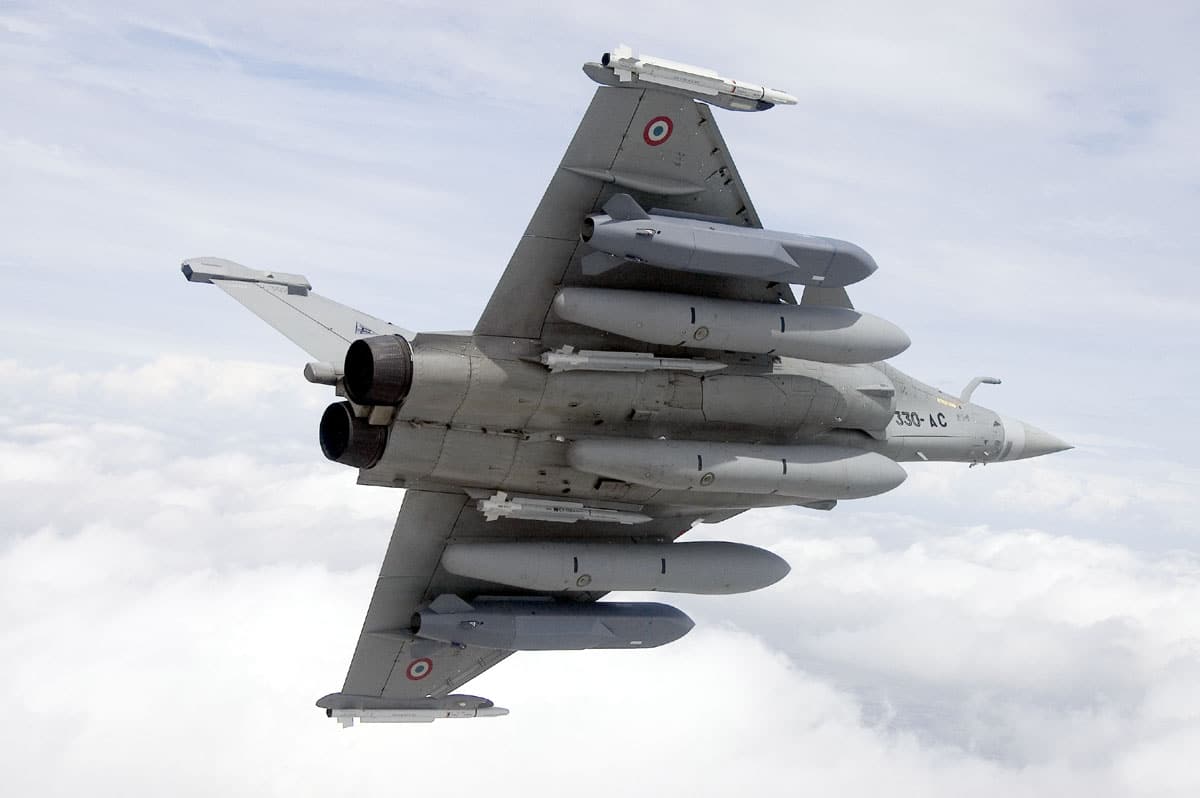
A Rafale fighter aircraft showing off the extent of its capabilities, carrying 2x MICA IR (wing tips), 2x MICA EM, 2x SCALP/Storm Shadow and 3x fuel tanks. | Source: Alexandre Paringaux/MBDA
The announcement follows a demonstration in July involving a Rafale F4 and a drone equipped with Harmattan AI’s NAMIB electronic warfare payload which simulated a Suppression/Destruction of Enemy Air Defense (SEAD/DEAD) scenario. The NAMIB is an electronic warfare (EW) payload capable of detecting, identifying, and geolocating electromagnetic emissions.
The “collaborative engagement,” according to Dassault, saw NAMIB detecting with high precision a radar emission tens of kilometers away and transmitting the targeting information to the crewed fighter. The Rafale subsequently simulated an anti-radiation missile launch.
For the Rafale F5 program, the Directorate General of Armaments (DGA) awarded contracts to Dassault Aviation, electronics producer Thales, engine maker Safran and munitions developer MBDA, to begin maturing their technologies as a risk-reduction effort. The goal is to meet the Rafale F5’s 2033 fielding timeline with the French Air and Space Force and the French Navy.
NAMIB, le nouveau produit de guerre électronique embarqué développé par Harmattan AI et Dassault Aviation, réalise un vol collaboratif avec un Rafalehttps://t.co/uDl4BRkmKR pic.twitter.com/YT6Q78A0Sr
— Dassault Aviation (@Dassault_OnAir) July 13, 2026
Rafale F5
The most sophisticated modernization of the Rafale to date, the F5 standard was originally a milestone meant to lay the foundation for France’s future generation fighter. However, the acceleration in the F5 program comes after the demise of the Franco-German sixth-generation Future Combat Air System (FCAS) – where Dassault had pushed for a larger workshare.
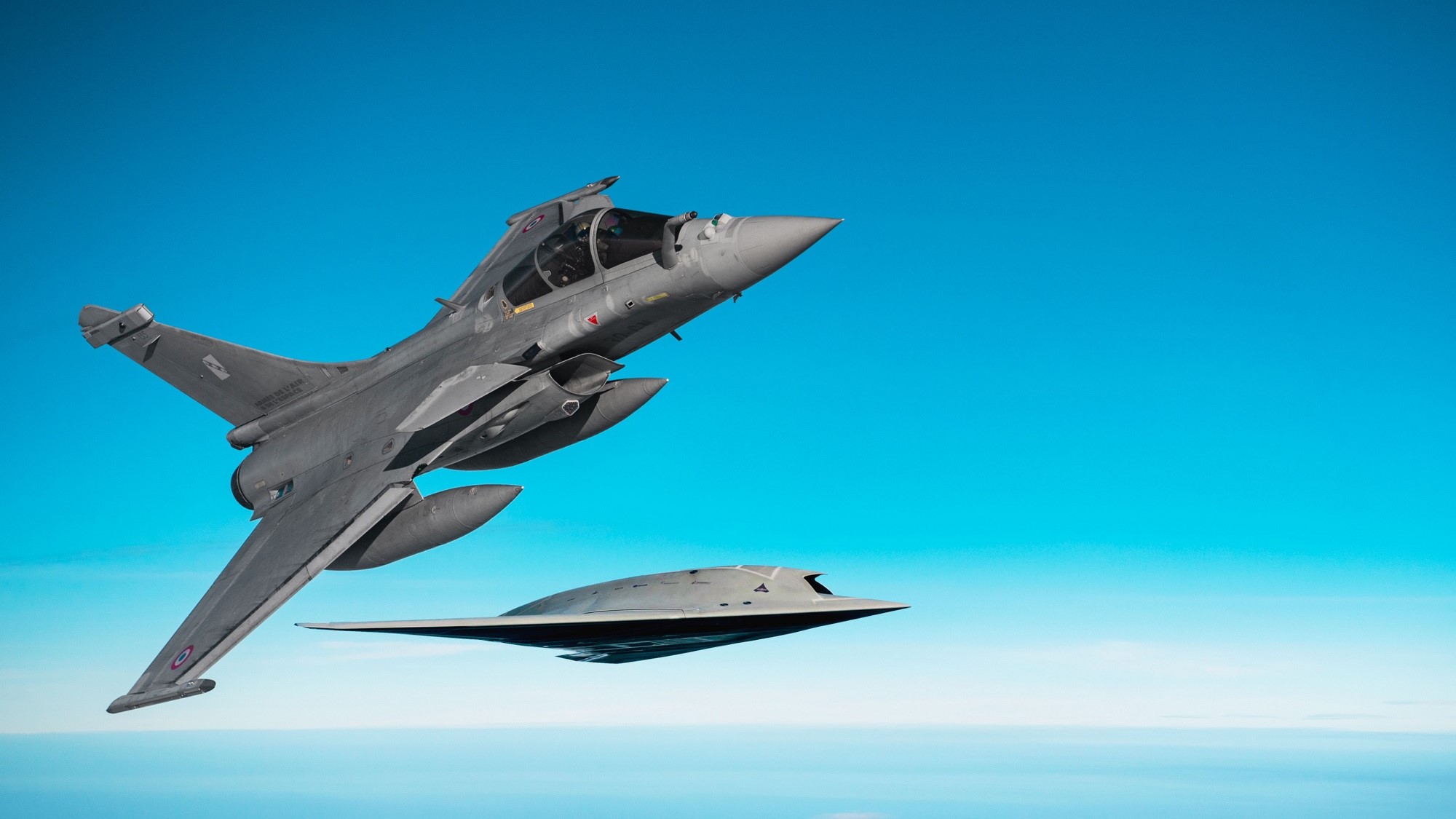
A French Air Force Rafale C breaks away from a formation with the Dassault nEUROn. | Source: Armée de l’Air et de l’Espace
The contracts awarded to date cover the newer propulsion, display, radar, sensors, communication, navigation suites and electronic warfare technologies. One of the primary weapons capability would be the ASN4G nuclear missile, developed in line with France’s planned renewal of its airborne nuclear deterrence component and the expanding nuclear umbrella and forward deterrent posture.
Rafale F5’s systems
The DGA’s contracts engages the four principal players in the Rafale program; Dassault Aviation, responsible for developing the primary airframe and integration; Safran, which is working on the new version of the M88 engine; Thales, responsible for the sensors, avionics, electronic warfare and the new radar; and MBDA, which is working on the weapons systems.
Notifiés à @Dassault_OnAir, @MBDAGroup, @SAFRAN et @thalesgroup, ces contrats permettent de sécuriser le prochain standard du Rafale
— Direction générale de l’armement (@DGA) September 9, 2026
The DGA has identified a very-low-drift inertial unit based on a hemispherical resonator gyroscope (HRG), which will be developed by Dassault Aviation, as one of the systems being introduced in the Rafale F5. The award to Thales covers a new Inter-Vehicle Data Link (IVDL), that generates a “high-speed, discreet, and jamming-resistant waveform” that can survive in heavy electronic warfare environments.
The primary upgrade involving the Thales RBE2 AESA radar is the RBE2-XG, a new variant of the radar which uses Gallium Nitride (GaN) semiconductors. Compared to Gallium Arsenide, GaN technology can support higher power density while an equal or reduced amount of heat produced, potentially enabling greater performance and design flexibility.
The DGA has explained that the RBE2-XG will be more resilient to cyber and electronic warfare attacks. “This new radar will benefit from a substantial increase in power, and consequently in detection range, as well as improvements in the identification of targets with an extremely low radar cross-section (RCS). Its computing capabilities will also be enhanced to facilitate the integration of artificial intelligence,” said the DGA.
La @DGA commande les premiers travaux en amont du prochain lancement en réalisation du standard F5 du #Rafale, prévu fin 2026 https://t.co/kj489BtErX pic.twitter.com/fmZnZgGUm2
— Philippe Top-Action (@top_force) September 10, 2026
Additionally, with “collaborative combat in mind,” the RBE2-XG will feature “sensors capable of working together without the need for pilot intervention.” Integration of Artificial Intelligence (AI) meanwhile will “enhance computing capabilities.”
The F5 version of the SPECTRA self-protection and electronic warfare suite, developed by Thales and MBDA, is expected to provide improved detection, interception and jamming capabilities.
Safran’s M88-2 engine will be upgraded to the M88 T-REX standard, which increases thrust by 20%, from 7.5 to 9 tonnes. The M88 T-REX retains the M88-2’s modular architecture, structure and low fuel consumption structure, and low fuel consumption while incorporating modifications to several modules intended to simplify maintenance without requiring the entire aircraft to be disassembled.
Armés jusqu’aux dents.
Le week-end dernier, aux journées portes ouvertes de la BA 113 Saint-Dizier, les Rafale se sont dévoilés sous leur meilleur profil.
Et avec cette colorimétrie grise, on adore ! pic.twitter.com/NENbxT8Dme
— Armée de l’Air et de l’Espace (@Armee_de_lair) September 17, 2026
The development of the Rafale F5 is therefore to extend the aircraft’s capabilities into the next decade and beyond in the absence of a classic fifth generation capability. Incorporating major improvements in sensors, electronic warfare, connectivity, propulsion, and collaborative combat, the upgrade is expected to significantly expand the Rafale’s capabilities beyond the Gen. 4.5-class.
As the future of the European sixth-generation fighter effort remains uncertain, the Rafale F5 could serve as a technological bridge toward France’s next-generation combat aircraft. The future relationship between France and its European partners will influence whether Paris pursues a jointly developed next-generation fighter or an independent national solution.