Bomb Markings On Thai F-16s Shed New Light On Cambodia Combat Operations
Mission markings appearing on Royal Thai Air Force F-16s offer new clues about the weapons and aircraft employed during the 2025 fighting with Cambodia, which also saw the Gripen’s combat debut and strikes involving T-50THs.
In the summer of 2025, a border incident broke out between the two Southeast Asian countries of Thailand and Cambodia. An armed confrontation had already occurred on May 28, 2025, before much wider fighting broke out in July. The brief conflict was followed by a wider air and ground clash in December. Thai ground forces were supported by the air force in large numbers and with various types of aircraft both around the border and in the Cambodian hinterland.
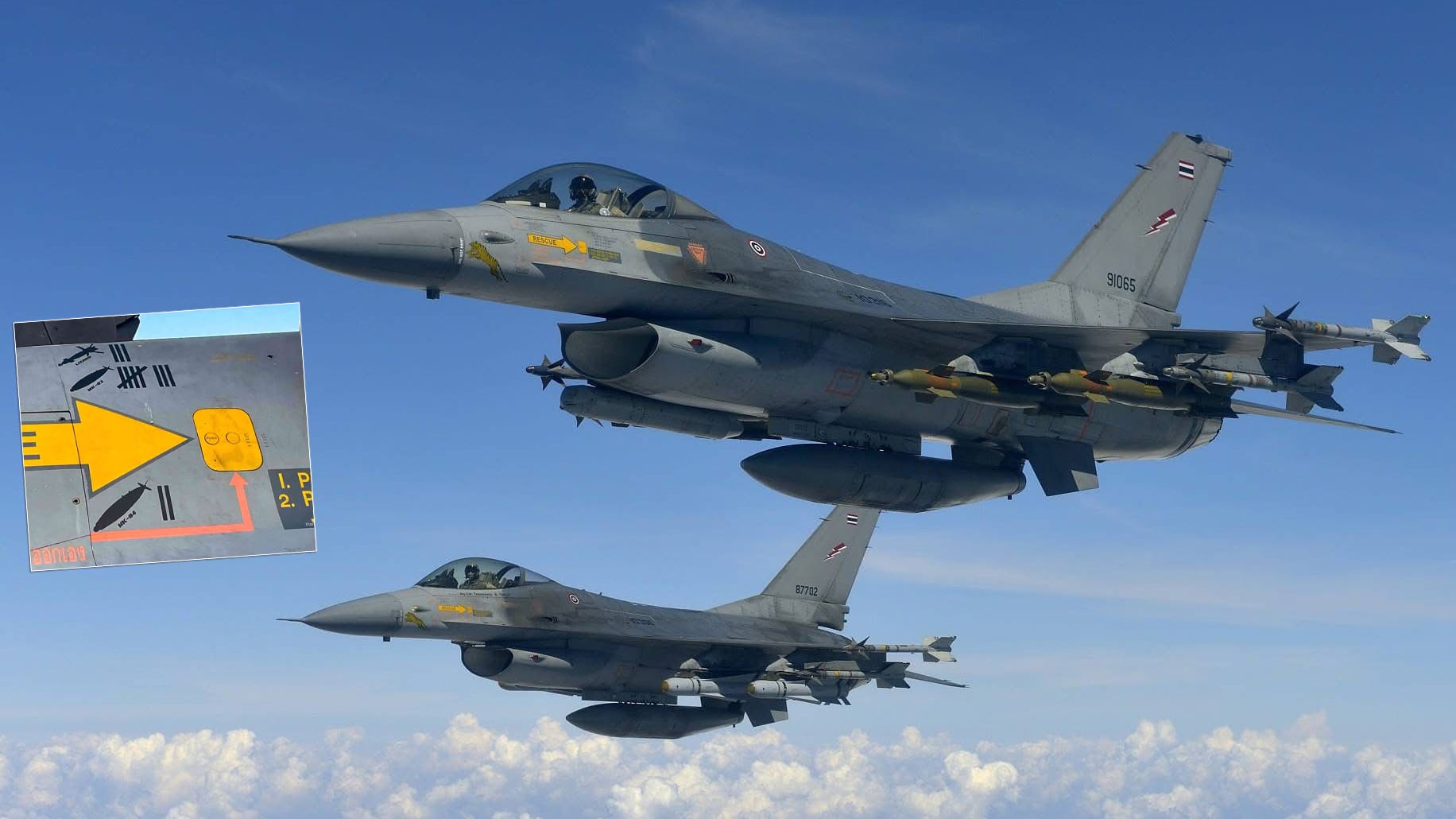
RTAF F-16 with AMRAAM, IRIS-T and GBU-12. | Source: RTAF
The border dispute between Cambodia and Thailand stems from the ambiguity of the border demarcations established under the 1904 and 1907 agreements, which were made during the demarcation of the border between the Kingdom of Siam (now Thailand) and the French Third Republic, along the border with French Indochina. After Cambodia gained independence from France in 1953, the sovereignty of the Preah Vihear temple complex became a focus of dispute.
The International Court of Justice (ICJ) issued a ruling in 1962, awarding the temple itself to Cambodia, citing historical maps and French survey documentation. However, disputes remained over the surrounding territory. In 2013, following a request by Cambodia for an interpretation of the 1962 judgment, the ICJ clarified that its earlier ruling had awarded Cambodia sovereignty over the entire promontory of Preah Vihear and required Thailand to withdraw its personnel from that territory. The ruling did not resolve sovereignty over other disputed areas outside the promontory, and broader sections of the border remained contested.
The dispute remained largely dormant until the end of the 20th century. Between 2008 and 2011, military clashes flared up again, including artillery clashes, border guard incidents, and limited incursions, resulting in several deaths and injuries on both sides. These clashes highlighted the persistent instability and challenges in the region.
A key incident that further escalated tensions occurred on July 23, 2025, when soldiers from the Thai 14th Infantry Battalion stepped on a landmine in Nam Yuen District, Ubon Ratchathani Province. The incident left five Thai soldiers injured, with one losing his right leg. The Thai Foreign Ministry issued a statement strongly condemning the incident, saying newly laid mines violated Thailand’s sovereignty and the Ottawa Convention on the Prohibition of Anti-Personnel Mines. Cambodia rejected the accusation that it had laid new mines, saying the incident occurred in an existing minefield inside Cambodian territory. The situation quickly escalated into armed conflict following the mine incident.
The air force was immediately put on alert. In the south, the 7th Wing’s Gripen jets in Surat Thani Province relocated some of its aircraft to the north at Korat Air Base, 130 km (80 mi) from the border, where F-16s of the 1st Wing, including 103rd Squadron, are also based. The initial clashes lasted five days, but the Thai Air Force acknowledged that its aircraft had carried out several bombing raids against Cambodian forces. It was then that the news broke that the Gripen had carried out its first combat strikes. This was not only the first time in Thai service, but also the first known combat employment of the type itself. Although Swedish Gripens participated in the 2011 Libyan conflict, they only carried out reconnaissance missions there from Sicily. Another clash began on Dec. 7-8, 2025, lasted for weeks, and saw more intensive air and ground operations from both sides.
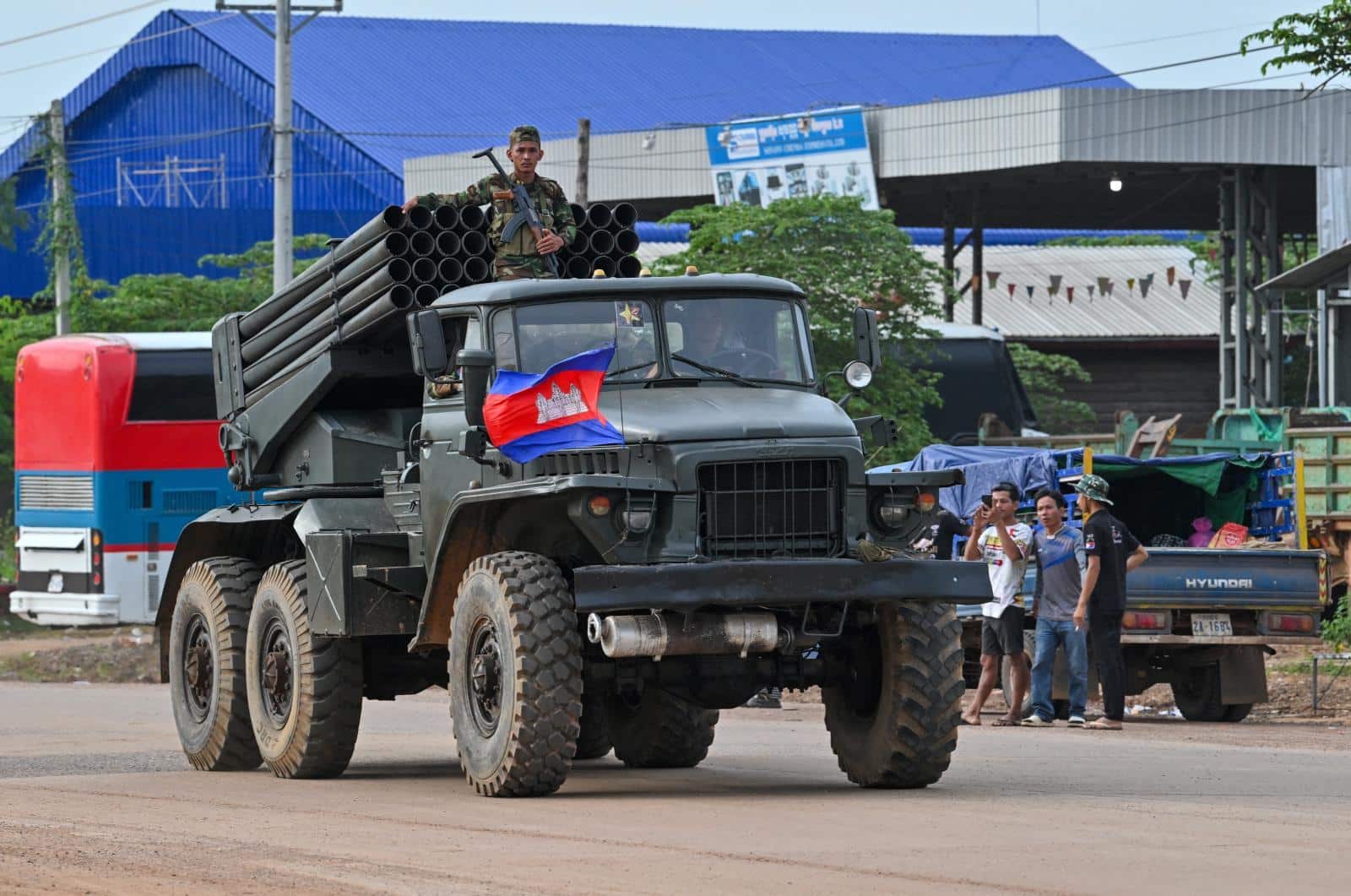
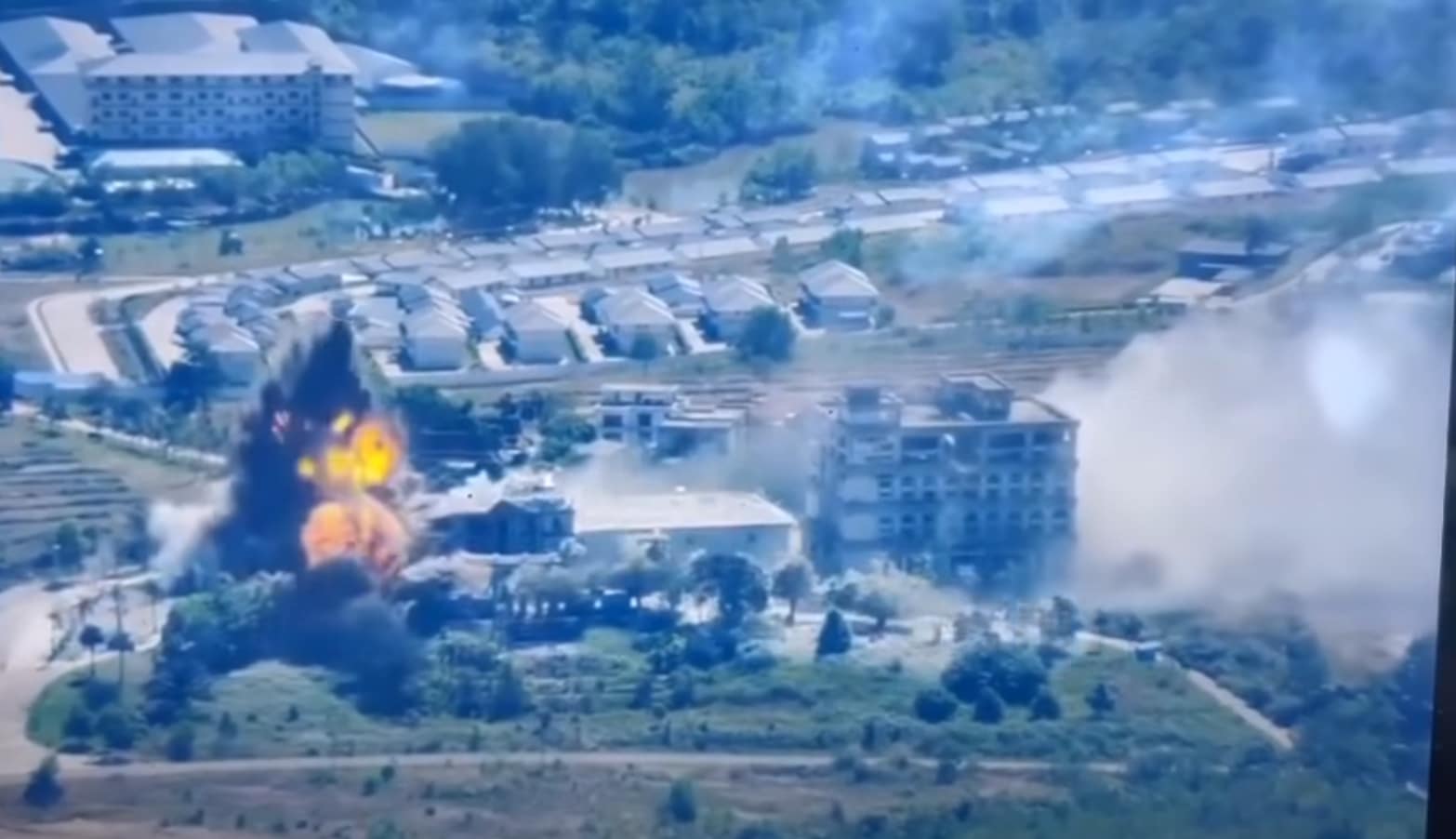
On Dec. 9, 2025, the Air Force’s JAS 39 Gripen fighters carried out an airstrike on a casino opposite the Chong Chom border crossing in Surin Province, Cambodia. This happened after the casino was reportedly used by the Cambodian army to launch attack drones, as a hideout for BM-21 Grad 122 mm rocket launchers, and as a troop staging point, according to the Thai military. On the evening of Dec. 10, 2025, F-16 fighter jets carried out an airstrike, dropping bombs on a casino building in the Chub Ko Kee area of Banteay Ampil district, Cambodia. In addition, Thai troops provided artillery support for an attack on a Cambodian oil depot opposite the Sai Taku border crossing in Ban Kruat district, Buriram Province. The attack came after the Thai side claimed that the casino and oil depot were being used by Cambodian forces as military facilities, including as a site for attack drone operations against Thai soldiers and as a storage facility for heavy weapons and BM-21 rockets.
Cambodian BM-21 GRAD. | Source: Tang Chhin Sothy / AFP
On the morning of Dec. 12, 2025, the Thai military reported the successful destruction of military targets opposite Chanthaburi and Trat provinces, supported by airstrikes to weaken Cambodian forces. Estimated Cambodian losses, according to the Thai side, were nine armored vehicles and tanks, 68 drones, one counter-drone system, three communication towers, and one BM-21 multiple launch rocket system. F-16 fighter jets also attacked ground targets, dropping GBU-12 Paveway II laser-guided bombs on what the Thai military described as a Cambodian army warehouse storing BM-21 rockets and heavy weapons.
At 5:45 a.m. on Dec. 13, 2025, a reporter monitoring the situation at Ban Chamrak, Mueang District, Trat Province, on the Thai-Cambodian border reported that two F-16 fighter jets began bombing targets around the Chai Chum Neang Bridge in Pursat Province, Cambodia. The first bombing occurred at 5:51 a.m., and the fifth and final one at 6:12 a.m. The first two attacks targeted a nearby casino building, while the final rounds targeted the Chai Chum Neang Bridge and a bridge parallel to it, about 5 km from the border. The attacks reportedly damaged both river crossings, disrupting the transport of military equipment from the Cambodian side. The casino building was also damaged.
Casino gambling is prohibited in Thailand, so in recent years casinos have been built on the other side of the border, in Cambodia. Many of the buildings are located immediately beyond Cambodian border crossings and cater heavily to Thai and foreign customers.
The destruction of the Thmodah Casino | Source: RTAF
On Dec. 15, 2025, F-16s carried out an airstrike, bombing Cambodian arms and ammunition depots located approximately 72 kilometers from the Thai border in Preah Netr Preah district, Banteay Meanchey Province.
During the morning of Dec. 15, 2025, F-16s dropped two bombs on a building complex in Poipet, Banteay Meanchey Province, known for its casino tourism. The Thai Air Force said the operation was in a suburban area and did not target civilians, while Cambodian authorities and media reported damage to a civilian warehouse, claiming that it was bombed by Thai forces. Royal Thai Air Force spokesman Maj. Gen. Chakrit Thamvichai said the operation targeted an ammunition depot used to stockpile BM-21 rockets, which Cambodia had used to attack Thai civilians the previous night.
Cambodian buildings destruction at Preah Netr Preah. | Source: RTAF
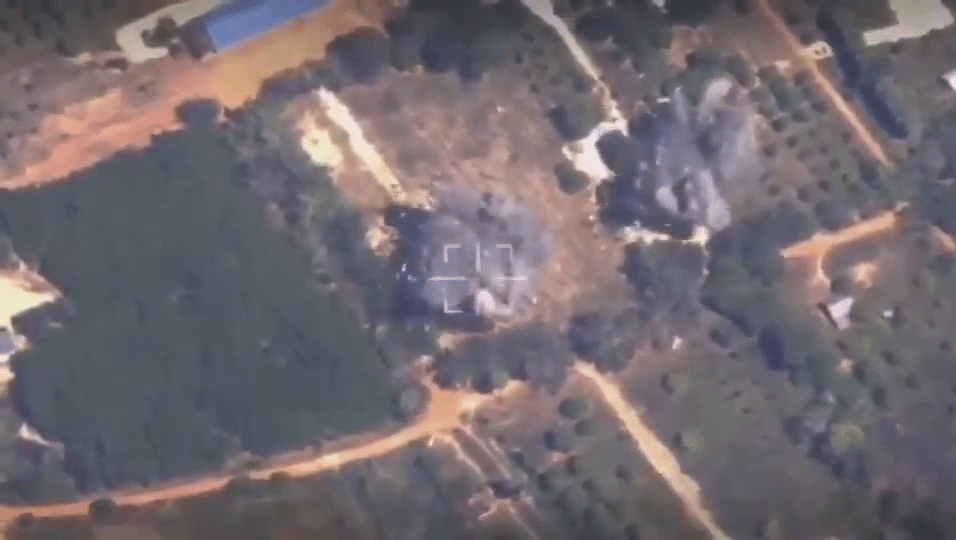
The spokesman said, “Prior to the attack, the Thai military conducted intelligence gathering to confirm that the target was military. We observed activity around the building, including the loading of BM-21 rockets, which led us to conclude that the target was legitimate for the attack. We detected secondary explosions at various points, indicating the destruction of BM-21 rockets that were stored in that area,” Chakrit explained, showing video footage of the operation at a press conference.
On Dec. 18, 2025, images posted on Cambodian social media showed the wreckage of a Thai unmanned aerial vehicle (UAV), with Cambodian sources claiming that it had been shot down. The downed UAV was a DP-20. Thai authorities subsequently confirmed the loss but said the aircraft had lost control at approximately 8:00 p.m. on Dec. 17, 2025, with its last signal detected about 10 km east of Poipet. According to Thailand’s Joint Press Center, the DP-20 was developed by Thailand’s Defence Technology Institute and was still in the research and testing phase, supporting Royal Thai Army operations. Thai authorities said the cause of the loss remained under investigation.
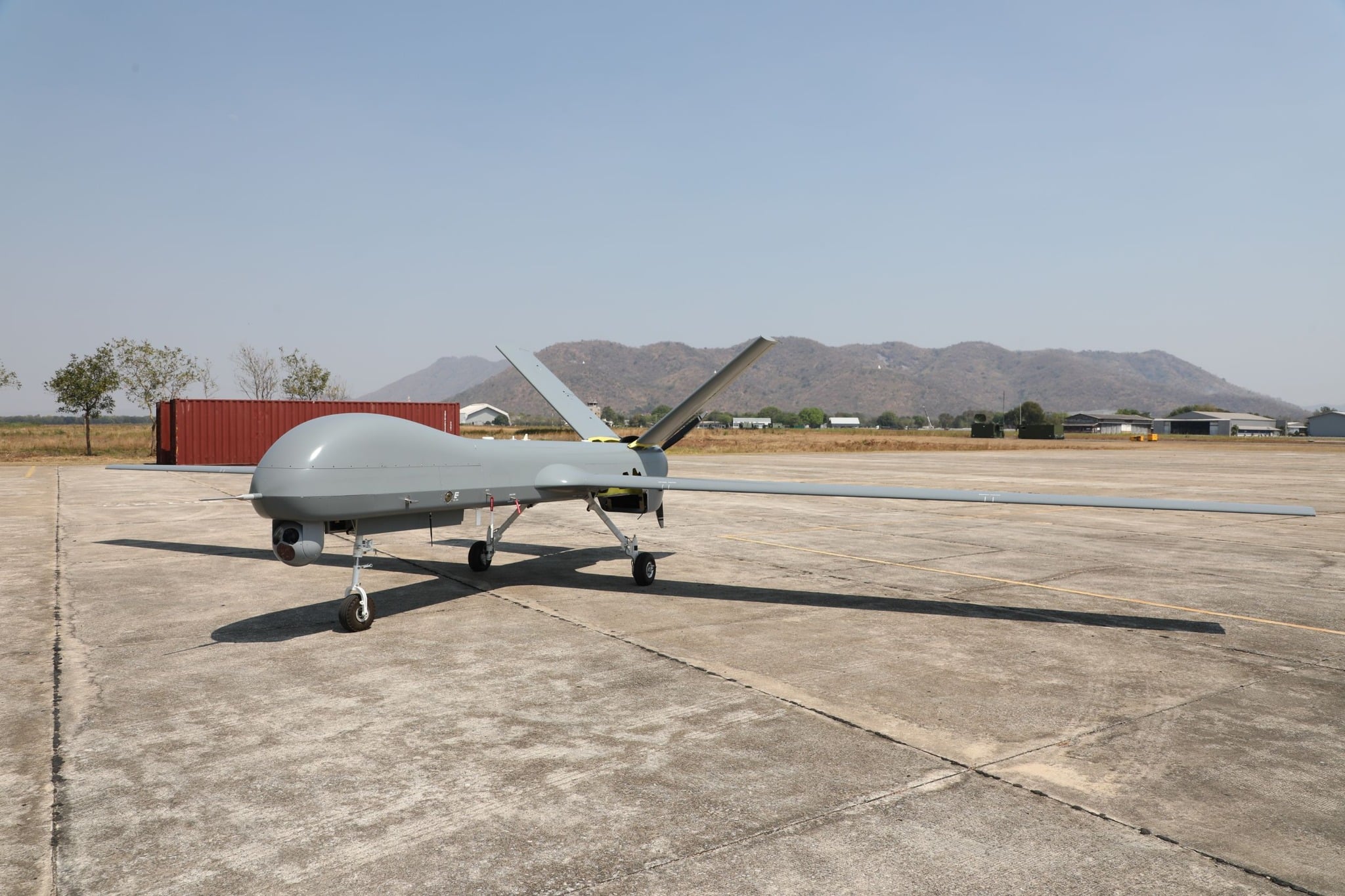
On Dec. 21, 2025, a Royal Thai Air Force Aerostar BP unmanned aerial vehicle (UAV) crashed in Banteay Meanchey, opposite Sa Kaeo Province. Cambodian forces claimed to have shot down the aircraft. The Aerostar BP has been in service with Thailand for about 10 years, used by the air force for surveillance and reconnaissance, and is currently stationed with the 3rd Wing’s 301st Squadron in Watthana Nakhon. On Dec. 24, 2025, it was reported that KAI T-50TH aircraft had been deployed to attack Cambodian targets. On the same day, an F-16 fighter jet dropped bombs on a Cambodian fortified command post near Phnom Chearach Mountain.
Finally, on Dec. 27, 2025, Thailand and Cambodia signed a ceasefire agreement, ending 20 days of fighting along their border over territorial claims. The ceasefire took effect at noon local time.
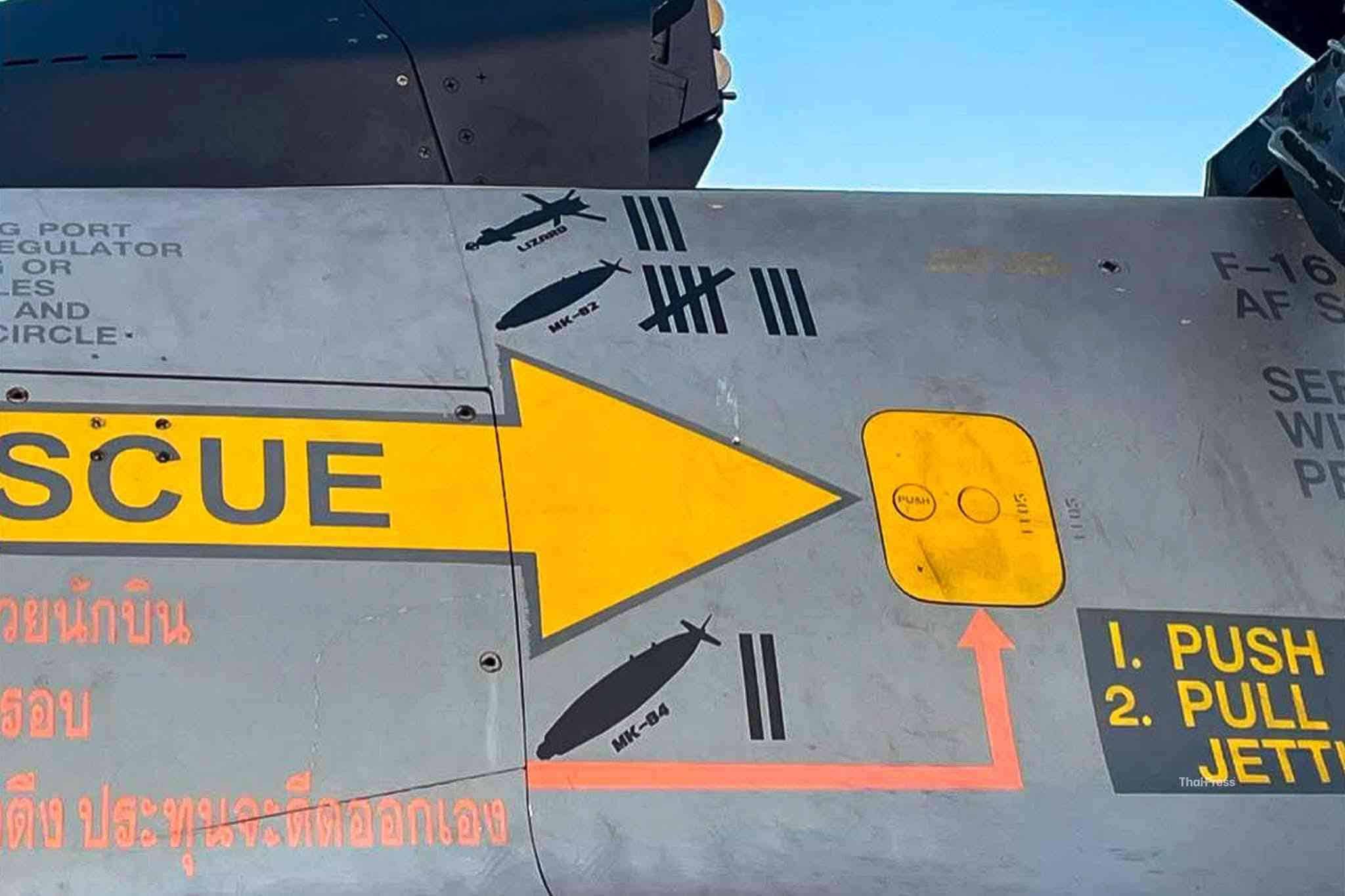
In Thailand, Children’s Day is celebrated nationwide on the second Saturday of January. For this occasion, the Thai armed forces, including the air force, hold open days and flying displays at many of their bases. During the event held on the military side of Bangkok’s Don Mueang International Airport, the F-16 aircraft with Thai registration number 10311 (serial number 87-0707) from 103rd Squadron flew a spectacular display. But it was not this, but the markings painted on the left side of the aircraft, under the cockpit, that attracted the attention of the audience. Here, bomb silhouettes could be seen, which would indicate that the aircraft flew combat missions during the Cambodian conflict. Under the three Lizard laser-guided bomb markings, several Mk.82 and Mk.84 icons could also be made out.
The mission markings have been appearing on the sides of several aircraft in recent months on social media platforms of various Thai armed forces pages, including the Air Force, and in photos posted by several civilian photographers. So far, a total of 19 Thai F-16s have been identified with various bomb icons (Mk.82, Mk.84, Lizard/GBU-12), including aircraft from 103rd Squadron, which flies F-16A/B Block 15 OCU (Operational Capability Upgrade) aircraft, and, more recently, 403rd Squadron, which operates F-16A/B Block 15 aircraft upgraded to the MLU standard.
Thailand’s first batch of 12 aircraft (eight F-16As and four F-16Bs) arrived in Thailand in 1988. In September 1995, Thailand received the first aircraft from a second shipment of 18 Block 15 OCU aircraft, 12 A-models and six B-models. These were used to form a second F-16 squadron based in Thailand. The last six F-16s were delivered in February 1996 and were among the last new-build Block 15 aircraft produced.
On July 14, 2000, the Thai government decided to purchase 16 used F-16s (15 A-models and one B-model), including former U.S. Air Force ADF variants, to form a third squadron. On Nov. 18, 2004, it was announced that Thailand would receive seven former Singapore F-16A/Bs (three A- and four B-models), which were delivered in 2005. Instead of a government-to-government purchase, these aircraft were donated to the air force by the Singaporean government as part of an arrangement connected with Singapore’s use of Thai airspace and training areas.
By the 2000s, many of the aircraft were approaching their 20th year of service, so a Mid-Life Upgrade (MLU) program was initiated for 18 aircraft assigned to 403rd Squadron. The MLU program was intended to extend the aircraft’s capabilities and service life, which was a more cost-effective solution than purchasing new aircraft. For the modernization, the air force commissioned Thai Aviation Industries (TAI), in collaboration with Lockheed Martin, in three phases, with six aircraft per phase, so a total of 18 aircraft underwent the program during the 2010s. The MLU included the new AN/APG-68(V)9 radar, AMRAAM capability, improved IFF equipment, an upgraded countermeasures system, the Link 16 encrypted data communications system, and the JHMCS (Joint Helmet Mounted Cueing System). The last six aircraft were delivered to 403rd Squadron on Sept. 24, 2018.
Delivery of the first F-16 MLU. | Source: RTAF
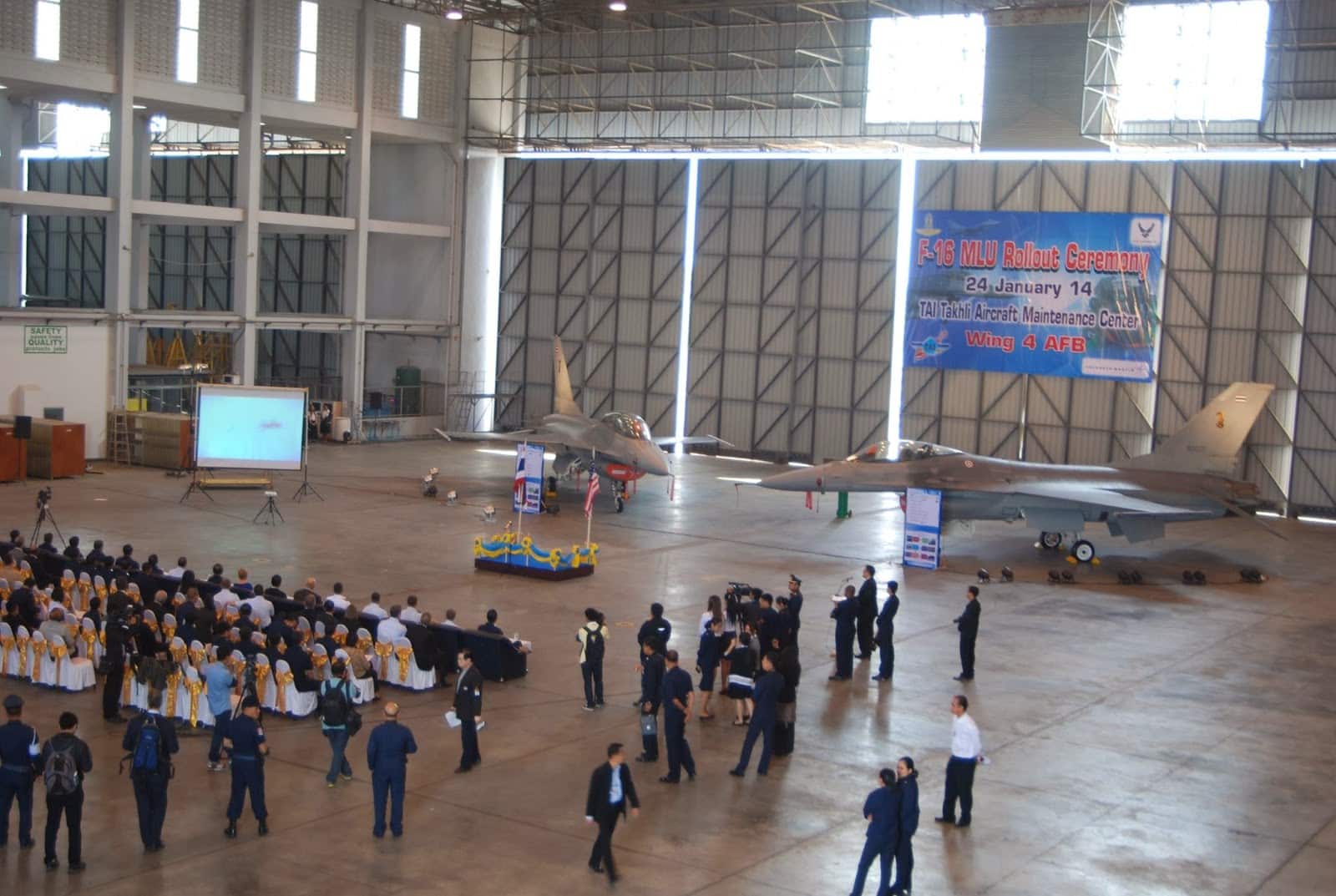
As for the bombing, it is worth mentioning that on the two-seat aircraft with serial number 10304, in addition to the 16 Mk.82 icons, a KGGB icon could also be seen. The KGGB (Korean GPS Guided Bomb) is a guided glide bomb system that can be attached to the Mk.82 conventional general-purpose bomb. The KGGB is capable of hitting targets from long distances and has a fire-and-forget capability. It was developed by South Korea’s Agency for Defense Development and LIG Nex1. It was officially announced in November 2023 that the Thai Air Force had adopted the KGGB. Although the number was not officially disclosed, Janes reported that the RTAF had ordered 20 KGGB kits in two batches of 10 in 2022.
F-16 serial 10311 with bomb marks. | Source: RTAF
The KGGB is a precision-guided munition (PGM) equipped with GPS/INS guidance. It integrates a Global Positioning System (GPS) and an Inertial Navigation System (INS), enabling effective operation regardless of the time of day and providing a degree of resilience in degraded navigation environments.
What makes the bomb interesting is that it was designed to minimize the additional aircraft integration required. Basically, an aircraft already capable of carrying the Mk.82 can potentially employ the weapon with comparatively limited modifications. This may be why the KGGB was visible on older South Korean F-5 and F-4 aircraft and was dropped during testing. A portable touchscreen tablet is used as part of the weapon’s cockpit interface. According to Korean sources, it can engage targets at ranges of up to around 100 km, depending on launch conditions.
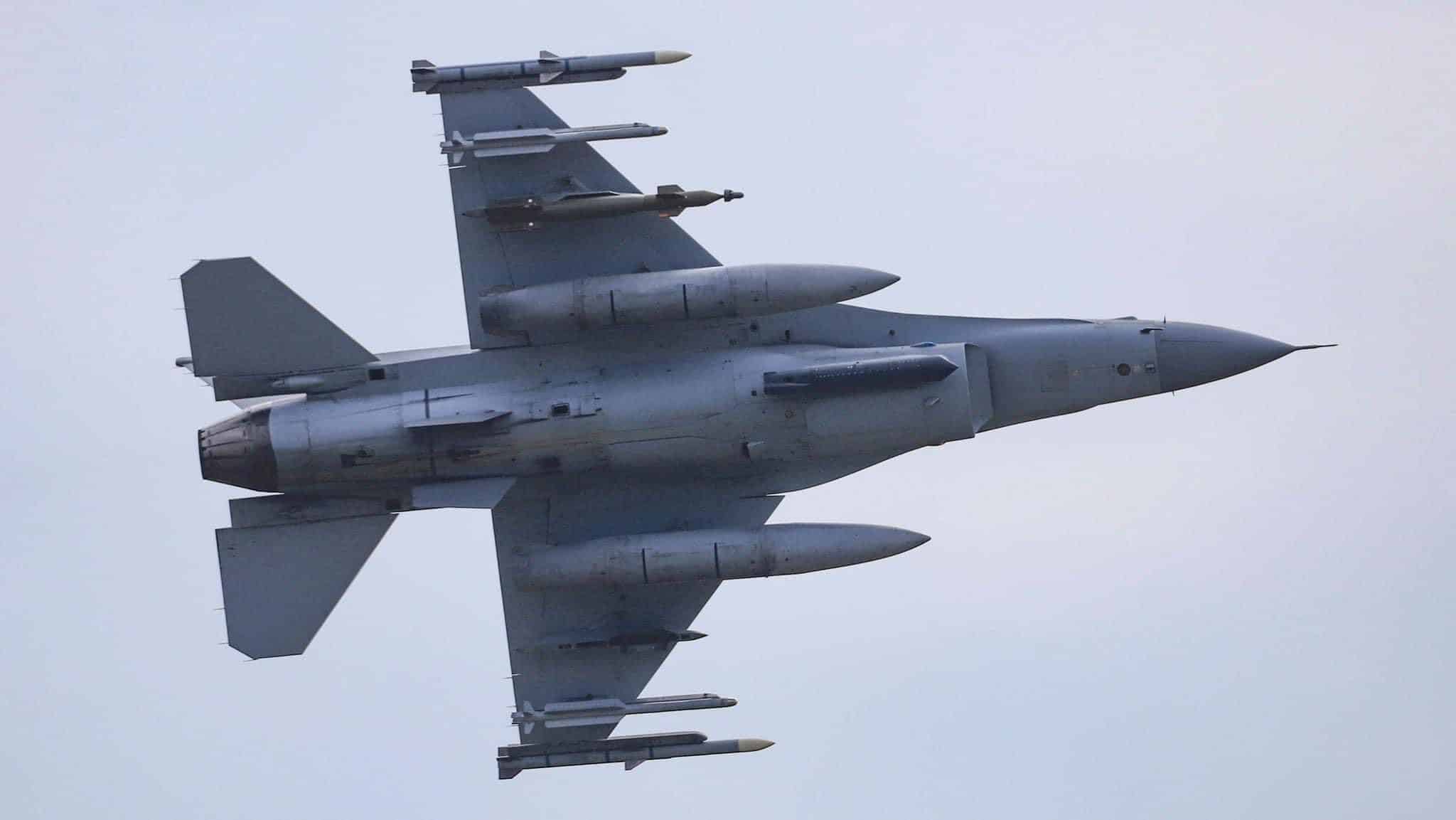
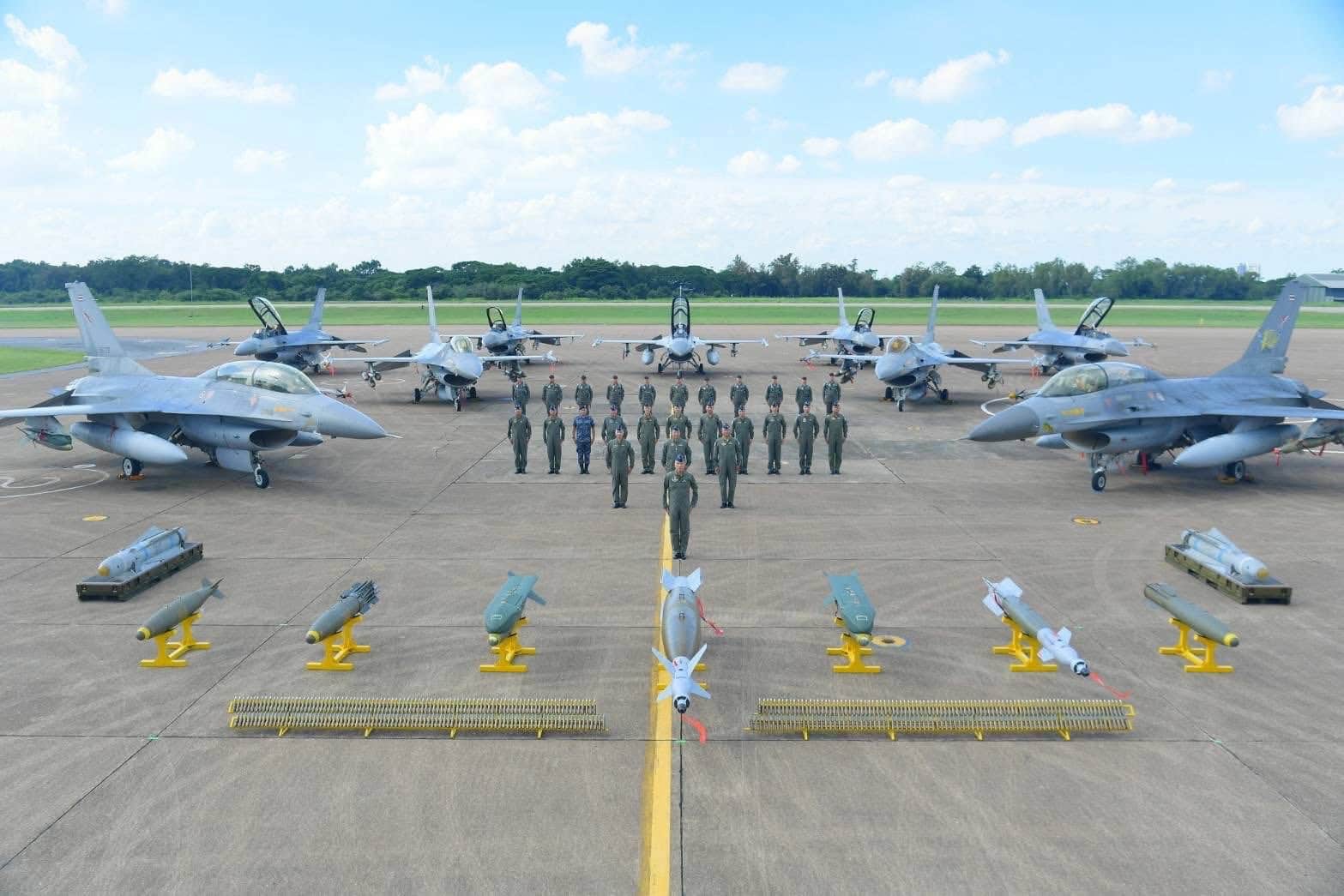
Weapons option for the 103th squadron. | Source: RTAF
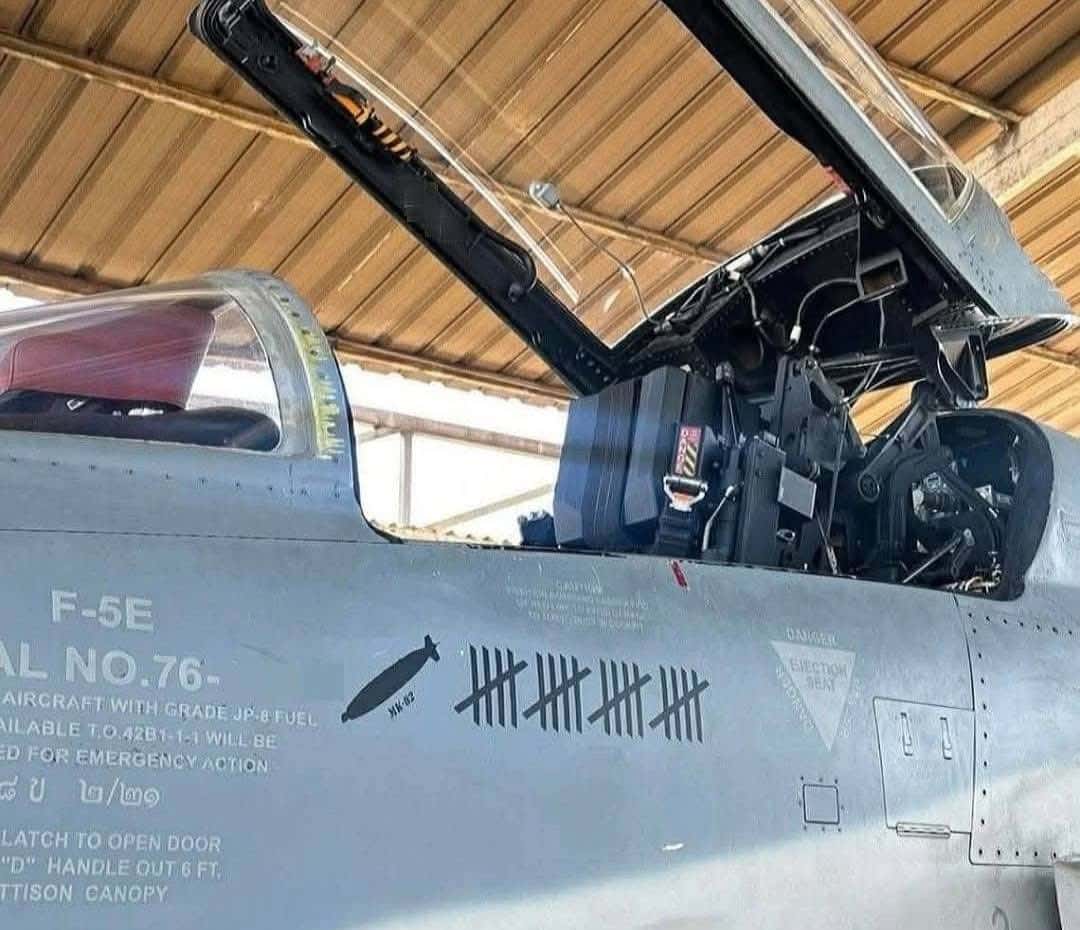
In addition to the F-16s, bomb silhouette images have also been released from the new KAI T-50TH Golden Eagle and the old F-5TH aircraft. On the latter two, only Mk.82 icons were visible, despite the fact that the F-5E/F Tiger II aircraft were recently modernized.
The Air Force’s F-5E/F fighter is a third-generation, twin-engine, supersonic light fighter-bomber, acquired in two phases under the Peace Rama program beginning in the late 1970s. Although the aircraft were modernized once in 2000 (multifunction display, HOTAS control system, Python-4 air-to-air missile), by the 21st century the type had limited capabilities and, for example, lacked a modern beyond-visual-range air-to-air capability. Due to Thailand’s economic constraints, acquiring another Gripen squadron to replace the remaining F-5s was not pursued at the time, so the Air Force instead expanded the capabilities of the existing aircraft. In 2018, an upgrade program was launched using Israeli technology, during which the F-5T Tiger aircraft of the 21st Wing, 211th Squadron, were modernized to the F-5TH standard.
Thai F-5, with 20 Mk.82 bomb marks | Source: RTAF
The F-5TH received a modern mission computer (MC) for more efficient data processing. A color moving map and two multifunction color displays (MFCD) were installed in the cockpit. In addition, it received upgraded communications equipment, an improved head-up display (HUD), and a digital video and data recorder (DVDR) system, as well as a post-flight evaluation system (Debriefing System). The aircraft’s electrical and environmental control system (ECS), including its associated systems, was further improved.
The aircraft’s central component, the old radar, was also replaced with the ELTA Systems ELM-2032 multimode pulse-Doppler radar. The Israeli radar has different operating modes, including air-to-air, air-to-ground and maritime modes.
As for armament, it can employ modern missiles currently in service with the Air Force, such as the American AIM-9M Sidewinder, the Israeli Python-4 and the European IRIS-T. With a helmet-mounted sight, high-off-boresight missiles can be aimed at the target using the pilot’s line of sight. For targets beyond visual range (BVR), it can carry the I-Derby air-to-air missile.
The Elbit Lizard III laser-guided bombs have also been added to the weapons kit and can be guided to their target using a targeting pod. The Lizard is a semi-active laser guidance kit for aerial bombs developed and manufactured by Israel’s Elbit Systems. The kit can be fitted to conventional general-purpose bombs, transforming them into precision weapons. Essentially, it can be considered an Israeli counterpart to the American Paveway concept.
The Sky Shield electronic warfare pod, also developed in Israel, has also been added to the aircraft. The pod detects enemy radars and is capable of suppressing integrated air defense surveillance and fire-control radars using electronic countermeasures. With the Link-T data link system, the aircraft is able to communicate with other aircraft, ground control points, and airborne early warning and control aircraft.
The Royal Thai Air Force ordered 14 T-50TH trainer and light-attack aircraft for the 4th Wing, 401st Squadron, at Takhli Air Base. They replaced the old Aero Vodochody L-39ZA/ART Albatros trainer aircraft, which were retired at the end of March 2021. A total of 36 aircraft initially entered service in the 1990s, with four more subsequently acquired, and their weapons systems and avionics were upgraded by Israel’s Elbit in the 2000s. The Air Force initially required 50-60 L-39 aircraft for five squadrons, but this was reduced due to economic considerations.
The T-50THs, according to statements made during the development of the fleet, were also planned to receive Thailand’s Link-T data link network system and additional weapons and targeting capabilities. The type’s light-attack capability became particularly relevant during the December 2025 conflict, when T-50THs were reported to have been employed against Cambodian targets.