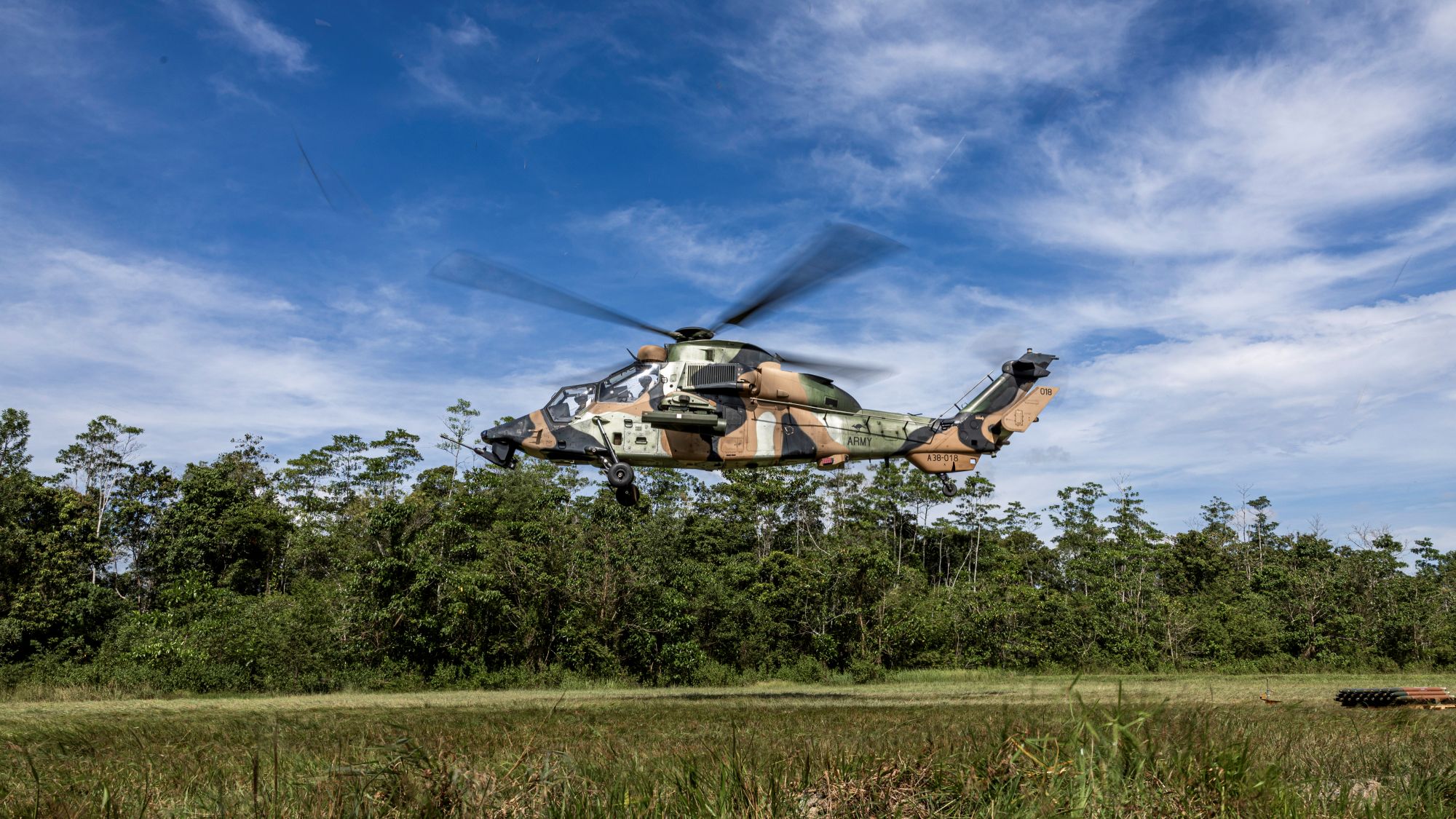
Australian Army to Retire its Tiger Attack Helicopters
The 1st Aviation Regiment will hold a sundown ceremony on Sept. 30 in Darwin, marking 20 years of Tiger service and the regiment’s transition to the AH-64E Apache attack helicopter.
The Australian Army officially announced on Sept. 23, 2026, the retirement of the Armed Reconnaissance Helicopter (ARH) Tiger. The 1st Aviation Regiment will hold a series of sundown events, attended by the unit’s members and their families, on Sept. 30 at their home base in Darwin, in the Northern Territory.
The Tiger served the Australian Defence Force (ADF) for two decades, starting in 2004, and combined the capabilities of the unarmed OH-58 Kiowa reconnaissance helicopter and the Bushranger armed version of the Bell UH-1 Iroquois (or Huey, as it is commonly known).
It will now give way to the Boeing AH-64E Apache attack helicopter, six of which have already been delivered, with the full fleet planned to be complete by late 2029, Defence Australia said. The transition will also see the 1st Avn Regt relocate 1,860 km east to Townsville, Queensland, along the northern coastline, the release subsequently said.
Six of the Eurocopter (now Airbus) ARH Tigers were already withdrawn, since the fleet had been affected by maintainability and low availability issues for a while, Australian defense officials had told Aviation Week during the 2025 Avalon Australia International Airshow.
[Clap de Fin] #RSA L’armée australienne @AustralianArmy va conclure les opérations de l’hélicoptère de combat ARH Tiger/#Tigre à Darwin https://t.co/zg4T4MGp1X pic.twitter.com/M4e6cLPI78
— Philippe Top-Action (@top_force) September 24, 2026
The service has been exploring disposal options, ranging from selling the entire airframes to stripping and selling their parts to other operators of the Tiger. A transfer to Ukraine was one option being considered, as Kiev had long desired an attack helicopter capability to complement its Mi-24 Hind helicopters.
The retirement of the Australian Tiger helicopters leaves only Germany, France and Spain among the type’s remaining users. Paris and Madrid have indicated their will to continue operating their fleet for some time into the future with the Tiger MkIII upgrades.
Tiger out, Apache in
The Defence Australia release said the Australian Army’s conclusion of the ARH Tiger flying operations in Darwin marks a “a significant milestone in the transition to the new AH-64E Apache Attack Helicopter capability.” The release did not explicitly specify a date for the events, but captions accompanying separate Defence images identify Sept. 30 as the date of the final activities.
The caption said: “The occasion was commemorated with a flyover of Darwin and unit celebrations, marking the end of a platform that provided integrated reconnaissance, surveillance and precision strike capabilities, while also signifying the Regiment’s transition to the AH-64E Apache helicopter.”
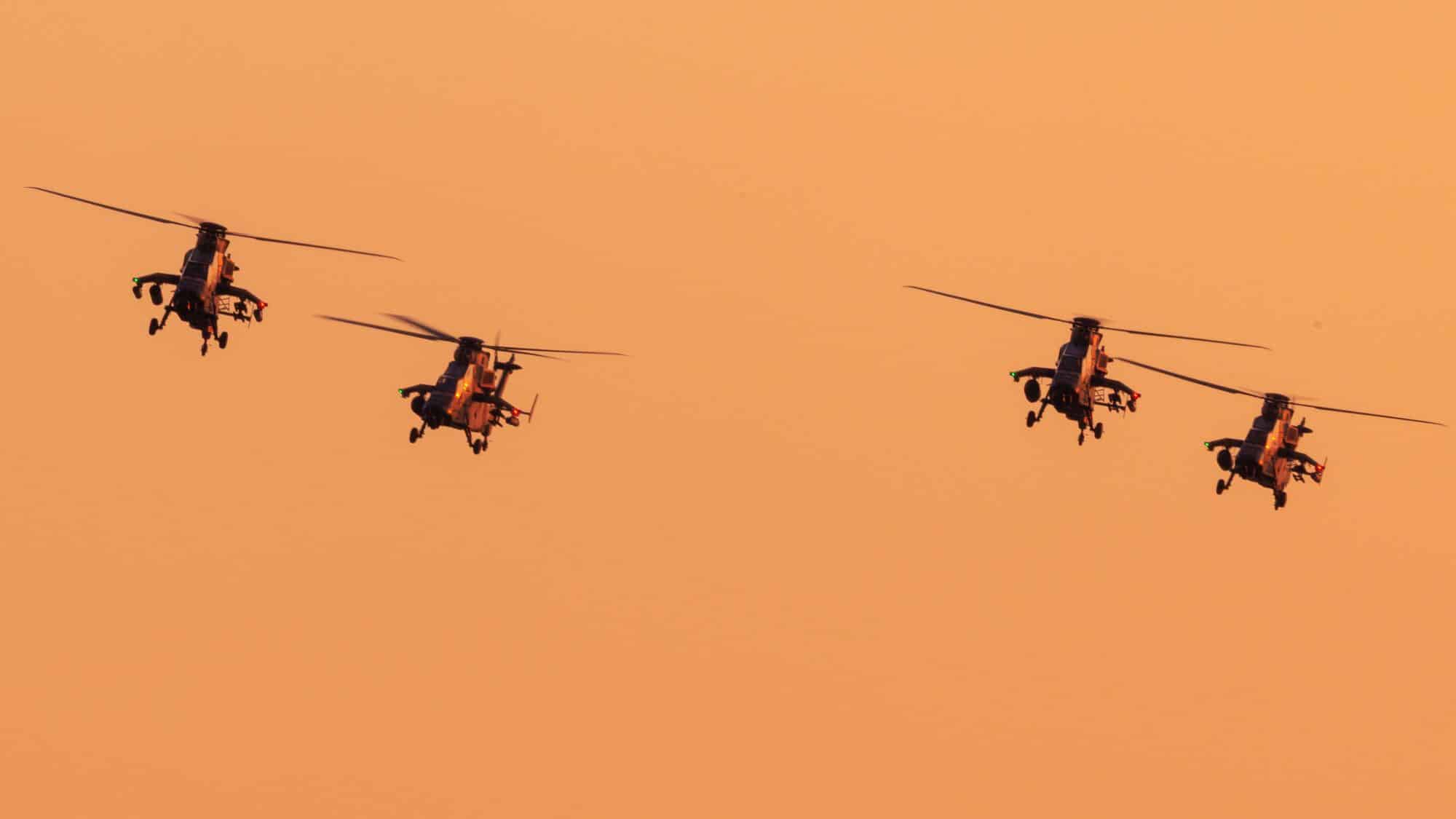
Four ARH Tigers of the Australian Army’s 1st Aviation Regiment conduct their final flight operations flying over Darwin. | Source: Australian Defence Force
The Commander of Army Aviation, Maj. Gen. David Hafner, reflected upon the ARH Tiger’s armed reconnaissance role for two decades: “The end of ARH Tiger flying operations is a significant moment for the 1st Aviation Regiment, but it also marks the beginning of an exciting new chapter as we continue our relocation to Townsville and further build Australia’s attack helicopter capability around the AH-64E Apache.”
He also credited Australian Army soldiers, aircrew and maintainers for attaining “an extraordinary transition from the ARH Tiger to the Apache, while continuing to deliver training and operational outputs.”
Australia is considering a plan that would send its retired fleet of Eurocopter Tiger ARH attack helicopters to Ukraine, per ABC.
Ukraine had previously expressed interest in acquiring the 22 Tiger helicopters, a type already operated by Germany, France, and Spain. pic.twitter.com/HfcSjjwK5N
— OSINTtechnical (@Osinttechnical) December 3, 2025
The ARH Tiger offered the reconnaissance and scouting capability of the Kiowa and the kinetic strike options of the Bushranger armed version of the Iroquois utility helicopter. It “integrated intelligence, surveillance, reconnaissance, electronic warfare and strike effects […] into a single platform.”
The ARH Tiger’s retirement is also in line with its planned 20-year service life. “[Australia also needs] to operate in an evolving threat environment, where advanced air defence systems, precision weapons and uncrewed platforms present challenges better suited to the capabilities of next generation battlefield helicopters such as the AH-64E Apache,” explained the release.
The heavier, larger, faster, future proof and better protected AH-64E will offer the 1st Avn Regt “enhanced firepower, networking and interoperability capabilities to support future Army operations.”
Tiger’s and Apache’s recent exercises
In the run-up to its retirement, the ARH Tiger participated in the Exercise Keris Strike in Malaysia in July 2026, along with the United States and Malaysia. This was the first time an Australian Army 1st Avn Regt element participated in this exercise, a caption said.

An Australian Army Tiger helicopter fires rockets during a live fire serial as part of Exercise Keris Strike 26. | Source: Australian Defence Force
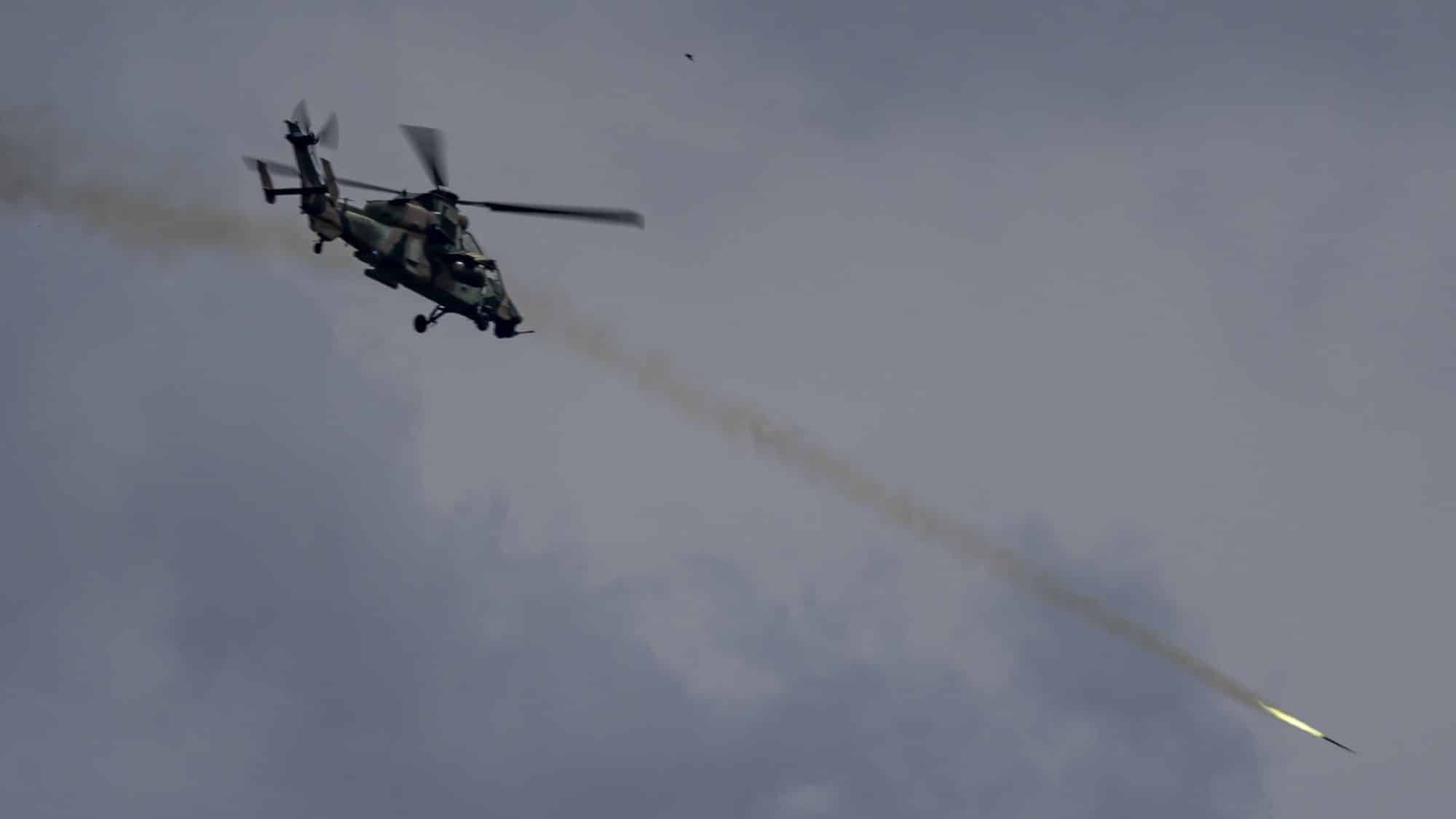
“The exercise involved an exchange of skills between subject matter experts, a field training exercise, and live fire exercise,” said a caption. An image showed a Tiger firing air-to-ground rockets, with other weapons also possibly employed but not caught on photo.
IMAGE 4: An Australian AH-64E Apache from the 1st Aviation Regiment conducts gunnery activities during Exercise Possum Guns at Townsville Field Training Area. (Image credit: Australian Army/Cpl. Michael Rogers)
In the same month, the 1st Avn Regt also conducted Exercise Possum Guns in Townsville, Queensland, with their new AH-64E Apache helicopters. The drills saw for the first time Australian Apaches conducting a live-fire exercise, with personnel also undertaking “mission planning, flight operations, loading and unloading of ordnance and refuelling of the aircraft.”
