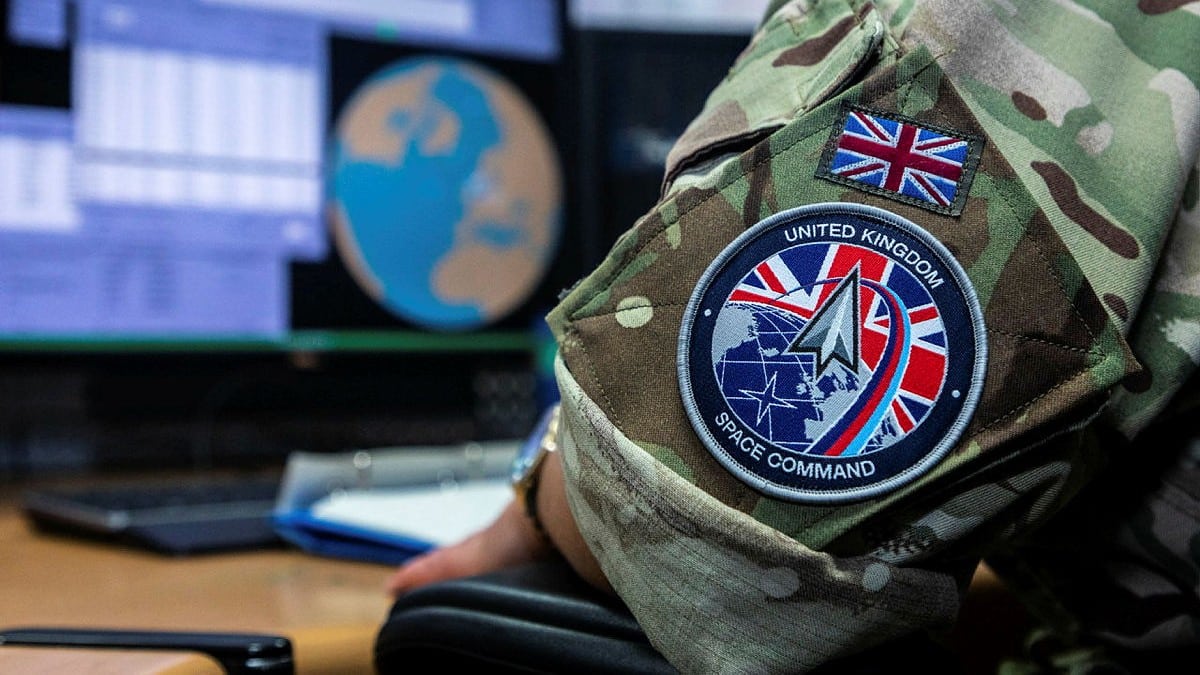
Royal Air Force Secretly Jamming Adversary Satellites Over Past Year
The Royal Air Force has been jamming satellites from adversary nations in order to defend British national interests, including its nuclear deterrent.
This was revealed by the BBC on Sept. 23, 2026, on the first day of the UK’s Space Power Conference. They report that the RAF has been using a ground based system to disrupt satellites used by adversary nations for intelligence, surveillance and reconnaissance (ISR) against the UK’s critical defence infrastructure. These satellites are used to track the movements of critical defence assets, including the UK’s continuous at sea nuclear deterrent, through a combination of high resolution imagery, synthetic aperture radar (SAR) and as of yet unknown methods and sensors.
Satellites monitoring the Royal Navy’s Vanguard class nuclear ballistic missile submarines (SSBN) put the deterrent at risk as information gathered by satellite can allow a hostile actor to locate the submarine and disable it, preventing the UK from utilising its second-strike capabilities during a time of crisis. With Russia’s rhetoric surrounding its own nuclear stockpile, ongoing since the beginning of the invasion of Ukraine, it is imperative that the UK’s nuclear deterrent cannot fail.
UK has been jamming satellites from other countries to defend itself from hostile threats, BBC told https://t.co/OcuELAPWdF
— BBC Breaking News (@BBCBreaking) September 23, 2026
This news comes as the RAF has set up its first dedicated space defence squadron, named No. III Space Effects Squadron, which is tasked with “disrupting, degrading and denying hostile threats in space.” It is unclear if this squadron will be responsible for further use of the ground based jamming system against hostile ISR satellites.
This squadron will also be essential in defending the UK’s space assets, upon which the nation is extremely reliant. UK and commercial satellites provide the country with mobile phone data, weather forecasts and online ordering, whilst Global Positioning System (GPS) provide critical navigation to the general public and emergency services. For the UK, defence-orientated satellites provide intelligence gathering and missile warning capabilities that help to give the Armed Forces an edge during warfighting.
The defence of these satellites is just as vital to the country as the defence of the nuclear deterrent, so the official standing up of this squadron is good news for British security.
UK Defence Secretary Wes Streeting making the announcement about the RAF’s jamming of hostile satellites to defend UK defence assets. | Source: UK Space Power Conference
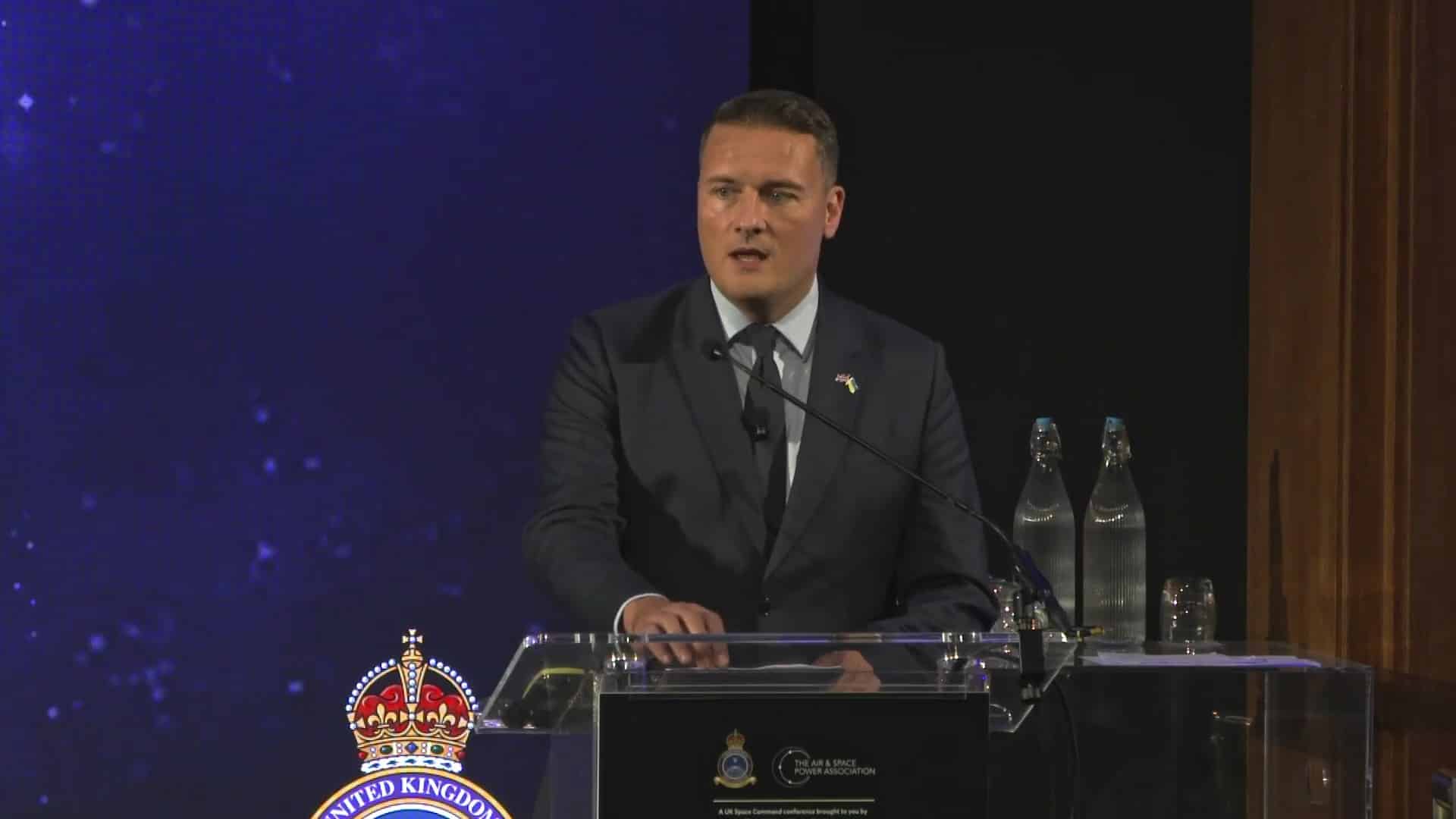
In his keynote speech at the UK Space Power Conference on Wednesday, Defence Secretary Wes Streeting emphasised that “two Russian satellites had intercepted the communications of at least a dozen European ones since Russia’s invasion of Ukraine in 2022.”
Our dependency on space is precisely why it is increasingly under threat from our adversaries.
My message at the Space Power Conference 2026. pic.twitter.com/4w3ZhEiY7k
— Wes Streeting (@wesstreeting) September 24, 2026
Showing that “not only do our adversaries have the capability to threaten our national interests and national security, they also unsurprisingly have the intent and that requires us to act.”
Regarding No III squadron, Streeting stated that it will have “the ability to conduct offensive and defensive operations, to strengthen deterrence, reduce opportunities for coercion and enhance the resilience of our space capabilities.”
RAF Chief of the Air Staff Sir Harv Smyth giving his keynote speech at the UK Space Power Conference. | Source: UK Space Power Conference
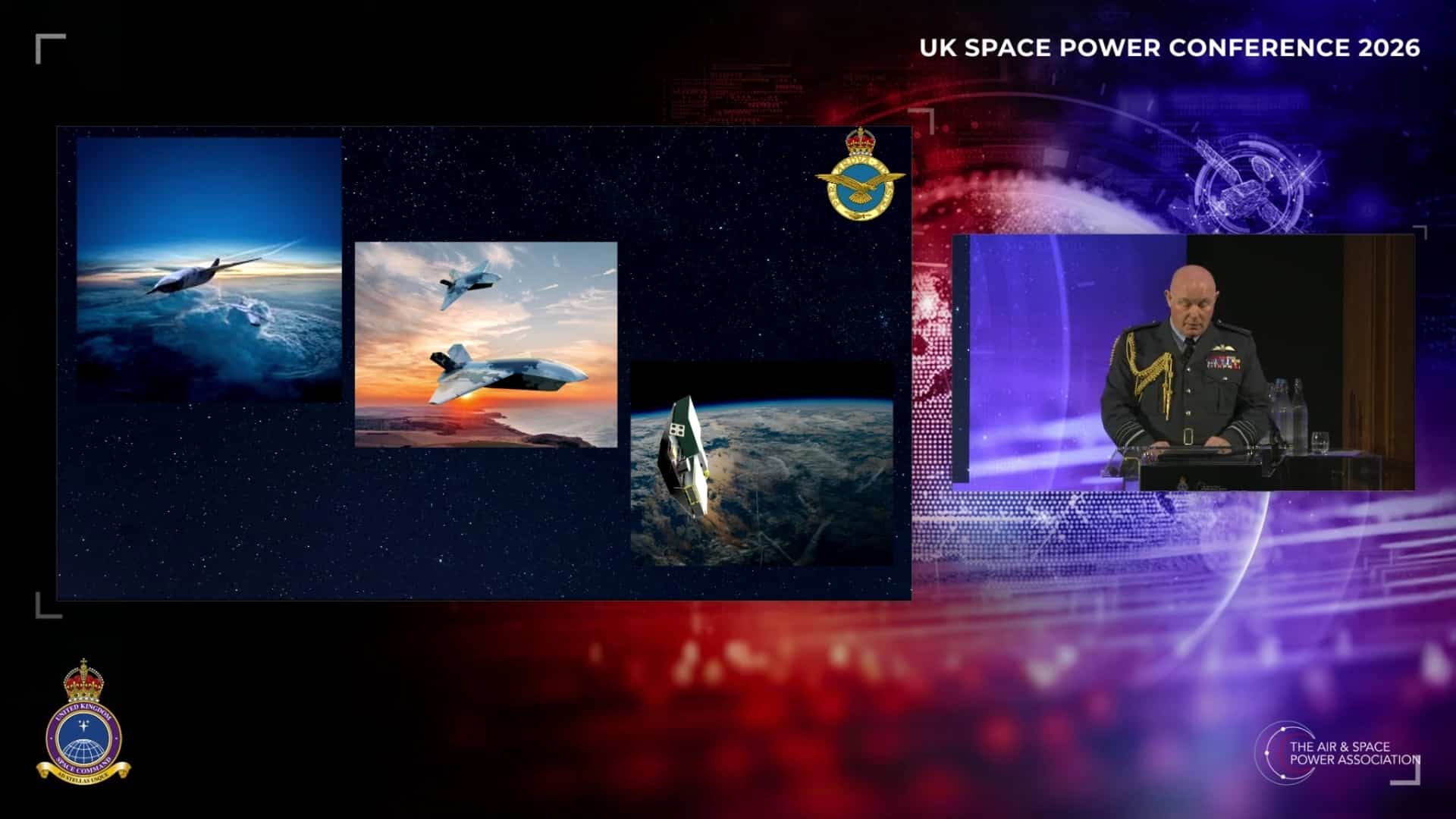
The Chief of the Air Staff (CAS), Air Chief Marshal Sir Harv Smyth, reiterated the importance of space during his keynote speech, stating that “Space is no longer just simply supporting air power from the sidelines. It is completely embedded within it… The effective use of space is critical to the ability of our new integrated force to understand, to communicate, to move and to fight.”
He added that “Space is obviously a prerequisite for modern air power. Every element of a sixth-generation air force depends intimately on space, the networks, the targeting, the navigation, the command and control.”
The first UK Space Power Conference has started. It’s a packed house and agenda as the UK looks to deliver its new Space Strategy. Space is an essential element of National resilience, and the Conference will discuss how we ensure its security and exploit its advantages. pic.twitter.com/tehrfXfCji
— Greg Bagwell (@gregbagwell) September 23, 2026
This renewed focus on space power comes as the RAF’s headquarters at RAF High Wycombe was redesignated as Air and Space Command, reflecting the integration of space within the RAF. This follows a familiar trend across the world as air forces rebrand themselves to better reflect the new reality of 21st Century warfighting.
To match this name change and the renewed importance of space, the British government announced in the 2026 Defence Investment Plan that £9 billion of new space capability would be made available for the 2030 to 2035 period. This comes alongside investments, from this year up to 2030, of £2.3 billion for satellite communications, £880 million for space-based ISR and space control and “£440 million for novel space technology.”
Space Deterrence and the UK
The Defence Secretary and the CAS both emphasised in their speeches the importance of deterrence in space and that is worth discussing here.
A good working definition of space deterrence comes from Eugene C. Richter, a Lt Colonel in the US Air Force, in his research paper to the U.S. Air War College Air University in 2024. He describes the concept as focusing “on how to deter attacks on capabilities within the space domain, not necessarily on the use of space-enabled means to deter aggression.”
It concerns dissuading an adversary from taking hostile measures to “deny, degrade, disrupt, or destroy one’s space assets and capabilities” which act as a core enabler for the air, land and sea domains of warfare. Without space certain capabilities are reduced in their effectiveness, or in some ways stopped entirely.
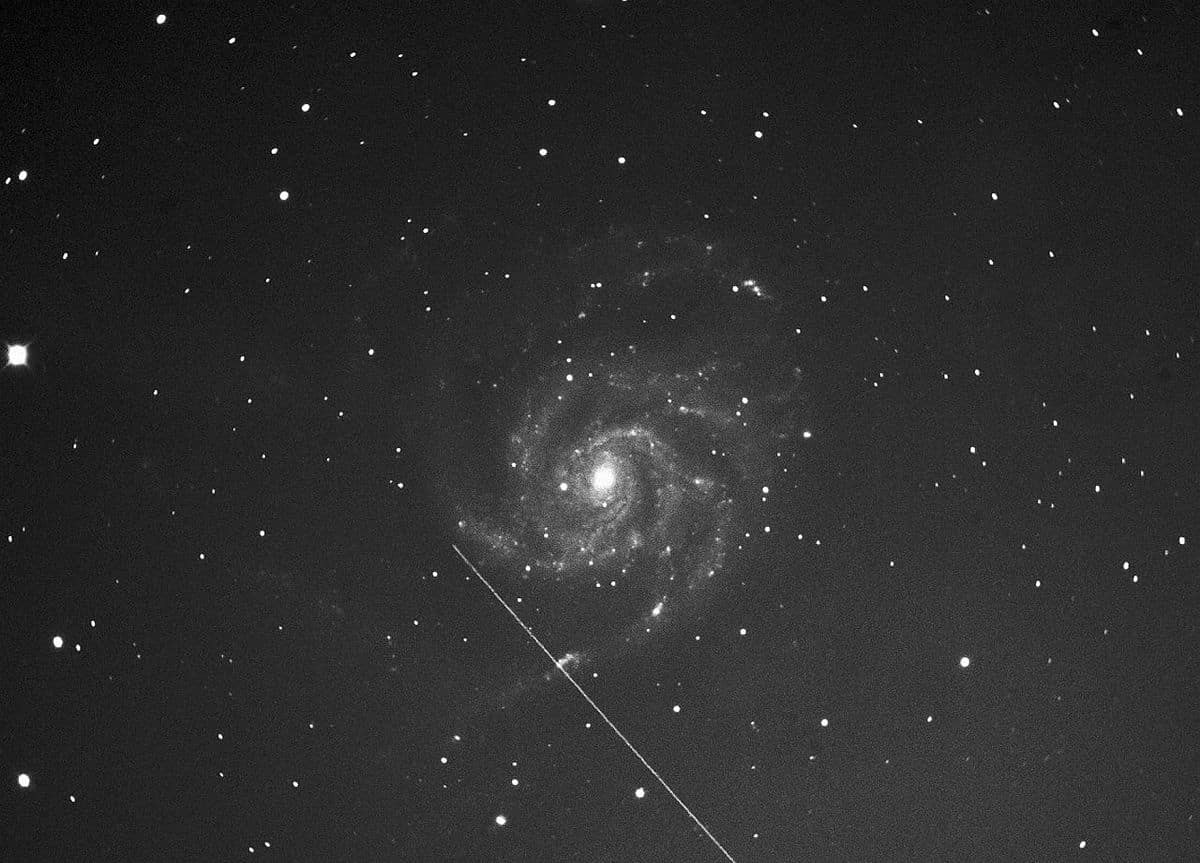
A STARLINK satellite in orbit, in front of the M101 galaxy captured by the British Noctis-1 military telescope, which monitors objects in Earth’s orbit, providing position information on UK satellites, helping to prevent collisions and protecting critical space assets. | Source: Crown copyright 2026/MOD
The Russo-Ukrainian war demonstrates this concept, with Russian forces using Starlink, terminals taken through third party sources, to provide battlefield communication for troops and drones. Once SpaceX was able to prevent Russian use of their satellites, it helped Ukraine to blunt several Russian advances in February 2026. On the other hand Russia’s use of GPS jamming has prevented Ukraine from getting the most out of its US supplied JDAM munitions, which typically rely GPS on for their extremely accurate targeting.
New speaker alert
Major Gen. (retd.) Paul Tedman, former Commander of UK Space Command, will join FASI’s upcoming online panel discussion to explore the implications of the UK Government’s Defence Investment Plan for air & space power.
1 Oct
https://t.co/QZL9CjiP1c pic.twitter.com/RxxBU2mIX9
— Freeman Air and Space Institute (@freeman_air) September 22, 2026
Deterring adverse space activity such as this is central to establishing military dominance on the 21st century battlefield and, as a result, this has become a significant focus for military theorists. Interestingly, the Freeman Air and Space Institute, based at King’s College London and set up jointly with the RAF, is placing increasing emphasis on space power over air power due to the nature of modern war becoming reliant on the space domain. Whilst they still provide excellent analysis on the use of air power they have been central to putting space research into government.
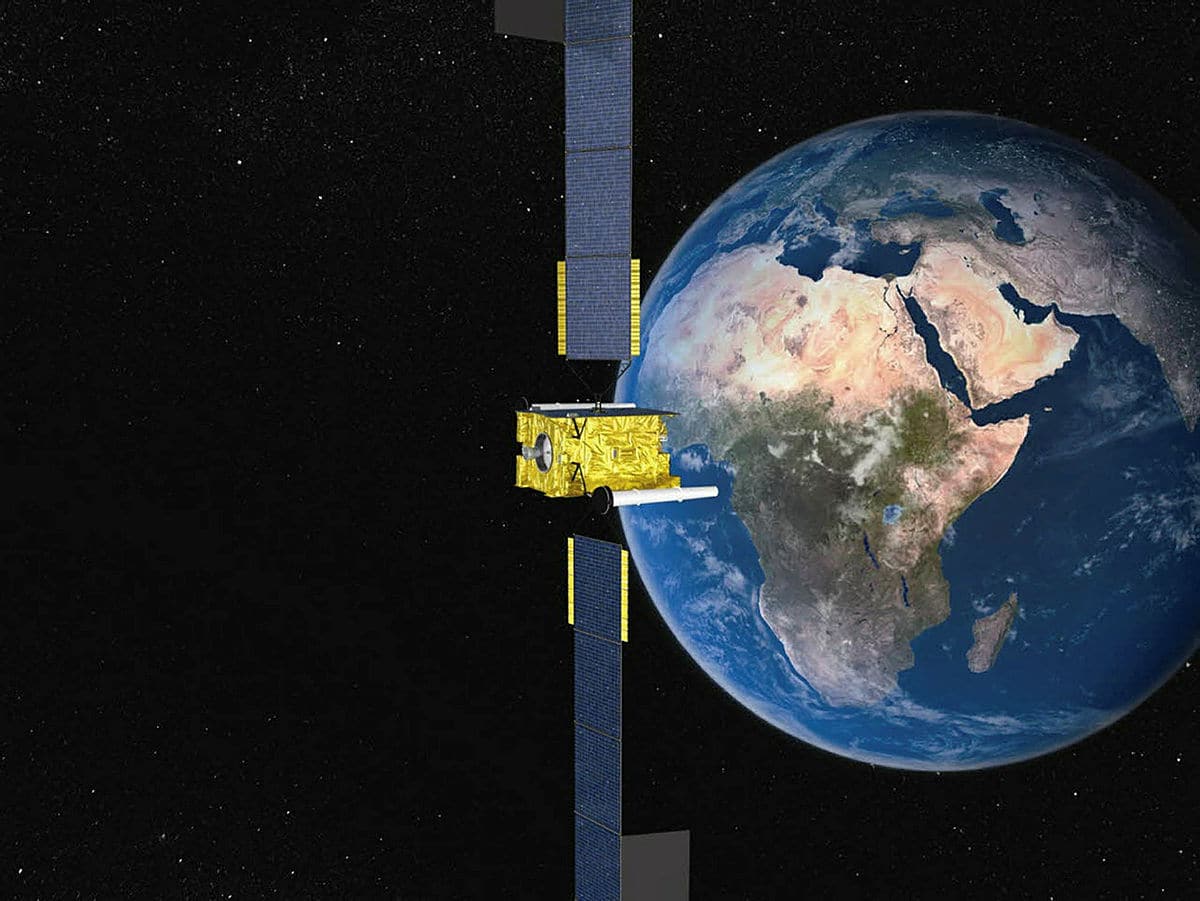
A computer generated image of the Skynet 5D satellite in orbit. A satellite which provides secure military communications for the UK Armed Forces which was successfully launched in December 2012. | Source: Astrium
For budgetary reasons however, discussions about space for the UK have often been theoretical, due to the lack of investment in previous years towards space capabilities. The UK does not currently possess a domestic rocket launching capability, with the British government reliant on commercial actors such as SpaceX, or allies within the European Space Agency for the deployment of satellites.
Likewise UK sovereign military satellite capability is limited to the Skynet 5 series of four satellites used for secure communications. Skynet 5 will eventually be replaced by a singular Skynet 6A satellite and a mixture of allied and commercial satellites used within a flexible systems architecture.
It is clear from @airpowerassn UK Space Power 2026 that the UK needs to have a sovereign launch capability and the delays in the UK’s 1st space launch at @SaxaVord_Space are concerning many.
Speaking to Baroness Lloyd later she said it is a key component of UK space strategy,…
— Mark Piesing (@MarkPiesing) September 24, 2026
Fortunately, the UK may gain a sovereign space launch capability through various horizontal and vertical spaceports around the UK, but progress here has been slow. It is noteworthy that the last attempt to launch a space vehicle from the UK failed to reach space and resulted in the closure of Virgin Orbit, the company that made the attempt.
‘Cosmic Girl’, a customised 747-400 aircraft, seen here carrying the test launch vehicle. The company said that an anomaly meant the rocket could not reach the required altitude and was later lost forcing the company to declare bankruptcy in the aftermath. | Source: Crown copyright 2021/VirginOrbit

Therefore, the setting up of No. III Space Effects Squadron is a change in how the UK views space, going from a passive position to one in which the UK can achieve direct influence. Their ability to conduct offensive space operations, as well as defensive, allows the UK to become more confident in a domain that is increasingly dominated by the US, Russia and China.
Day Two of #UKSpacePower26 is delivering a clear message:
Space is central to our #NationalResilience, security and economic growth.
Dicussions chaired by Prof Anu Ojha @spacegovuk continue online: https://t.co/b1rZ4vttIl pic.twitter.com/w99HNCFbcq
— The Air & Space Power Association (@airpowerassn) September 24, 2026
According to the CAS, squadron numbers IV, V and VI will include a Space Tactics and Training Squadron as well as a squadron which will deliver a deep space advanced radar capability. They will then be joined by a Space Defence function working as part of the newly established Integrated Air, Space and Missile Defence Operations Centre. These will reinforce the pre-existing No. I Space Operations Squadron and No. II Space Warning Squadron which already monitors space for threats, including hostile satellites and space debris.
U.S. Space Weapons
The revelation that the UK is conducting anti-satellite operations follows the U.S. move last week to reveal that they have secretly deployed weapons into space. Whilst speaking at the Air, Space and Cyber Conference last Monday, the U.S. Secretary of the Air Force Troy Meink said “on orbit” weapons had been deployed and that they were necessary to safeguard U.S. forces against hostile enemy action.
He did not reveal what this weapon was, nor how long it has been deployed in space. Theorists are unsure if it is a kinetic kill weapon, an electronic warfare weapon or a laser/radiowave based weapon, but currently this is all speculation.
Space weapons can provide a deterrent value preventing other actors from interfering in a nation’s space activities. However, the U.S. commitment to space control, a step beyond simple deterrence, adds another factor to events going on in that domain. According to a U.S. Space Force spokesperson, the U.S. is committed to “contesting and controlling the space domain by employing kinetic and non-kinetic means to affect adversary capabilities through disruption, degradation and even destruction.”
Last week marked the first time a US official has acknowledged that it possesses space-based weapons.
An arms race in space has been underway for years, writes Mallory Stewart. The important question is why the US chose to make this disclosure now.https://t.co/Bb2oPkSpEc
— Bulletin of the Atomic Scientists (@BulletinAtomic) September 22, 2026
China responded the day after the announcement, warning against an “arms race” in space, with Chinese foreign ministry spokesperson Guo Jiakun stating that “We urge the U.S. to stop expanding military build-up in outer space, and uphold global strategic stability with concrete actions.”
China itself launched a SC-19 ASAT in 2007 to shoot down the FengYun-1C satellite, at a range of 865 kilometers, which exploded into a large debris field that, according to the ESA, “increased the trackable space object population by 25%.” As of February 2026, 2,351 pieces of this debris still remain in orbit. These weapon systems remain in the Chinese missile arsenal and have been continuously tested throughout the 2010s.
Russia similarly launched an ASAT in November 2021, shooting down the defunct Kosmos-1408 satellite that was located in low Earth orbit (LEO). The missile hit the satellite at a range of 650–680km and created a cloud of over 1,500 pieces of trackable orbital debris. According to NASA the situation was so dangerous the crew of the International Space Station (ISS) were forced to shelter in the space station’s multiple Soyuz modules used to return the crew to Earth in an emergency.
That this launch occurred mere months before Russia’s full scale invasion of Ukraine cannot be missed, showing that Russia did this to deliberately send a message to the West about how it would respond to involvement in their war of aggression. Luckily Russia’s threat was never carried out, but the risk of escalation in space remains high.
F-15A 76-0086 carrying a centerline CASM-135 ASAT missile. The CASM-135 was the captive version of the ASM-135 missile used during the famous missile test. It is unknown what space weapons the U.S. currently possesses, but they could resemble some conventional weapons already seen on Earth, i.e missiles or air defence lasers. | Source: United States Air Force
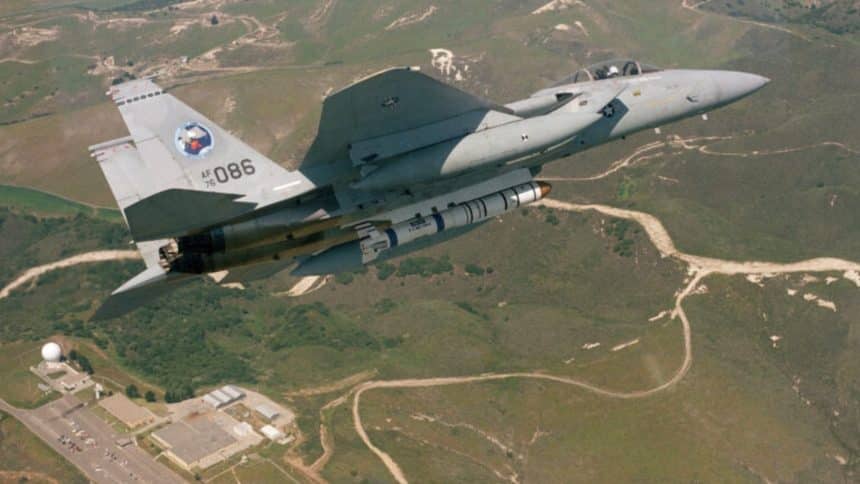
The U.S. too has launched ASATs against target satellites, and notably fired them from specially modified F-15A fighters. More recently, in 2008, the USS Lake Erie shot a modified SM-3 at a U.S. satellite that was de-orbiting, in what is viewed as a direct response to the Chinese missile test. The operation, known as “Burnt Frost,” did not produce much debris as the satellite was already falling to Earth when it was hit, although the test was controversial at the time.
Interestingly, the British government is committed to not testing destructive anti-satellite (ASAT) weapons due to the harm they cause to the rest of the space ecosystem through the creation of long-lived debris fields that threaten other satellites and space vehicles. Space debris is a significant threat to the further development of space with a number of private companies such as Astroscale and ClearSpace working on the safe disposal of satellites and debris, returning it to the planet.
Whilst the 1967 Outer Space Treaty explicitly bans nuclear weapons and other types of weapons of mass destruction (WMD) in space, it does not ban conventional weapons, allowing for the weaponisation of space in ways that haven’t been seen before. These worrying developments will have dire consequences for world stability should future conflicts between these powers arise.