Two Naval Aviators Eject Following Mishap on USS Eisenhower
The U.S. Navy said that two Naval Aviators ejected from their aircraft following a recovery mishap aboard the USS Eisenhower aircraft carrier and were promptly recovered by search and rescue forces.
The U.S. Navy announced that a recovery mishap aboard the USS Dwight D. Eisenhower (CVN 69) resulted in two Naval Aviators assigned to Carrier Air Wing (CVW) 3 ejecting from their aircraft. The service says that both were promptly recovered by search and rescue (SAR) forces and were safely returned to the ship to be evaluated by medical personnel.
Additionally, four shipboard personnel were also injured during the mishap and are receiving medical care. However, one Sailor is being evacuated to a Norfolk-area hospital for treatment of non-life-threatening injuries.
— U.S. Navy (@USNavy) September 29, 2026
The mishap happened at approximately 6:18 p.m. EDT on Sept. 28, 2026, as the Nimitz-class aircraft carrier was sailing off the coast of Virginia. According to USNI News, the USS Eisenhower is currently at sea for a carrier qualifications campaign, and left Naval Station Norfolk in the afternoon of Sept. 28.
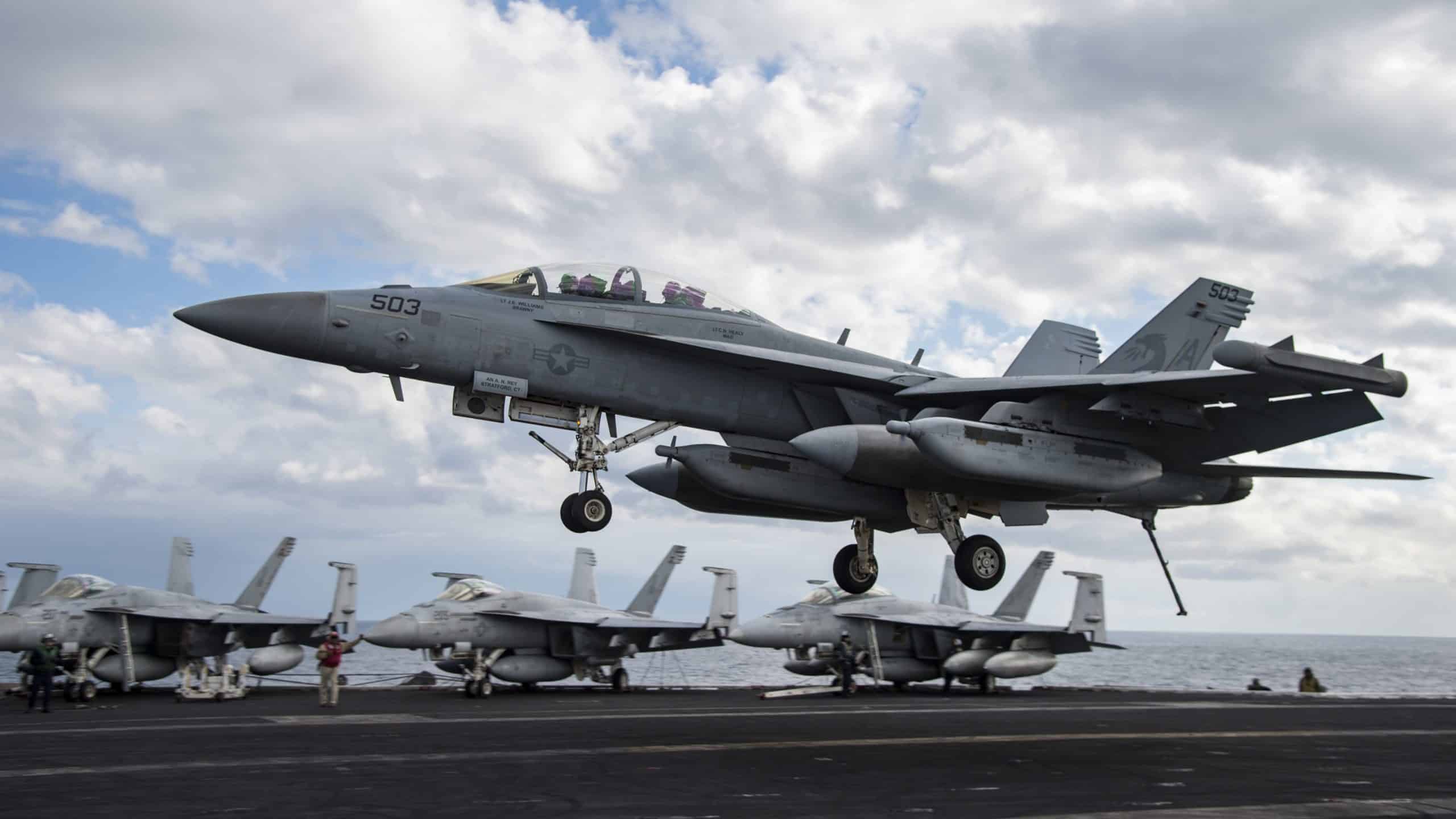
The service did not release details about the aircraft involved in the mishap and whether it went overboard or stopped on the deck. The ejection of two Naval Aviators seemingly points to either the F/A-18F Super Hornet or the EA-18G Growler, the only two types of twin-seater aircraft currently in service with Carrier Air Wings.
An F/A-18F Super Hornet, attached to the “Fighting Swordsmen” of Strike Fighter Squadron (VFA) 32, lands on the flight deck of the Nimitz-class aircraft carrier USS Dwight D. Eisenhower (CVN 69) in the Arabian Gulf, Dec. 10, 2023. | Source: U.S. Navy photo by Petty Officer 3rd Class Nicholas Rodriguez
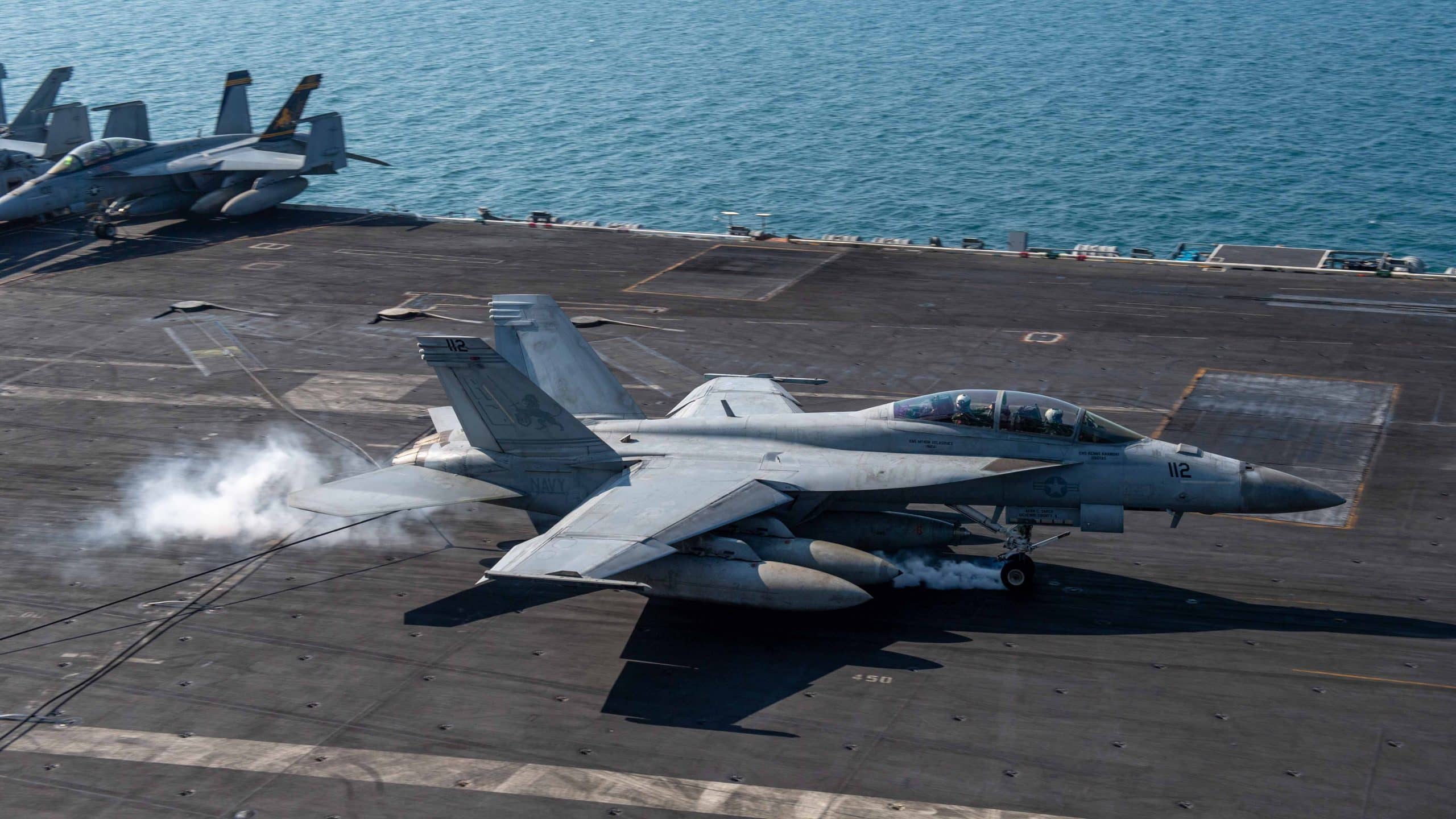
CVW 3 is assigned one squadron of each aircraft, the Strike Fighter Squadron (VFA) 32 “Swordsmen” and the Electronic Attack Squadron (VAQ) 130 “Zappers,” respectively. The Navy did not mention the squadron involved.
In the past, similar outcomes have resulted from rare mishaps in which an arresting cable snapped during an arrested landing and struck deck personnel as it recoiled, much like a whip suddenly released under tension. However, we can’t confirm that this is what happened in this case, as the Navy has not released specific details about the mishap.
The carrier recently completed its Planned Incremental Availability (PIA) at Norfolk Naval Shipyard. A PIA is a scheduled period for an aircraft carrier to undergo extensive maintenance, repairs and modernization to meet future operational demands, spanning a wide array of overhauls and inspections.