Kentucky Air National Guard C-130s Perform Rare SAR Exercise with Royal Navy Merlin
Four C-130J Hercules aircraft, 60 personnel, and 62,000 lbs of equipment from the 165th Airlift Squadron deployed to Glasgow Prestwick Airport in August for a series of training exercises with partner forces including the Royal Navy and the Royal Canadian Air Force.
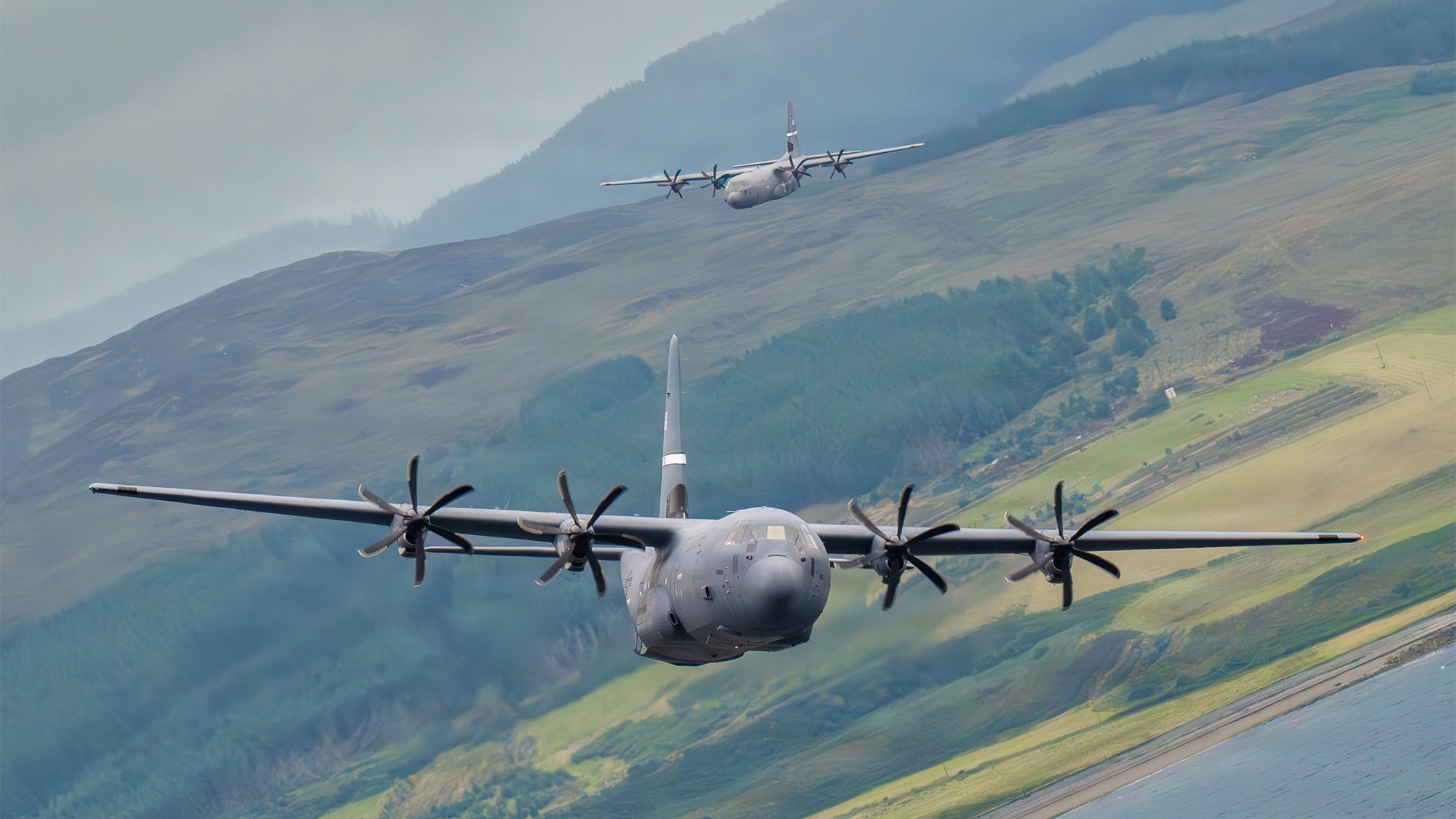
Designed to encompass a wide range of the C-130J’s taskings, the eight day long series of exercises was staged to build interoperability with allies and reinforce unit readiness. Rapid reaction aircraft launches, including engine-on refuelling operations, were followed by low level formation flying around the hills of Scotland and open water work with the Royal Navy.
“The deployment was designed to accomplish a large amount of C-130J continuation and tactical training while taking advantage of an unfamiliar overseas operating environment and opportunities to work directly with Allied partners,” C-130 pilot and mission commander Lt. Col. Nick Reinke said.
U.S. Air Force C-130J Super Hercules aircraft assigned to the Kentucky Air National Guard’s 165th Airlift Squadron taxi at Glasgow Prestwick Airport in Prestwick, Scotland, after completing a five-ship formation flight along the coast of Scotland on Aug. 19, 2026. | Source: U.S. Air National Guard photo by Dale Greer
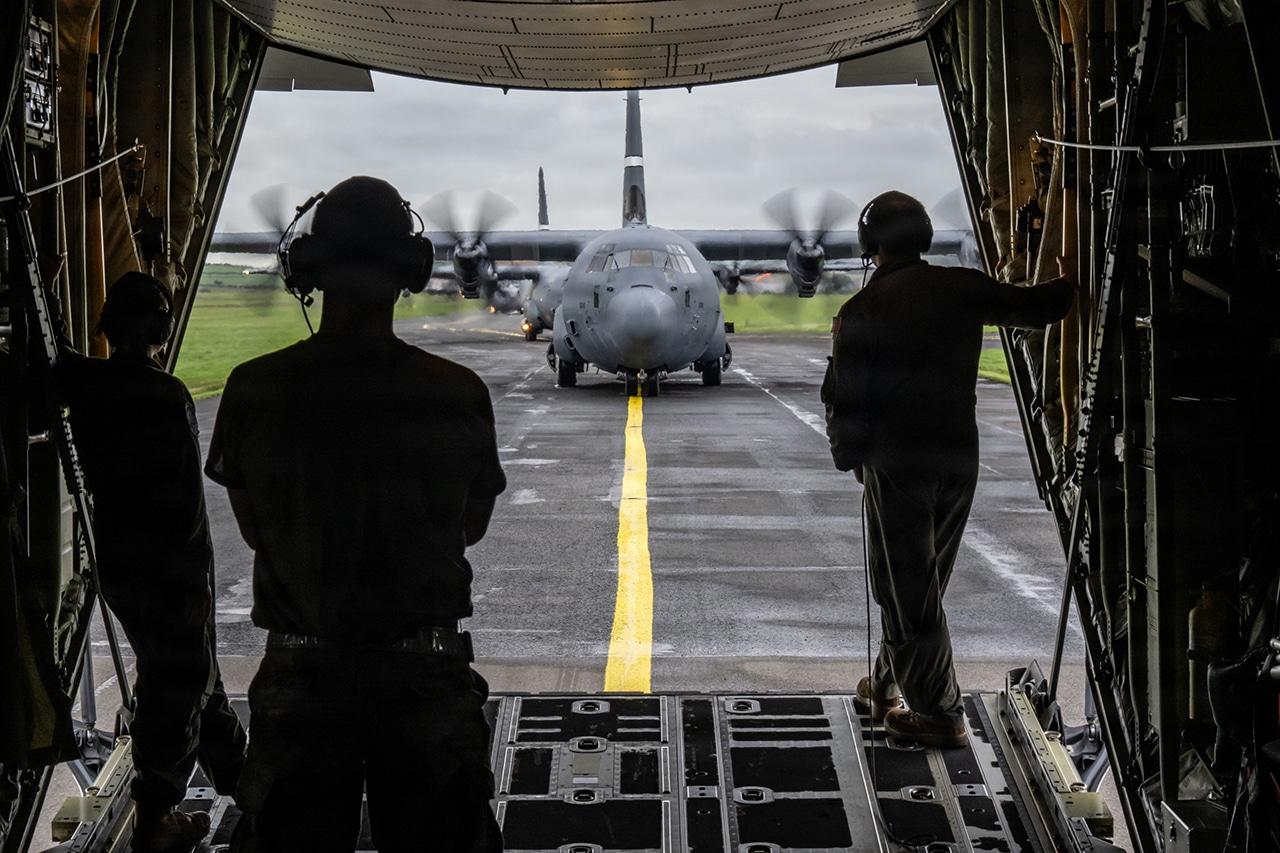
“While we can accomplish many of these individual training events in the United States, it is much harder to reproduce an unfamiliar environment.”
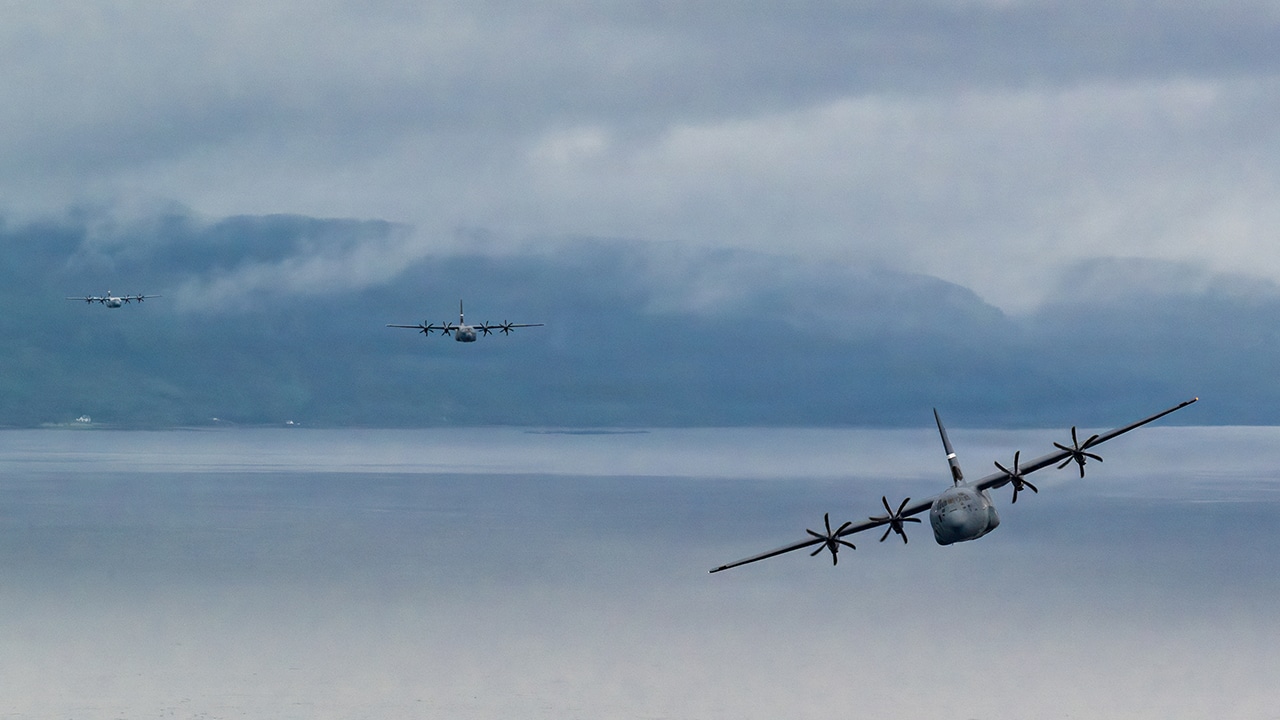
A five-ship low level formation flight involved all of the deployed C-130s plus an example from the Royal Canadian Air Force.
U.S. Air Force C-130J Super Hercules aircraft assigned to the Kentucky Air National Guard’s 165th Airlift Squadron fly a low-level sortie as part of a five-ship formation along the coast of Scotland on Aug. 19, 2026. | Source: U.S. Air National Guard photo by Dale Greer
“The integration with the Royal Navy was one of the highlights of the exercise,” Reinke said. “It allowed our pararescue personnel and C-130J crews to integrate fixed-wing airdrop, maritime rescue, rotary-wing insertion and recovery, and on-scene command and control with a NATO partner.”
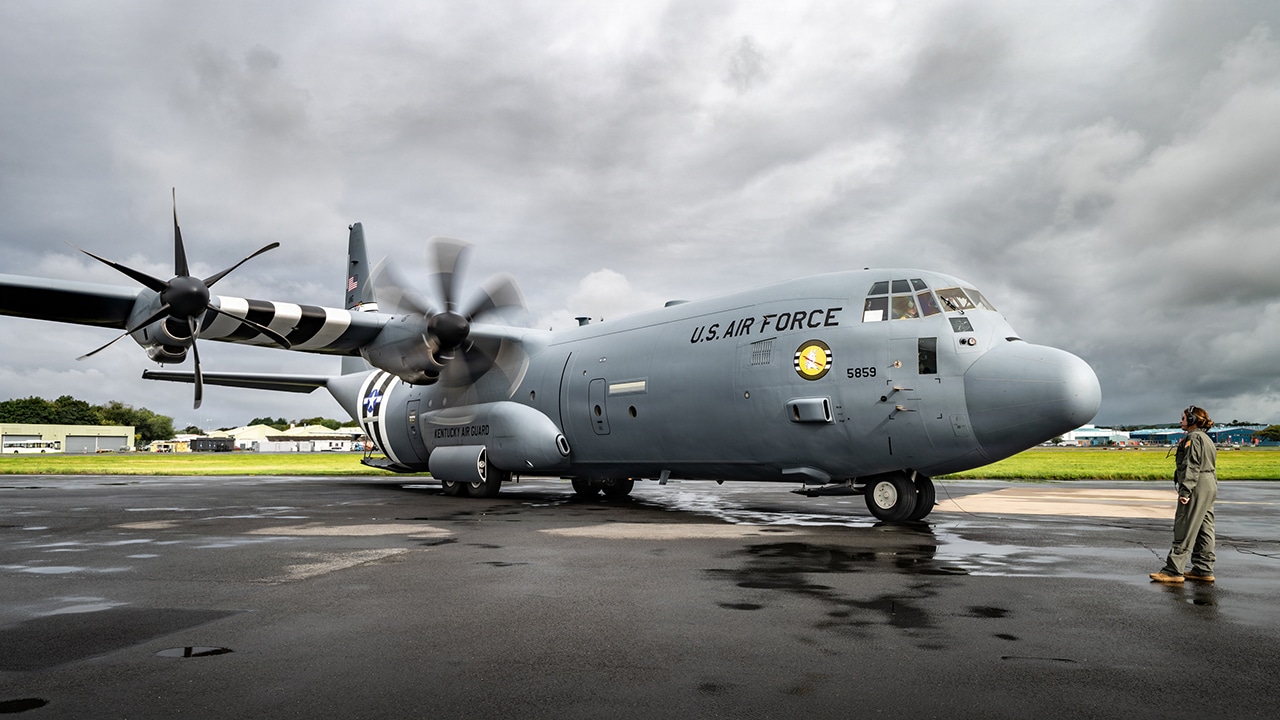
U.S. Air Force Senior Master Sgt. Bethany Begley, a loadmaster assigned to Kentucky Air National Guard’s 165th Airlift Squadron, conducts a pre-flight inspection of a C-130J Super Hercules aircraft at Glasgow Prestwick Airport in Prestwick, Scotland, Aug. 19, 2026. | Source: U.S. Air National Guard photo by Dale Greer
A Merlin HM2 from 814 Naval Air Squadron (NAS), which was forward deployed from RNAS Culdrose to Prestwick’s HMS Gannet during the exercise, worked with the C-130s to conduct joint search and rescue (SAR) missions. Simulated downed aircrew would be located in the water first by the C-130s, which would airdrop an inflatable boat and a small number of personnel to render first aid and secure the casualty before the Merlin arrives to winch the casualty and the personnel on board.
U.S. Air Force pararescuemen from the Kentucky Air National Guard’s 123rd Special Tactics Squadron jump from a C-130J Super Hercules aircraft into the Atlantic Ocean off the coast of Scotland on Aug. 18, 2016. | Source: U.S. Air National Guard photo by Dale Greer
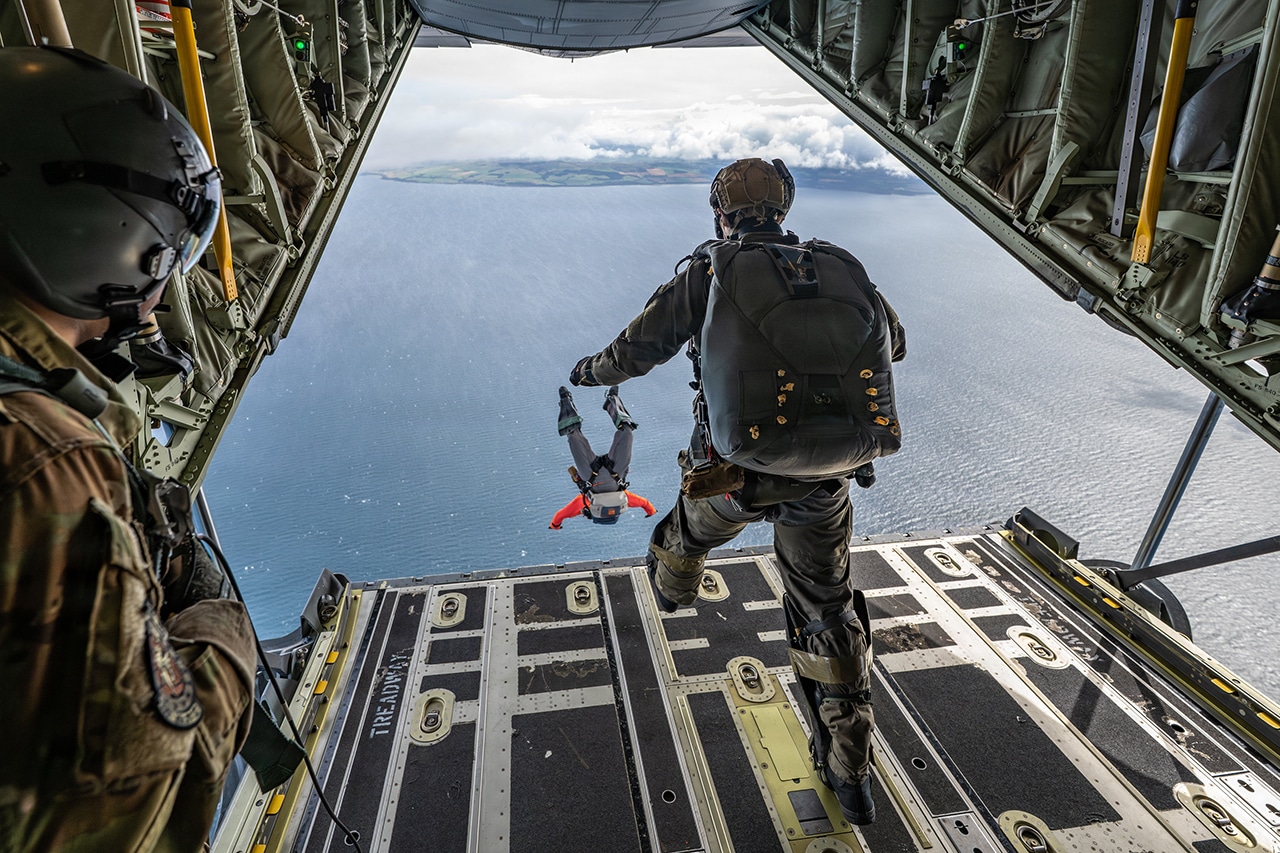
While the 165th Airlift Squadron (AS) does train for maritime missions, when operating from their landlocked home in Kentucky the nearest body of open water is around 500 miles away. Prestwick, on the other hand, is around half a mile from the Clyde estuary, which not only features some of the deepest coastal waters in the UK but is also a chokepoint for Royal Navy and allied submarines arriving and departing from Faslane naval base.
One of the U.S. pararescue personnel who took part in the exercise says the environment was unfamiliar compared to the ones they are used to back in the United States. “It’s a lot colder here, and the salt water is an unusual factor for us,” he said. “The Royal Navy also uses different geolocation methods, and they have different tactics and techniques than we typically employ.”
U.S. Airmen from the Kentucky Air National Guard’s 123rd Special Tactics Squadron prepare an inflatable boat for search-and-rescue operations in the Atlantic Ocean off the coast of Scotland on Aug. 18, 2016. | Source: U.S. Air National Guard photo by Dale Greer
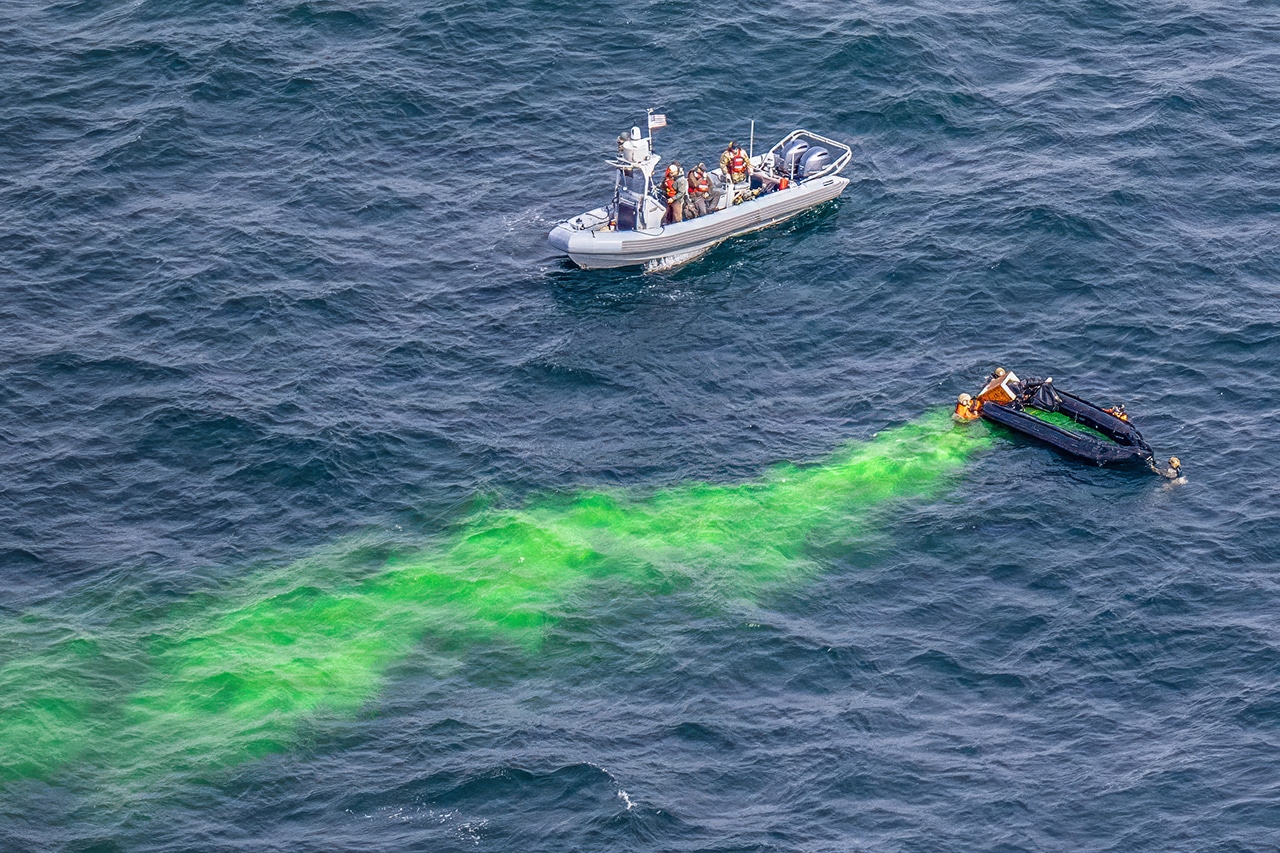
An additional discovery for the U.S. aircrew was the Merlin’s increased level of downwash compared to the MH-60 Seahawk helicopters they’re more accustomed to working with.
A British Royal Navy Merlin Mk2 helicopter assigned to the 814 Naval Air Squadron hovers over the Firth of Clyde in the Atlantic Ocean as part of search-and-rescue training near the coast of Scotland on Aug.18, 2026. | Source: U.S. Air National Guard photo by Dale Greer
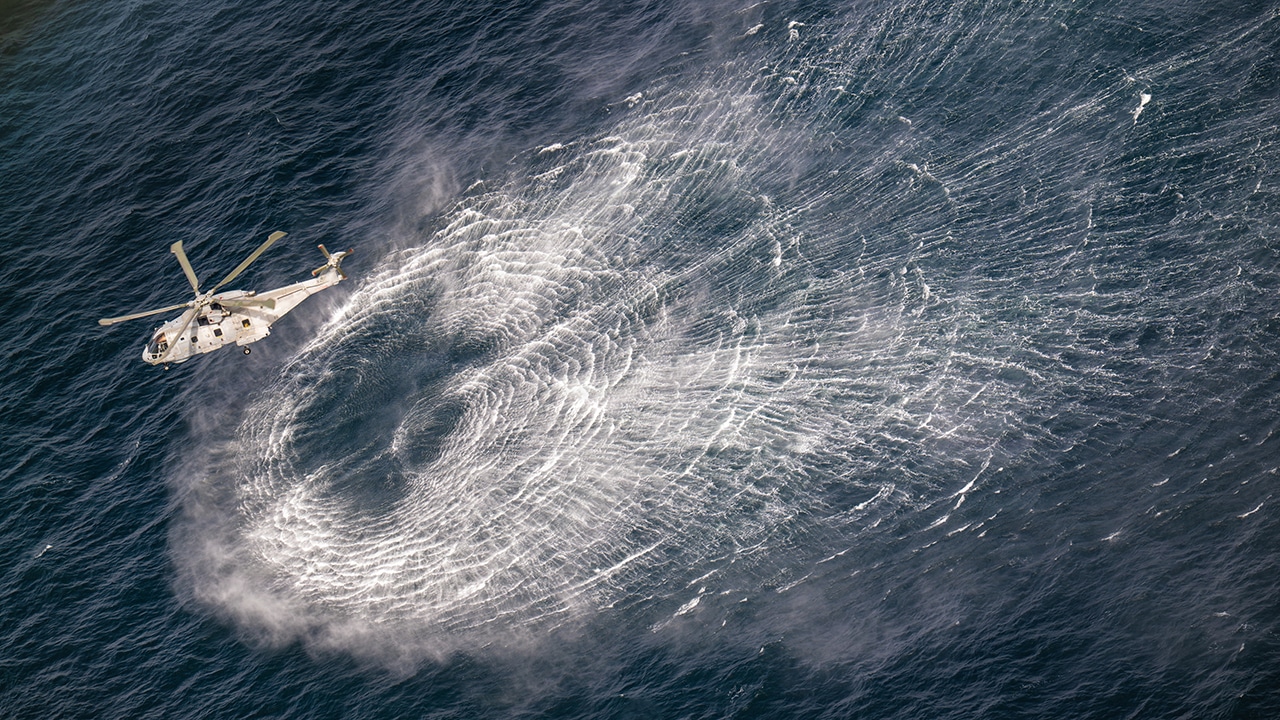
“Those are the kinds of things you don’t anticipate, but we were able to work through them and figure out what worked best for their guys and for us,” he said. “We had to be flexible on the spot to get the mission done.”
Swordfish Flight from @RNASCuldrose 814 NAS joined Kentucky’s @AirNatlGuard for a combined air-sea open water exercise.
Merlin crews rescued ‘downed’ aviators in the Firth of Clyde after US Hercules parachuted in supplies and personnel.
https://t.co/6xkuZAhCNa https://t.co/z0905I1NE7
— Royal Navy (@RoyalNavy) October 2, 2026
Flight Commander Lieutenant Cass, who leads 814 NAS’ Swordfish Flight, said “complex personnel recovery and search and rescue training ensures crews remain proficient in recovering those in need during challenging conditions.”
“Swordfish Flight thoroughly enjoyed training with the Kentucky Air National Guard. This vital training strengthens our ability to work with each other and reinforces the close defence relationship between NATO allies. We hope to continue working with our friends across the pond in the years to come.”
While it’s now been over a decade since the Royal Navy stood down from providing civilian SAR in the UK, its aircrews are still called upon to provide SAR for Royal Navy deployments, and Merlin crews have on several occasions stepped in to offer support to civilian agencies when they hear emergency calls during exercises.
U.S. Airmen from the Kentucky Air National Guard’s 123rd Special Tactics Squadron prepare to hoist a simulated patient into a Merlin Mk2 helicopter off the coast of Scotland on Aug. 18, 2026, as part of a search-and-rescue training scenario. | Source: U.S. Air National Guard photo by Dale Greer
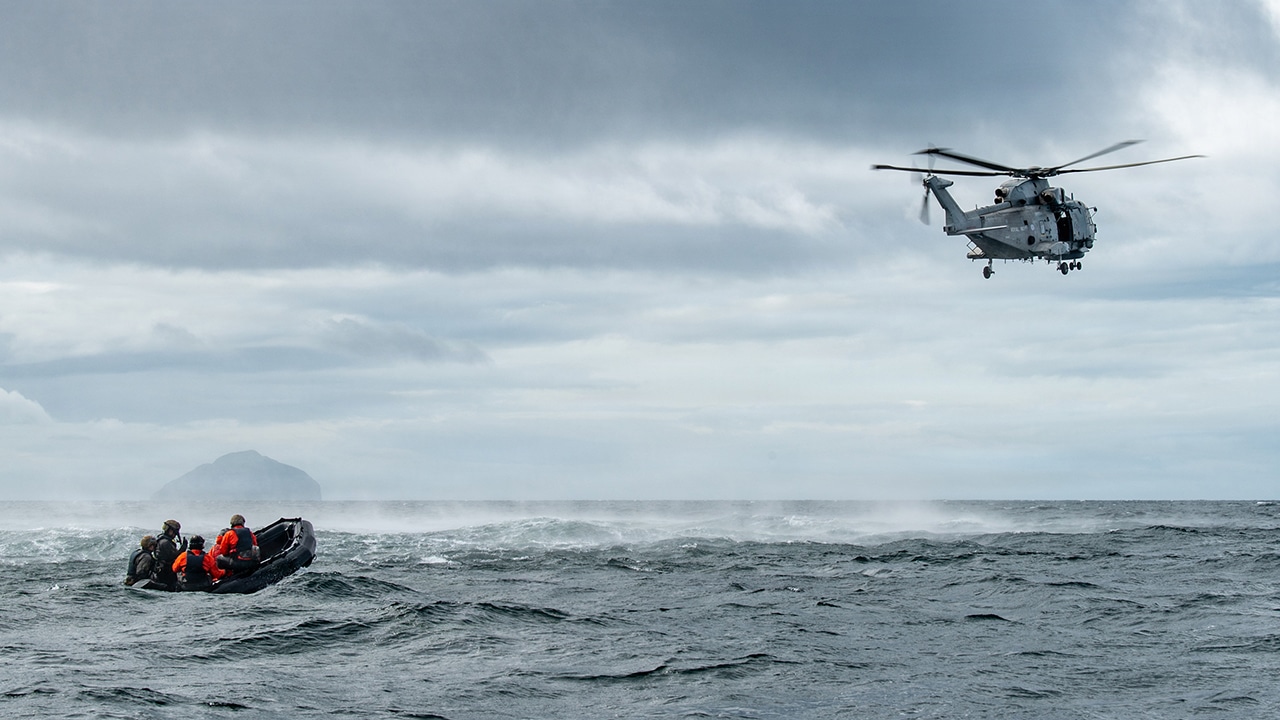
HMS Gannet at Prestwick was formerly home to a detachment of Sea King helicopters for SAR purposes until the stand down. It continues to be a commissioned forward operating base for the Royal Navy, but now has no permanently assigned aircraft of its own. Instead, Merlin HM2s from Culdrose will routinely forward deploy there not only to support training but to protect movements of the Royal Navy’s Vanguard class ballistic missile submarines.
Captain James Hall, Commanding Officer of RNAS Culdrose noted: “While protecting the United Kingdom’s Continuous At Sea Deterrent and our carrier and maritime task groups remain our primary focus, we must also retain the versatility and expertise expected of a naval helicopter force.”
“Exercises such as this, conducted alongside our Air National Guard partners, enable our crews to maintain and enhance critical search-and-rescue skills while strengthening the ability to work seamlessly together which underpins NATO’s collective security.”