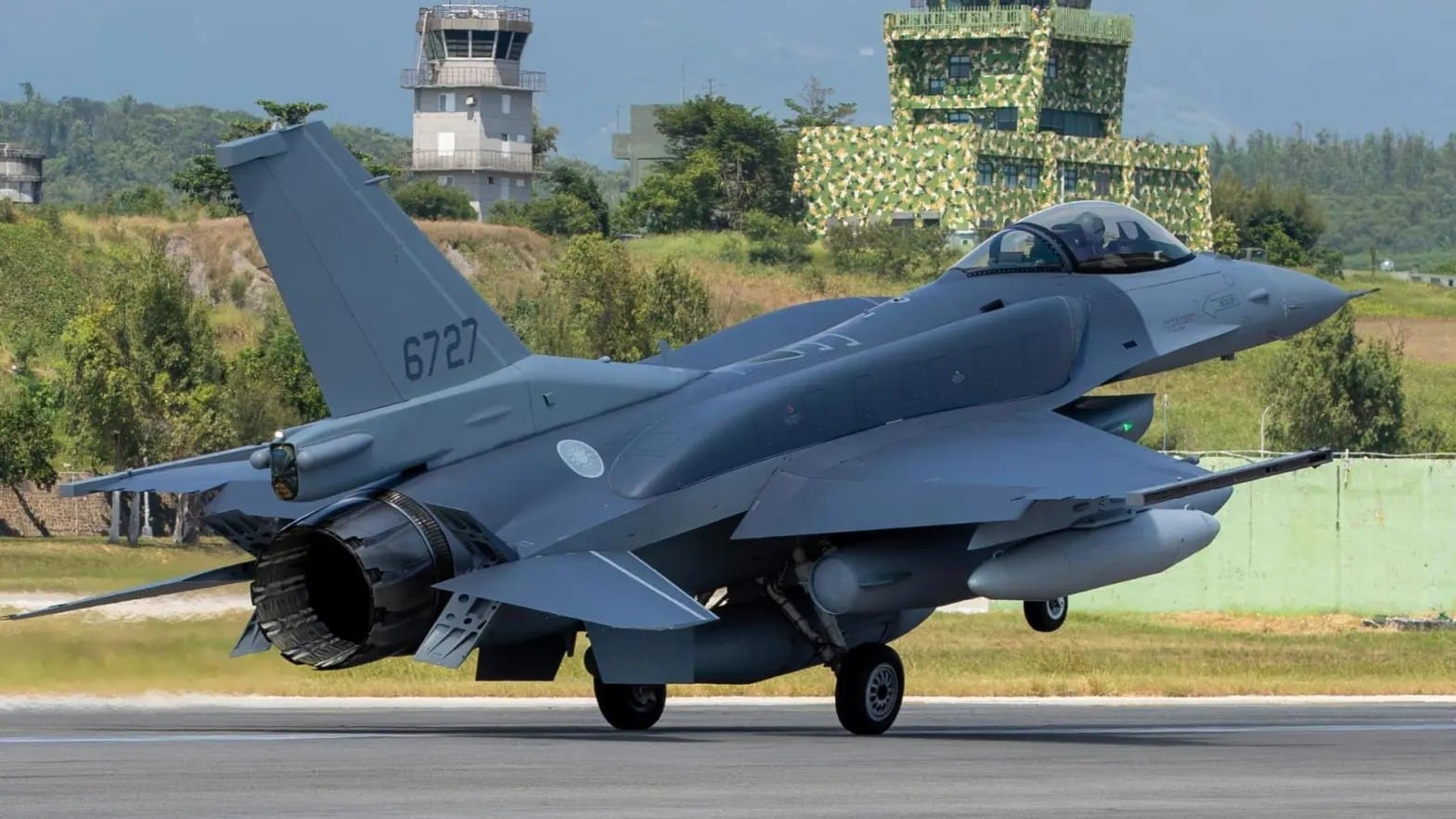
Taiwan Receives First Two New-Build F-16C Block 70 Fighters After Years of Delays
The first two of 66 new-build F-16C Block 70 fighters ordered by Taiwan from the United States have arrived at Chihhang Air Base, marking the beginning of deliveries under a long-delayed $8 billion program.
Taiwan has received the first two new-build F-16C Block 70 fighter jets ordered from the United States, marking the beginning of the long-awaited delivery of a new generation of Fighting Falcons to the Republic of China Air Force (ROCAF).
The two aircraft, serials 6727 and 6728, arrived at Chihhang Air Base near Taitung on Oct. 2, 2026, marking the first deliveries under Taiwan’s 2019 procurement of 66 new F-16C/D Block 70s. As usual for delivery flights, the aircraft were flown to Taiwan by U.S. personnel and were formally handed over to the ROCAF.
空防新銳!F-16 BLK 70戰機返國,國軍戰力再升級!#F16Block70 #F16 #中華民國空軍 https://t.co/1vZVZn5Lqj
— 軍聞社 Military News Agency, ROC(Taiwan) (@mna_roc) October 3, 2026
The arrival represents an important milestone for Taiwan’s fighter modernization program, but also the culmination of an acquisition that has experienced long delays, after the deliveries were initially planned to start in 2023. Instead, the first new F-16 for Taiwan was unveiled in March 2025, but deliveries only started over a year later.
New-build Block 70s, not upgraded F-16Vs
The arrival of the first two aircraft is particularly significant because Taiwan already operates a large fleet of Block 70 aircraft, designated F-16V. However, the two configurations should not be confused.
Taiwan’s F-16V fleet consists of existing F-16A/B Block 20 aircraft that were upgraded to Block 70 under a major modernization program. The upgrade included the installation of the AN/APG-83 AESA radar, new mission computers, electronic-warfare systems and improved avionics.
Greg Ulmer, President of Lockheed Martin Aeronautics, speaks at the rollout ceremony for the first new Taiwanese F-16 Block 70. | Source: Phil Hamby, Director of Governmental Affairs, South Carolina Military Department
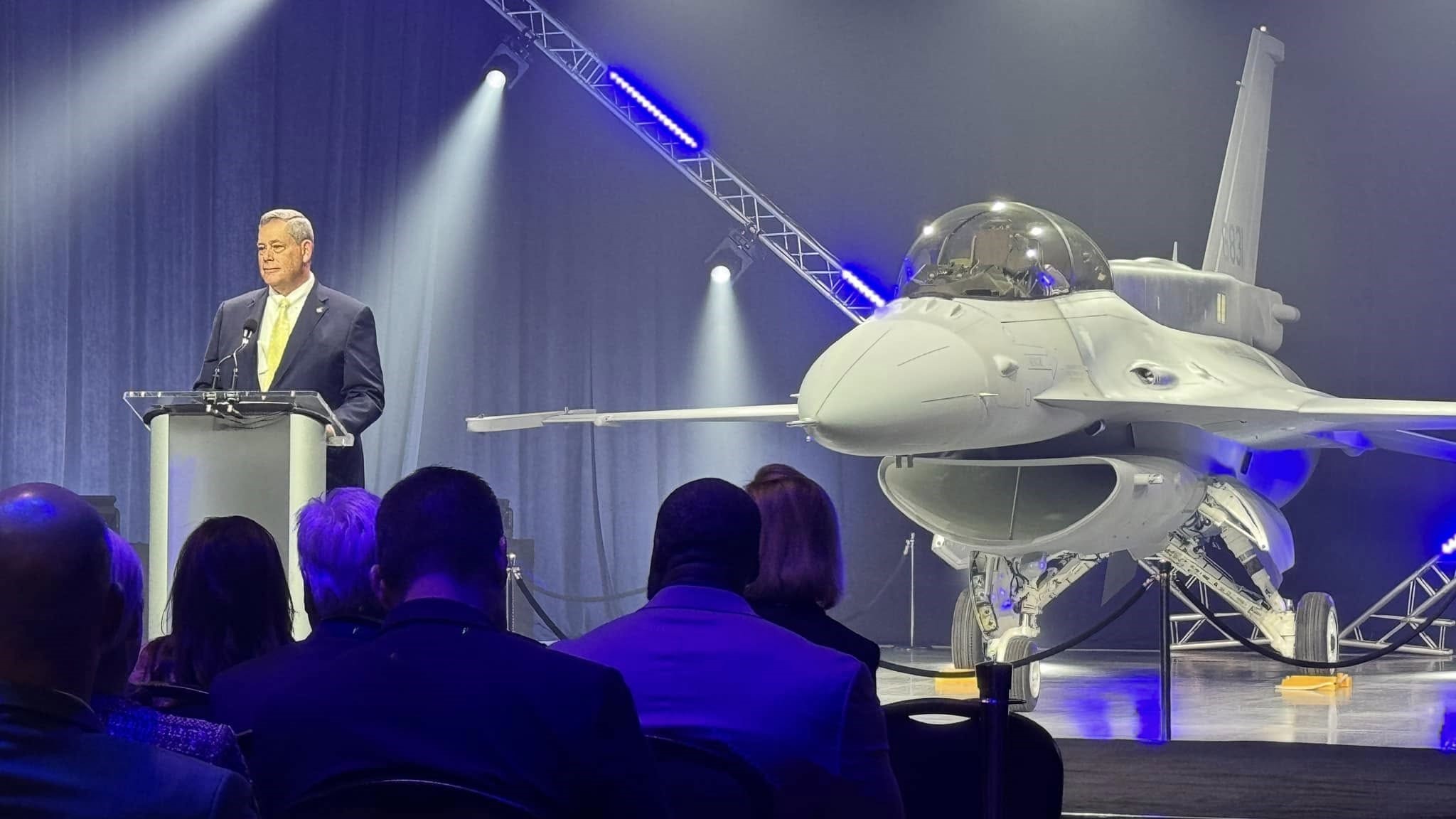
The aircraft now arriving from the U.S. are newly manufactured F-16C/D Block 70s, built by Lockheed Martin at its production facility in Greenville, South Carolina. Compared to the upgraded fighters, these introduce additional modifications.
However, the key difference is the age of the airframes. While the upgraded F-16Vs might have a limited number of flight hours remaining out of the 8,000 total they obtained with a previous service life extension, the aircraft that are now being delivered come straight from the factory and feature a 12,000 flight hours service life.
A long-delayed acquisition
Taiwan’s procurement covers 66 new-build F-16C/D Block 70 aircraft and was approved by the U.S. in 2019 as part of a Foreign Military Sale (FMS) valued at approximately $8 billion. The first deliveries were originally expected in 2023, but the program subsequently experienced significant delays.
Among the factors affecting the schedule were the transition of F-16 production to Greenville, South Carolina, in 2019. This was followed by supply-chain problems in 2021, which caused another year of delays.
Additionally, as reported by Taiwanese media, the first two aircraft left the U.S. on Aug. 17, however their delivery flight was significantly slowed down by adverse weather, with long stopovers in Hawaii and Guam. The first two aircraft have now finally reached Taiwan, while the remaining fighters are at different stages of production, testing and delivery preparations in the U.S.
A ROCAF F-16V prepares for a Quick Reaction Alert mission during a combat readiness exercise in 2022. | Source: CNA
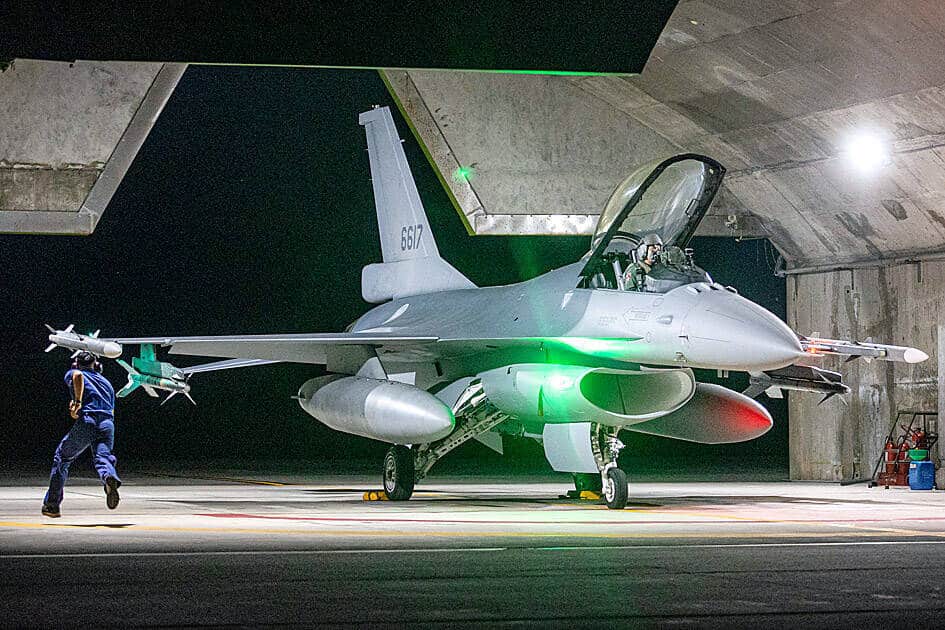
Taiwan’s new F-16s
The Taiwanese Ministry of National Defense (MND) stated that the F-16 Block 70 procurement was launched in response to “enemy threats and urgent national defense needs.” In 2019, the MND obtained the budget in accordance with the “Special Regulations for the Procurement of New Fighter Aircraft” to acquire the 66 new fighters.
The MND says that this deal demonstrates the U.S. government’s commitment to continue to assist Taiwan in improving its self-defense capabilities, in accordance with the “Taiwan Relations Act” and the “Six Assurances.” The latter are guidelines for the relations between the two countries that were adopted in 1982, under which the U.S. would not set a date for ending arms sales to Taiwan, nor would it consult with China regarding those arms sales.
The sale of the F-16 Block 70 was considered a ‘red line’ by China and only in 2019 the Foreign Military Sale was authorized, after years of wait. The new F-16s would also allow Taiwan to become the type’s largest fleet in South East Asia, with 205 aircraft in inventory.
The F-16 Block 70/72 are the most advanced production Vipers, which are newly built as opposed to the F-16V which are existing aircraft upgraded to the same configuration. So far, six countries have selected the F-16 Block 70/72 and Lockheed Martin has a production backlog of more than 100 jets.
Among the new systems installed during the upgrade we can find the APG-83 AESA (Active Electronically Scanned Array) radar, AN/ALQ-254(V)1 Viper Shield Electronic Warfare suite, a new Center Pedestal Display (CPD), the AN/APX-126 Advanced IFF (Identification Friend or Foe), Link 16 datalink, full NVIS (Night Vision Imaging System) and JHCMS II (Joint Helmet-Mounted Cueing System II) compatibility, a new Embedded GPS/INS (EGI), Conformal Fuel Tanks (CFT) a modern commercial off-the-shelf (COTS)-based avionics subsystem, a high-volume, high-speed data bus and the Automatic Ground Collision Avoidance System (Auto GCAS).
An F-16 Block 70 for Bulgaria departs from Greenville, South Carolina, for the ferry flight. | Source: Lockheed Martin
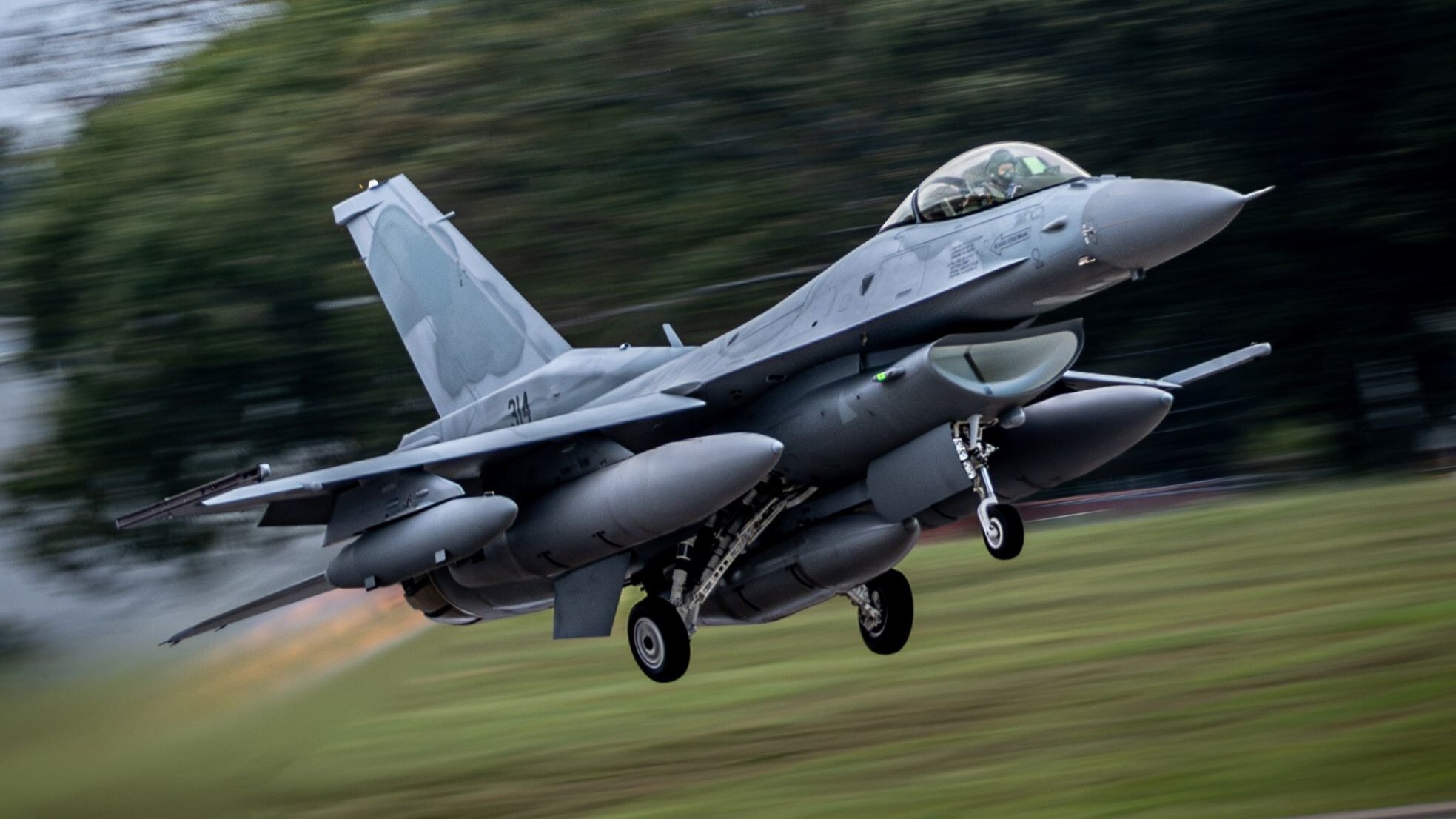
The APG-83 Scalable Agile Beam Radar (SABR), developed by Northrop Grumman, is an AESA (Active Electronically Scanned Array) radar designed to fit the F-16 with no structural, power or cooling modifications; in addition, it enables the F-16 to detect, track and identify a greater number of targets (reportedly more than 20 at the same time) faster and at longer ranges while providing all-weather, high-resolution Synthetic Aperture Radar (SAR) mapping. The system also integrated a robust electronic protection to operate in hostile electronic environments.
The Viper Shield suite was designed to maximize the survivability of the F-16 Block 70 against future threats, and to integrate seamlessly with the aircraft’s new APG-83. The system, based on an all-digital architecture which uses commercial-off-the-shelf (COTS) technology for enhanced system performance, a smaller form factor, reduced weight and easier future upgrades, also includes a digital radio frequency memory (DRFM)-based jamming system, which provides enhanced capability against advanced threats.
The Block 70 features a new cockpit concept, with the installation of a Center Pedestal Display (CPD), that provides the pilot with critical tactical data on a high resolution 6’’x8’’ screen. The new screen allows pilots to take full advantage of the new radar and targeting pod data, including new color moving map, a larger and easier representation of the air-to-air situational displays with zoom functionality and last but not least the ability to switch information among displays. Also, Taiwanese F-16s might have been equipped with the Martin Baker US18E seats.