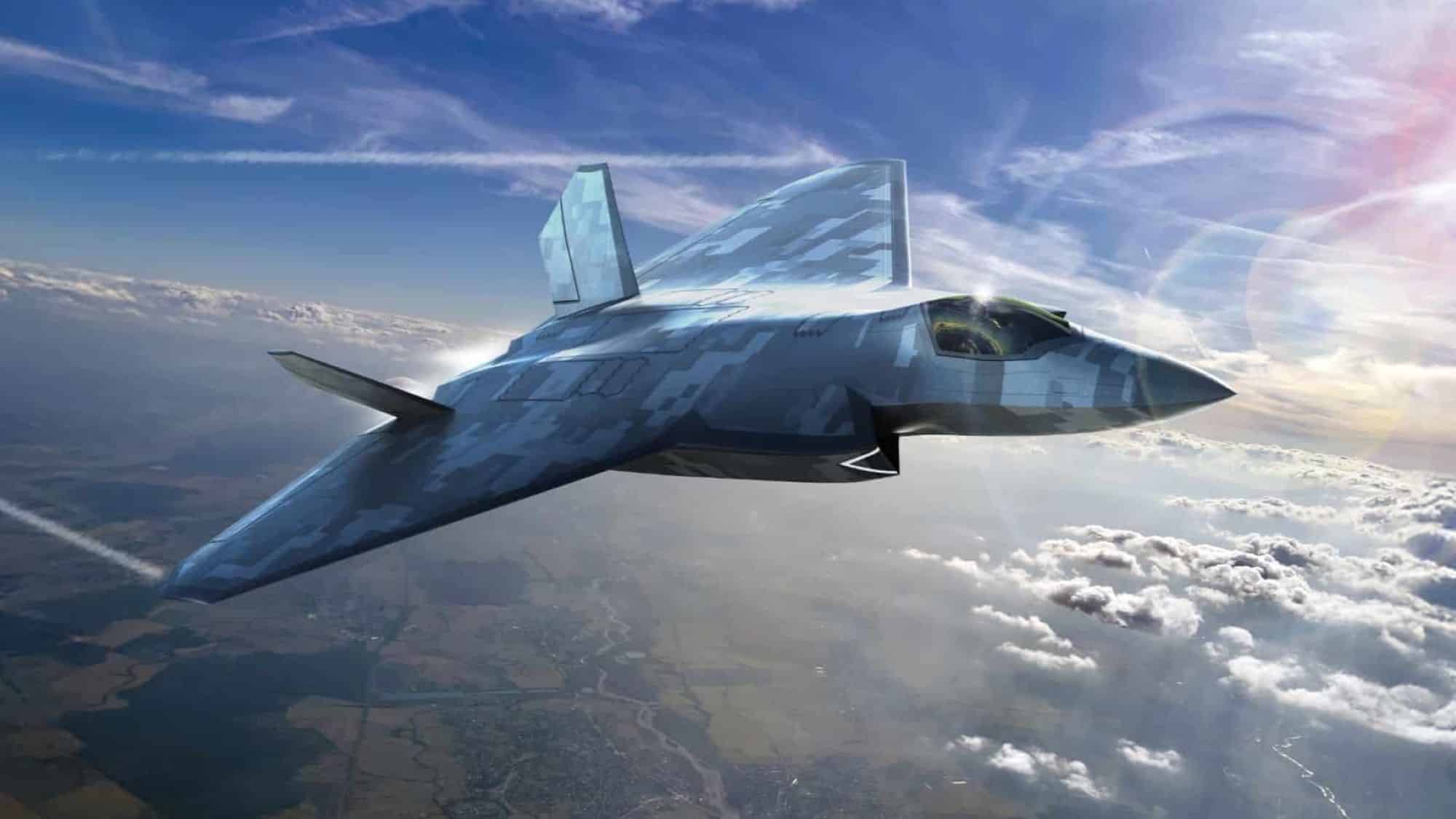
Germany ‘Exploring’ GCAP Entry with UK, Reports Say
While discussions between London and Berlin are in the early stages, internal German government assessments reportedly favor a collaboration with Sweden and Spain over joining GCAP.
Germany has begun exploratory talks with the United Kingdom over possibly joining the Global Combat Air Program (GCAP), the next-generation fighter aircraft being developed by the UK, Italy and Japan. Politico, confirming the development from both British and German officials and basing the report on internal German government documents, said that the move was initiated by the United Kingdom, looking into potential “cooperation, including industrial ‘workshare’ and Germany’s military capability requirements.”
Describing the ongoing discussions as “exploratory talks” which appear to be at an extremely nascent level, the report also mentions that it is not clear if the UK raised any specific observer status for Germany within the GCAP consortium.
Interestingly however, Politico also cites other internal German assessments that reportedly find the GCAP to be unsuitable for the country. This is owing to a series of issues, beginning with the difficulty of negotiating an equitable industrial workshare in an already well-established arrangement between the UK, Italy and Japan.
German consternation over joining the GCAP, while preferring the Swedish and Spanish route, was also previously reported in June by Der Spiegel. Others include Germany’s relations with British defense giant BAE Systems and the suitability of the GCAP platform itself for German needs.
1⃣the current specification of GCAP/Tempest is not tailored to “continental ambitions”
2⃣ Given the progress made, it is difficult to increase German industrial shares and [R&D] work shares.”
3⃣(regarding BAE) it references «negative experiences» related to Typhoon project
/2
— Stéphanε γvelines (@StephanVelines) October 1, 2026
The same internal government communications however find a collaboration with Spain and Sweden on a next-generation fighter to be more favorable. Without commenting on the specifics, a UK government spokesperson told Politico that Britain and its partners “remain open to others joining GCAP. ”
Germany-FCAS and GCAP so far
The new development comes in the wake of Germany and France ending their partnership over the Next Generation Fighter (NGF) component of the Future Combat Air System/Système de Combat Aérien du Futur (FCAS/SCAF) program. Industrial workshare disagreements, particularly over Dassault’s expected role in the development of the NGF, were the main issue.
Germany has since then announced a “Team Gen 6” at the recent ILA Berlin,a group of German companies which will work toward a sovereign European sixth-generation fighter. Eight German companies – along with a parallel grouping of Spanish companies – agreed to continue work started under the NGF project.
This implied work for the other components of the FCAS, including the Combat Cloud networking system, the Remote Carriers (or collaborative drones) and the sensors and avionics on the UCAVs. “Berlin and Paris intend to continue cooperation on other parts of the multi-pillar FCAS project,” Politico said.
Politico reports that Germany, following the death of FCAS, is in talks with the UK to potentially join the UK-Italian-Japanese GCAP fighter jet program.https://t.co/FtlFCqassR https://t.co/E5dfyo0Zmy pic.twitter.com/t0vd2vJrOE
— Jeff2146 (@Jeff21461) October 2, 2026
German defense minister Boris Pistorius had previously said the country was also exploring other options like buying additional F-35s, or joining other aircraft development programs. The GCAP has meanwhile continued to make steady progress, including a £4.6 Billion contract award to the Edgewing project vehicle.
Canada has also joined GCAP as an observer, while Singapore is in “exploratory” talks. Leonardo’s CEO Lorenzo Mariani had welcomed the country’s participation, yet, he also warned that a new member’s entry would risk pushing the program’s deadline beyond 2035.
Between GCAP and a partnership with Spain, Sweden
As mentioned, the Politico report quotes internal German government assessments and communications that compare the GCAP, and a collaboration with Spain and Sweden. These studies don’t favor the GCAP, citing the pre-established industrial and technological workshare arrangements between London, Rome and Tokyo. This would make it hard to accommodate German industry at this stage.
The publication however clarifies that the internal German government assessments regarding a next-generation fighter and the GCAP do not yet represent a formal or settled position by Berlin. At the same time, the studies find that the collaboration with Sweden and Spain offer a greater scope for favorable industrial terms for German industry.
An exciting step for European sovereignty at ILA Berlin: “Team Gen 6”, a group of eight leading German defence and aviation companies signed a strategic positioning paper. The German and French governments have announced a realignment of the European Future Combat Air System… pic.twitter.com/aZcjAaO6dE
— Airbus Defence (@AirbusDefence) June 11, 2026
That collaboration is far from being formalized and thus offers ample avenues to carve out fairer participation terms. Furthermore, given how the defense industrial base has become the bedrock of Europe’s economic revival, the Politico report suggests German industry would be better off teaming up with Spain and Sweden.
It must be noted that Sweden cooperated with Italy and the UK on future combat air technologies but did not become a GCAP partner. Additionally, Sweden recently unveiled the A3-001 Collaborative Combat Aircraft (CCA) concept, and has kept the door open for international cooperation.
What the report said
An anonymous UK defense industry representative’s reaction to Politico reflected the adherence to the 2035 deadline: “A U.K. defense industry representative said they expected London to emphasize that GCAP is an existing program with a 2035 timeline that could meet German needs while helping to safeguard German jobs after the Eurofighter Typhoon is phased out.”
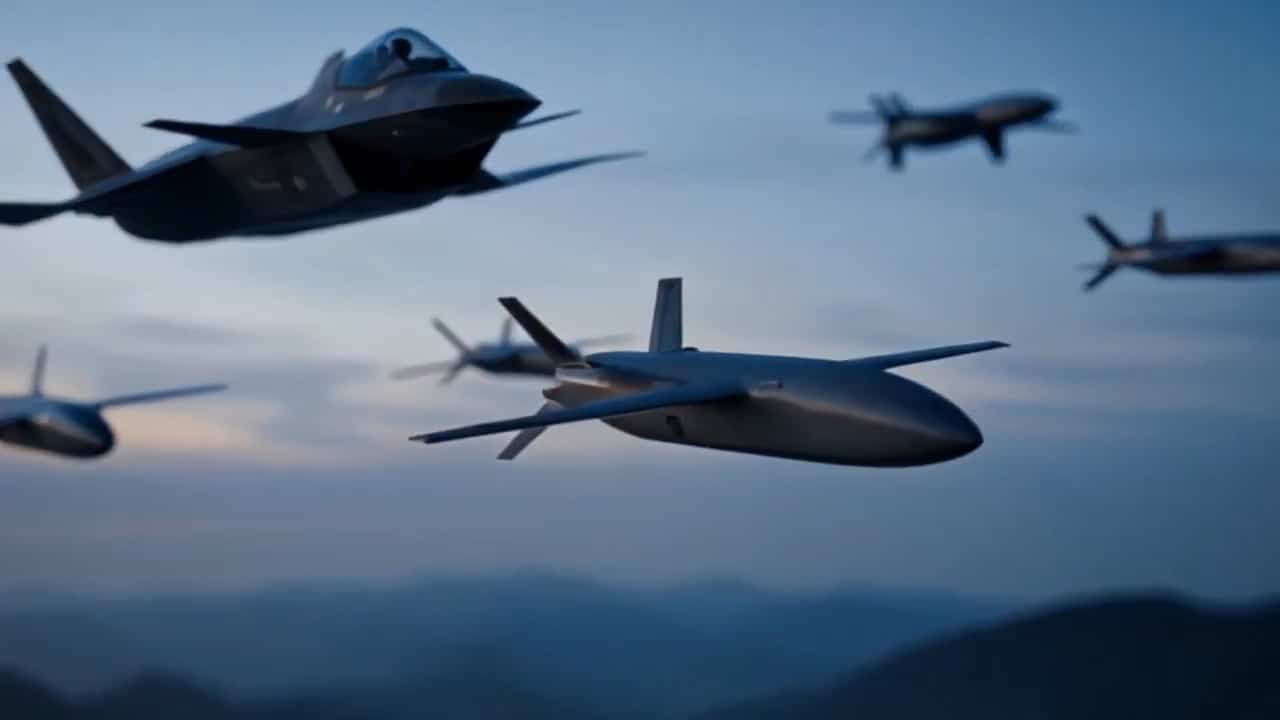
Loyal wingman drones envisaged for the FCAS flying together with the 6th gen aircraft concept unveiled as a part of the Team Gen 6 effort. | Source: Airbus Defence & Space
Politico then indirectly quoted and paraphrased the internal German documents that said a GCAP deal would “face substantial questions” within the Bundeswehr (German Armed Forces). While one ministry assessment does identify the GCAP as an option, it says the program is built around a maritime scenario, whereas Germany wants a platform “for operations in continental Europe.”
“[A] meaningful role for German industry in a project that is already underway” is another concern, Politico said. Skepticism over BAE Systems is another, owing to “negative experiences” during the development of the Eurofighter. The British company can be expected to dominate the new program in a way that would not allow cooperation “on an equal footing,” Politico said, this time directly citing a German government document.
The same internal German note favorably assesses a new partnership with Sweden and Spain, given the three countries’ “closely aligned military requirements and would start from a more comparable position than […] the already established British-Italian-Japanese program.” The note therefore recommends a German-Swedish-Spanish partnership as it would be “more advantageous and more promising” from Germany’s perspective.
In response to a request for comment, the German defense ministry confirmed that initial exploratory talks have taken place over GCAP’s basic requirements and program content, but did not say whether Britain had formally raised any specific participant status for Germany. pic.twitter.com/4XiOtZDIro
— JamesFennell MBE (@FennellJW) October 2, 2026
A German defense ministry spokesperson confirmed to Politico the “initial coordination talks” over the basic requirements for a sixth-generation combat air system. The spokesperson added that the final decision would have a “political dimension.”
In June, Der Spiegel, while reporting about Germany’s Team Gen 6 effort and quoting unnamed officials from the German companies, said: “In addition to the six German companies, the Swedish defense contractor Saab is apparently being sought for collaboration […] The new partners apparently reject cooperation with the British-Italian-Japanese fighter jet consortium GCAP, whose concept does not meet German requirements.”