U.S. Navy Receives First C-130J-30 for TACAMO Program
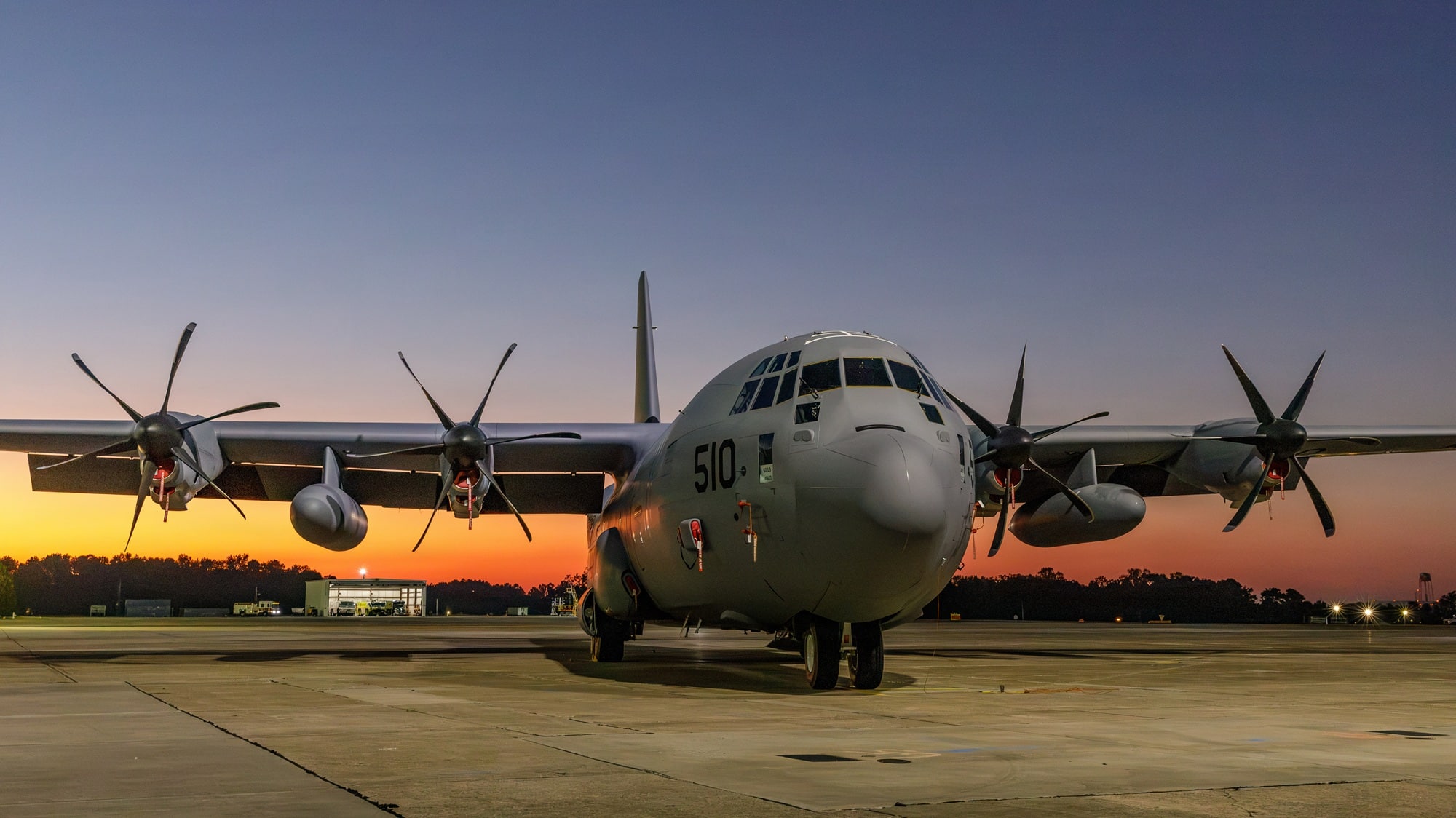
The U.S. Navy has received the first C-130J-30 Super Hercules which will be converted into the E-130J Phoenix II, equipped with the Take Charge and Move Out (TACAMO) mission system.
The U.S. Navy has accepted the delivery of the first C-130J-30 Super Hercules that will undergo the conversion to the E-130J “Phoenix II” configuration. The delivery, part of a formal ceremony on Oct. 15, 2026, at the Lockheed Martin’s production facility in Marietta, Georgia, marks a new step toward the fielding of the next-generation Take Charge and Move Out (TACAMO) mission system.
“Today’s delivery from the historic Marietta line represents far more than a new airframe; it marks the foundation of our future strategic deterrence posture,” said Capt. Roger Davis, Airborne Strategic Command, Control, and Communications program manager (PMA-271). “Through our close partnership with Lockheed Martin and our industry team, we are ensuring our nation maintains an unshakeable communications lifeline to our ballistic missile submarine fleet.”
A new era for strategic airborne communications has arrived – the @USNavy officially accepted delivery of the first C-130J-30 Super Hercules from Lockheed Martin.
Read the full story on DVIDS: https://t.co/4judvbe6lT
Photo courtesy of Lockheed Martin https://t.co/2F52E3GaDg
— PAE(A) (@PAEAviation) October 16, 2026
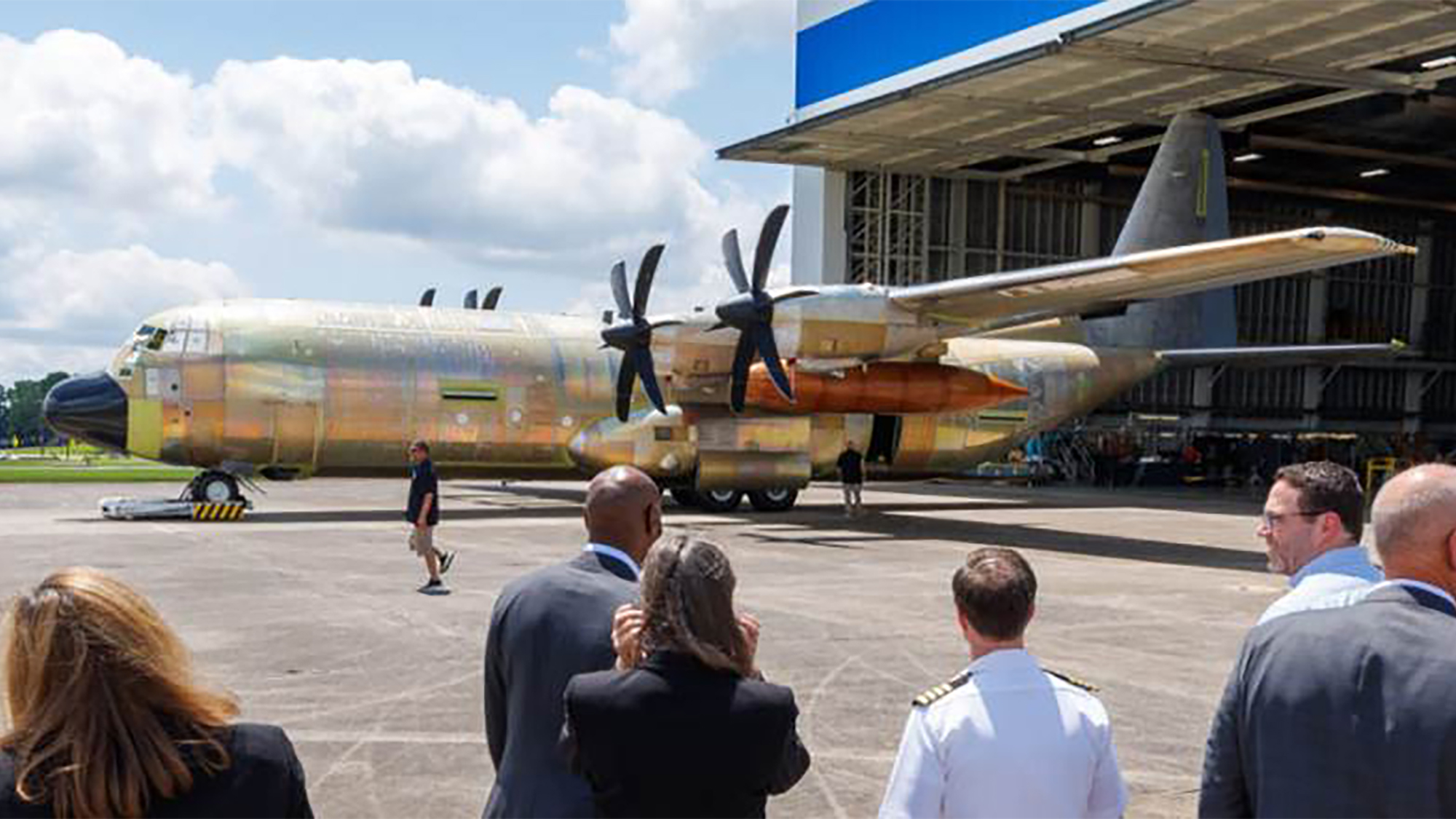
This C-130J-30 first emerged last year, in September 2025, when it was rolled out of the factory at the end of final assembly. The aircraft will now transition into mission systems integration led by prime contractor Northrop Grumman and Collins Aerospace will provide Very Low Frequency (VLF) systems, said the Navy’s Portfolio Acquisition Executive Aviation (PAE Aviation).
E-130J Phoenix II
The U.S. Navy’s Airborne Strategic Command, Control and Communications Program Office (PMA-271) is procuring the E-130J through the TACAMO Recapitalization Program. The program will produce the successor of the current E-6B Mercury fleet.
The E-6B Mercury fleet, although it is derived from some of the last Boeing 707 airframes produced, is now in excess of thirty years old. The main role of the aircraft is to connect the President, Secretary of Defense and U.S. Strategic Command with naval ballistic missile forces, broadcasting radio transmissions in the very low frequency (VLF) range to communicate with submerged submarines.
Render of the E-130J Phoenix II. | Source: Northrop Grumman
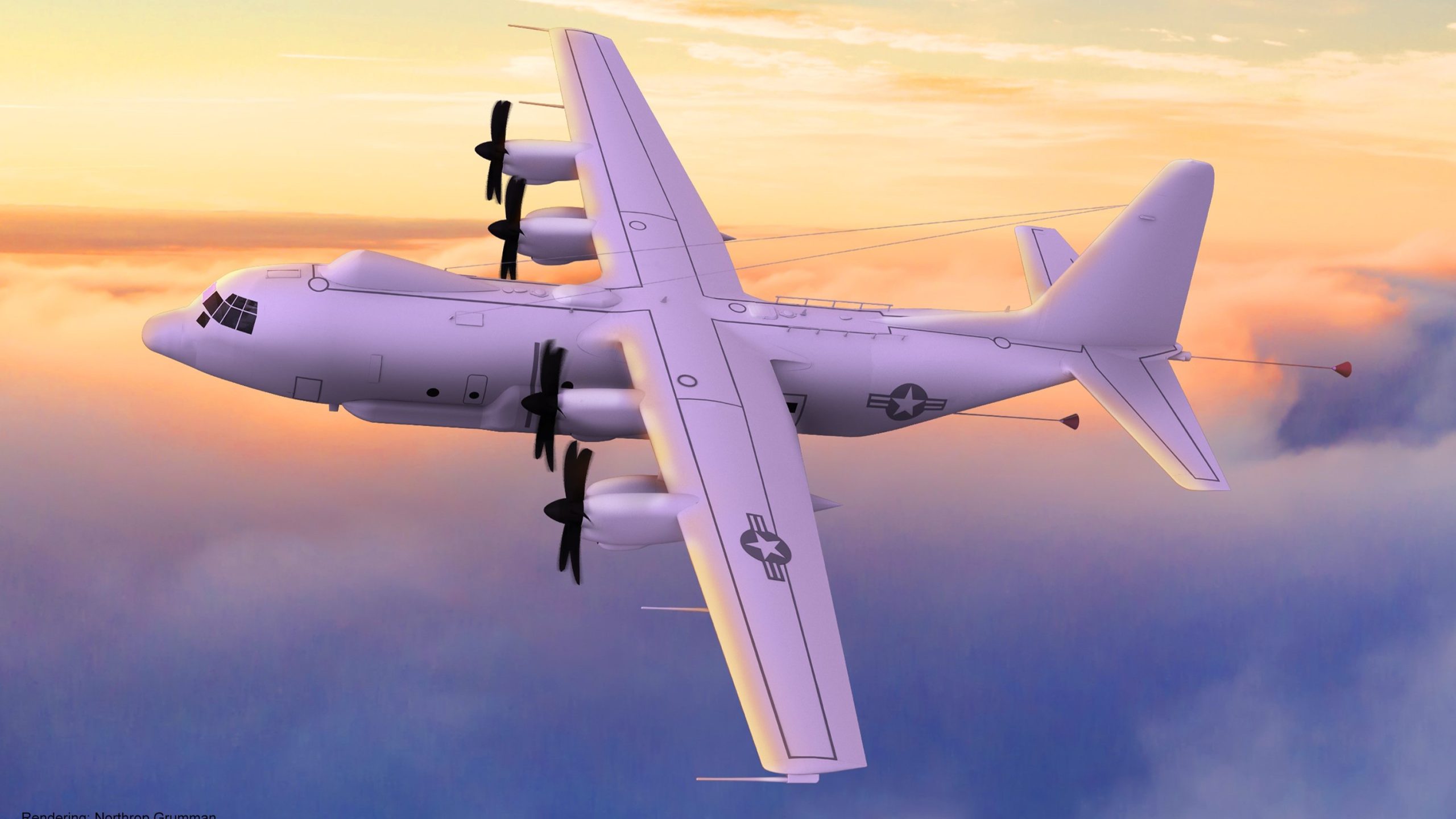
Northrop Grumman, Lockheed Martin’s Skunk Works and Raytheon Intelligence and Space teamed up to bid for the replacement program in 2023. As part of the work, the prime contractor to integrate TACAMO mission systems, including the Collins Aerospace Very Low Frequency (VLF) subsystem, into government-furnished C-130J-30 aircraft.
The use of the type for the TACAMO mission is not a novelty, as the E-6B replaced another Hercules variant, the EC-130Q which was based on the C-130H. Compared to the E-6B, however, the E-130J is not expected to feature Air Force’s Airborne Command Post (ABNCP) capability, also known as “Looking Glass,” which allows to communicate with the nuclear bombers and ICBM (InterContinental Ballistic Missiles) silos.
This prompted congressional concerns. Reports mentioned an unconfirmed possibility of the Air Force’s new E-4C Survivable Airborne Operations Centre (SAOC) inheriting the mission, but details on this are scarce. The Fiscal Year 2026 U.S. National Defense Authorization Act (NDAA) later requested the Secretary of the Air Force to provide Congress with an acquisition strategy addressing the prospects of using the C-130J-30 for the ABNCP mission.
The Navy says the “arrival of the new airframe initiates a planned transition from the legacy E-6B Mercury, honoring decades of service while setting the foundation for the future fight.” With the TACAMO mission system, the aircraft will provide survivable, reliable, and secure, communications between the president, the secretary of defense, and U.S. Strategic Command.
The first C-130J due to be converted into an E-130J. | Source: NAVAIR
“Modernizing this capability is vital to ensure the nation’s Nuclear Command, Control, and Communications (NC3) architecture remain resilient and reliable,” said the service. “The updated platform delivers enhanced endurance, capacity, and operational reach necessary to support mission success in complex global environments.”
Meanwhile, the Government Accountability Office (GAO) reported that concerns about the integration of the mission systems had become tangible program risks. The Navy also pushed its low-rate initial production decision back by approximately one year.
Reportedly, key challenges include fitting the specialized equipment within the C-130J-30’s available space and managing size, weight, power and cooling (SWaP-C) constraints. Contractors have been working on modifying existing mission systems to reduce their weight.
Concerns were also raised regarding the operational availability requirements of the platform. According to a recent Modernized Selected Acquisition Report (MSAR), in addition to the six pre-production E-130Js, the Navy is now planning to procure 25 production aircraft, for a total of 31, doubling the current TACAMO fleet which counts 16 E-6Bs.